By Madhu Chandra*
“Commission for Minority Religion and Linguistic Minority” known as “Misra Commission” was setup by United Progressive Alliance (UPA) Government in 2005 to study and report on socio-economic condition of Christians and Muslims converted from Scheduled Caste origins. The Justice Misra Commission report was submitted on May 22, 2007. Since then UPA Government has delayed to give its consent that Supreme Court of India could give its verdict to 60 years denial of constitutional Rights to 20 million Indian Christians from Scheduled Caste origins.
The commission report has suggested to De-link Religion from Scheduled Caste and Dalits who, irrespective of their religion, suffer caste stigma and Scheduled Caste status to should be given all Dalits irrespective of their religions.
UPA Government did not give its consent as per the recommendation of Misra Commission, then why was the Commission asked to study the socio-economic condition of Dalit Christians?
Thereafter the denial of the fundamental rights to dalit Christian continues. The same demand as per the recommendation by the Misra Commission, the Dalit Christian has been looking at under the Modi 2.0 government of NDA. 70 years is the constitutional denial to the 20 million Indian Christian dalits. 70 is the good number for Christians and the hope for justice still knocks at the door.The fundamental, birth and constitutional rights of Christians from Scheduled Caste origins have been denied for last 59 years. Supreme Court of India has been postponing the Dalit Christian reservation Civil Writ Petition for last six years, waiting for UPA Government to give its consent.
After constitutional denial of Scheduled Caste origins converted to Christianity and Muslims after the Presidential Order 1950, a million dollar question remains in the minds of Indian Dalit Christians: “Will the Judicial system of India give justice to Indian Dalit Christians now after 59 years of injustice done to them?”
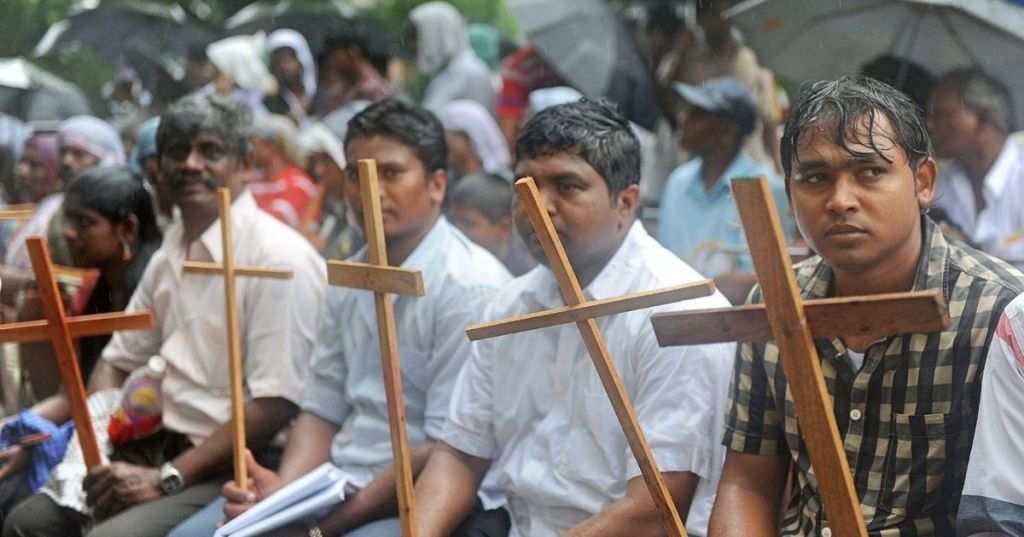
India’s 75% Christians belong to Scheduled Caste communities numbering to 20 millions, whose statutory and benefits available in Constitutional were denied after 1950 Presidential Order. The debate on Dalit Christian reservation is ongoing for many decades in spite of repeated assurance given to Dalit Christian communities to be included in Constitution Scheduled Caste Order 1950.
For first time, Indian’s lowest caste known as “Untouchables” or “Depressed Classes” have been identified as Scheduled Castes introduced by Colonial Government of India in 1935.
In the following year Colonial Government of India (Scheduled Castes) Order 1935 specified, “No Indian Christian shall be deemed to be a member of a Scheduled Caste.” Since then any Scheduled Caste origins converted to Christianity lost its Scheduled Caste status, although they remain economically, educationally, socially and politically backward as much as before their conversion.
After India got Independent from Colonial power, while framing Indian Constitution the Presidential Order of Scheduled Castes and Scheduled Tribes Order 1950, the Scheduled Caste Origins converted to any other faiths or religions different from Hinduism has been left out in Para 3 of Article 341.
Dalit Sikhs protested and they are included in Constitution (Scheduled Caste) Order 1950 after six years’ denial of their birth, fundamental and constitutional rights by amendment Para 3 of Article 341 in 1956.
Dalit Buddhists remained their birth, fundamental, constitutional rights of scheduled caste status denied for 40 years until the Para 3 of Article 341 was amended in 1990 to include them in the Presidential Order.
Every time Dalit Sikhs and Dalit Buddhists demanded to be included in Constitution (Scheduled Caste) Order 1950, assurances were also given repeatedly to Scheduled Caste origins converted to Christianity. The birth rights of Dalit Christians have been kept suppressed for 59 years that too without any assurance either from legislate nor political heads.
Chronological on Dalit Christian Reservation
The clause of Para 3 of Article 341 in Indian Constitution (Scheduled Caste) Order 1950 clearly indicates “No person who professes a religion different from Hinduism shall be deemed to be a member of a Scheduled Caste.”In 1950 upon the representation of Christian leaders for not including Scheduled Caste Christians in Constitution (Scheduled Caste) Order 1950, the assurance from then the Prime Minister and President via letter dated 7 November 1950 and 17 December 1950 respectively were given.
In 1953 Indian Central Government appointed “First Backward Classes Commission” under Article 340 of Indian Constitution to investigate the conditions of socially and educationally backward classes within Indian Territory. The Commission submitted its report on March 3, 1955 stating that within the Christian society and church, those converts from Scheduled Caste origins are discriminated such as like not allowed to sit together inside the church, no inter caste marriages and separate cemetery etc.
This commission’s report proves that although Christianity does not preach caste but practices it. If the Scheduled Caste Order 1950 is given on the basis that Hinduism has caste, then Christian converts from Scheduled Caste origin will also deserve to be listed in the Constitution (Scheduled Caste) Order 1950.
In 1979, the President of India by an Order, under Article 340 appointed the second backward commission, which is known as “Mandal Commission” to investigate the conditions of socially and educationally backward classes within Indian Territory. The commission submitted its report on December 31, 1980 that “conversion from the faith to another did not change the socio-economic status of a person.
It was, therefore, desirable that converts from Scheduled Castes to Buddhism, Christianity and etc. should be treated as Scheduled Castes, but until this change was brought about by legislation, all such converts should be listed as Others Backward Classes (OBCs)” The Mandal Commission also stated that “though caste system is peculiar to Hindu society yet, in actual practice, it also pervades the non-Hindu communities in India in varying degrees.”
In 1980, The Minority Commission in its 3rd Annual Report 1980 in page No. 31 said that “The Commission has prima facie felt that since the Christians, Muslims and Buddhists of Scheduled Caste origin continue to suffer from social and economic disabilities even after their conversion, there should be no objection to their availing of the concessions admissible to them before their conversion.”
In 1984, The Supreme Court of India in the case of S. Anbalagan Vs. Devarajan AIR 1984 SC 411, said that “the practice of caste however irrational it may appear to our reason and however are repugnant it may appear to our moral and social sense, it so deep rooted in the India people that its mark does not seem to disappear on conversion to a different religion.”
In 1993, The Union Government of India included Scheduled Caste converts to Christianity and Islam in the “Other Backward Classes” in a resolution passed on September 10, 1993 by Ministry of Social Welfare for the purposes of the reservation on 27% vacancies in civil posts and service under the Government of India.
In 1995, a memorandum signed by Members of Parliament dated May 1, 1995 submitted to Shri. P. V. Narsimha Rao, the then Prime Minister of India, for immediate inclusion of statutory benefits to the Scheduled Caste converts to Christianity and also requested to introduce the required Bill during the current session of the Parliament.
In 1996, a memorandum dated February 20, 1996 and signed by 103 Bishops of India was submitted to Shri P. V. Narsimha Rao to include statutory benefits to Scheduled Caste Converts to Christianity in Presidential SC/ST Order 1950 by promulgating an ordinance immediately.
In the same year, in a note for Cabinet dated March 3, 1996 Welfare Ministry had proposed to include Scheduled Caste converts to Christianity as Scheduled Castes in the Presidential SC Order 1950 to make them eligible for all statutory safeguards and benefits available to the members of Scheduled Caste.
The Cabinet approved this proposal at its meeting held on March 7, 1996 to introduce the Bill to amend the earlier Constitution Scheduled Caste order. Although the Bill was listed for introduction on March 12, 1996, it could not be introduced as some procedural lapse and new government was expected to assume.
In 2003, Ministry of Social Justice & Empowerment, Government of India in its Annual Report of 2002-2003 in Chapter 3, the Scheduled Caste origins converted to Christianity did not avail all the schemes implemented for various developmental programs for Scheduled Castes.
In 2004, Centre for Public Interest Litigation through its General Secretary and T. Franklin Caesar of Tamil Nadu filed a Write Petition dated March 22, 2004 under Article 32 of the Constitution of India challenging the Para 3 of Article 341 of Constitution (Scheduled Caste Order) 1950. More than dozen of individual and advocates have filed the writ petition challenging the same Para of same Article.
This case has been going on in Supreme Court of India ever since. The next scheduled to hear on July 19, 2007.Dalits Christians are at knock at the door of Indian Judicial system.
Supreme Court on Dalit Christian Reservation
There are several hearings so far on Dalit Christian Reservation after writ petition filed in Supreme Court of India apart from many dates of adjourning.1st SC Hearing: April 26, 2004, the first hearing was called where advocates of petitioner presented and it was postponed on May 3, 2004. The May 3, hearing seems adjourned.
2nd SC Hearing: April 11, 2005 hearing was called and gave the order that “Mr. B K Prasad, Advocate, present in Court, takes notice for the respondent. Formal notice need not issue. List for final hearing in the month of August 2005. All the parties seeking intervention/impalements may remain present on the date the hearing is taken up. The parties who wish to file synopsis of submissions may do so within four weeks.
3rd SC Hearing: August 23, 2005 hearing was called and gave the order that “The learned Attorney General and the learned Addl. Solicitor General make a statement on behalf of the Union of India that the issue arising for decision in these petitions is receiving the attention of the Government along with other issues in a wider perspective and pray for hearing being adjourned. Both the parties pray for a fixed date being given. List on 18th October, 2005.”
4th SC Hearing: October 25, 2005 was adjourned with next hearing in the last week of November 2005.
5th SC Hearing: November 28, 2005 was called for hearing and gave the following order that the challenge in these matters is to the constitutional validity of Paragraph (3) of the Constitution (Scheduled Castes) Control Order, 1950. Therefore, investigation from National Commission for Religious and Linguistic Minorities had been sought in the context of the ceiling of fifty per cent on reservation in terms of the decision of this Court in Indra Sawhney vs. Union of India & Ors. (1992 Suppl. (3) S.C.C.217). Supreme Court gave no opinion on the issues involved and gave order to wait till Supreme Court hears the matter in detail after the information is supplied. Court was adjourned with next hearing in third week of February 2006.
The hearings were scheduled on February 12, 2006 and postponed to April 5, 2006 then to July 12, 2006.
6th SC Hearing: February 15, 2006 was adjourned with next hearing in the first week of April 2006 as Misra Commission delayed submission of its report.
Misra Commission called public opinion on extending Dalit Christian reservation. Two studies at Delhi were conveyed by Centre for Research and Development and Delhi University and one at Mumbai by Tata Institute. Delegations of All India Christian Council led by Dr. John Dayal attended all of these studies. Dr. Dayal termed these studies as highly skewed studies with Brahminical personalities.
Social Scientist, activists responded to these studies that conversion of Dalits to any religion did not change their social backwardness status as well as educational and economical condition. They are same as before their conversion.
The scheduled of SC hearing in first week of April was further postponed to July.7th SC Hearing: July 12, 2006 was once again adjourned with next hearing in the month of October as Misra Commission report was yet to complete.
Misra Commission report was finally ready to submit to United Progressive Alliance Government in month of October 2006. Dalit Christian went frustrated by delaying of the Misra report and when it was finally ready to submit to UPA government, commission was instructed to delay until Uttar Pradesh Assembly election is over in first week of May.
Since the 7th Hearing on July 12, 2006, SC has listed the case in many dates where times was sought by Learned Additional Solicitor General and granted to list for latest hearing on December 1, 2009.
Recommendations on Dalit Christian Reservation
The present Dalit Christian reservation case in Supreme Court has been referred to Union Government to give its opinion on giving Scheduled Caste statutory and beneficiaries to the Scheduled Castes origins converted to Christianity in November 2005 hearing.The UPA Government has setup National Commission for Religious and Linguistic Minorities under the chairmanship of Justice Raganath Misra known as Misra Commission to investigate the economical, educational, sociological conditions of Scheduled Caste origins converted to Christianity.
Enough Commissions before Misra Commission have been setup and finding have been submitted with recommendations that Scheduled Caste origins converted to Christianity still suffer caste stigma, socially oppressed and economically, educationally and socially backward. Why then another Misra Commission? What have the commissions before Misra Commission said; will that be note valid reasons for Scheduled Caste origins converted to Christianity to include in Constitution Scheduled Caste Order 1950?
Elayaperumal Commission (1969): Report of the Elayaperumal Commission in Para 32 says “The Committee found during tours that all Scheduled Castes who got themselves converted to religions other than Hinduism should be given all concessions which are available to Scheduled Castes. This is because the Committee found during tours that they suffer from the same disabilities which the Scheduled Castes suffer.”
Mandal Commission (1980): As stated above the Mandal Commission in 1980 supported that Scheduled Castes converted to Christianity be treated as Scheduled Caste as their conversion did not change the conditions of socially, economically and educationally.
Misra Commission (2005): Now the ball to give scheduled caste converted to Christianity is in the court of Misra Commission. Misra Commission will not find anything new but only charges from Sangh Parivar and affiliated organizations against Dalit Christian Reservation.
The Sangh Parivar’s opposition is not only Dalit Christians but to all reservation system for Indian Dalit communities. The Commissions before Misra Commission have given enough evidence that Scheduled Caste origins converted to any religions remains the same social, economic, education status even after their conversion.
Misra Commission Report came to its expire of term after submitting its report on May 25, 2007 with four members of five recommending to extend SC status to all Dalits who converted to Christianity while Asha Das – member secretary of the commission opposed. Asha Das opposition to the commission recommendation seems like to turn the ray of hope started dawning for Dalit Christians into darkness after discrimination of 59 years of their birth rights.
Union Government of India have referred to Misra Commission Report and yet to give the consent upon which Supreme Court of India is give its verdict to 20 million Indian Dalit Christians whose Birth, Fundamental and Constitutional rights have been denied for last 59 years.
Conclusion
After 6 years of struggle, Dalit Sikhs got their birth, fundamental and constitutional rights to enjoy statutory and beneficiaries of Scheduled Caste when Para 3 of Article 341 was amended in 1950 by including Scheduled Caste origins converted to Sikhism.Dalit Buddhists got their rights to enjoy Scheduled Caste statutory after 40 years of struggle when Para 3 of Article 341 was amended in 1990 and Scheduled Caste origins converted to Buddhism listed in Constitution (Scheduled Caste) Order 1950.
Dalit Christians are kept denied their birth, fundamental and constitutional rights for last 56 years by abstracting their names from Constitution Scheduled Caste Order 1950. The constitutional denial of Scheduled Caste origins converted to Christianity is triple oppression.
The allegation not to give Scheduled Caste status to Dalit Christians on the ground that Christianity does not have caste, they why Scheduled Caste status given to those Scheduled Caste origins to Sikhism and Buddhism as both the religions does not have caste.
On the other hand, if reservation for only those religions that practices caste then Dalit Christians also deserve it because they suffer caste stigma among Indian society. Dalit Christians suffer caste oppressed before their conversion and now. They suffer Religious persecution from religious fanatics and constitutional denial of their statutory from Presidential SC/ST order 1950 of which I term the triple discrimination of India Dalit Christians.
Dalit Christians seeking to be included in Scheduled Caste status is the constitution, birth and fundamental rights.
Will Indian Judicial system finally give justice to 20 Million Indian Dalit Christians whose constitutional right was taken away by Presidential Order 1950 is the million dollar worth question.
—
*Freelancer and social worker based at Hyderabad
Comments