
Bangladeshi women crossing borders: Demand to sensitise cops, BSF personnel

Counterview Desk 

Bringing more instances of how the security personnel along the borders in West Bengal refuse to probe the human trafficking angle while arresting Bangladeshi women, human rights leader Kirity Roy has said, they are treated as accused in violation of the memorandum of understanding (MoU) between the Government of India and the Government of Bangladesh on Bilateral Cooperation for Preventing of Human Trafficking, especially trafficking in Women and Children.
In a letter to the chairman, National Human Rights Commission (NHRC), Roy, secretary, Banglar Manabadhikar Suraksha Mancha (MASUM), and national convenor, Programme Against Custodial Torture & Impunity (PACTI), Hooghly, said, “The victims should be immediately repatriated to their own country and the criminal charges against them must be withdrawn at the earliest”, insisting, “The matters must be handled by the police or the BSF personnel with a human approach.”

Text:

I am writing this complaint regarding detention of Bangladeshi women in West Bengal and accusing and treating them as criminals under Foreigners Act, 1946. For a long time MASUM has been trying to bring this systematic violation of laws by the BSF and police administration into light by making numerous complaints to the NHRC and other relevant departments. The authorities including police and Border Security Force (BSF) are not at all concerned to initiate proper investigation into whether the persons including women and children crossed the border from Bangladesh to India were the victims of human trafficking or not. Here I am appending two case details for your perusal.

Case 1:

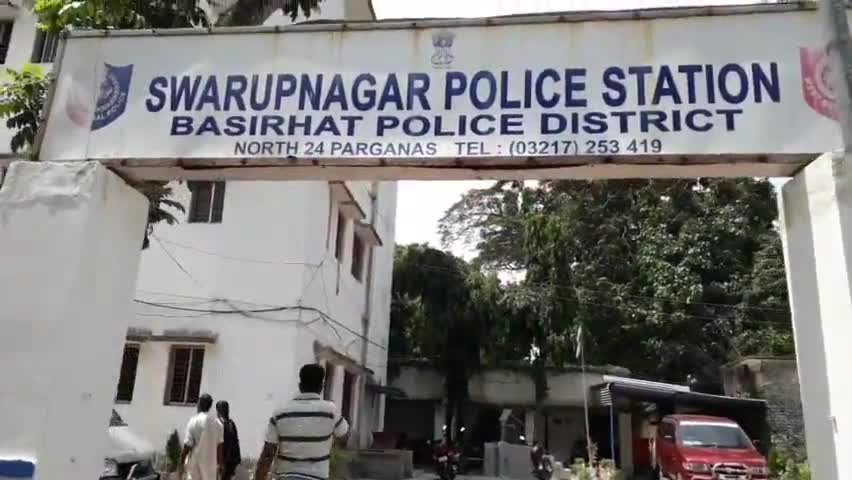
In connection with Swarupnagar Police Station Case no. 496/2022 dated 17.05.2022 under section 14 of Foreigners Act, the following Bangladeshi woman was arrested:
> Ms. Rokeya Sheikh, wife of Suhag Sheikh, Aged- 30 years, residential address: - Village – Bombar, Police Station – Kaliya, District – Narail, Bangladesh
The accused person is a Bangladeshi national, who was trying to enter India from Bangladesh on 16.05.2022 at around 07:50 p.m. and was apprehended by BSF personnel attached with ‘D’ coy of 112 Battalion, Hakimpur BSF BOP and the next day at 04:45 a.m. she was handed over to the Swarupnagar Police Station.
For more than 8 hours she was under BSF custody whereas the distance between the said BOP and the police station is only 15 kilometers. General rule is BSF has to inform the concerned police regarding the apprehension of any accused as early as possible after the apprehension. On 17.05.2022 the victim was produced before the Basirhat Additional Chief Judicial Magistrate Court escorted only with male police personnel.
The magistrate sent them to the Dum Dum Central Correctional Home for 14-day jail custody. As per the Article number 2 under II definition MoU of between the Government of the Republic of India and the Government of the People’s Republic of Bangladesh on Bilateral Cooperation for Preventing of Human Trafficking especially trafficking in Women and Children; signed by both countries on 30th May 2015, trafficking in women and children shall mean selling, buying, recruitment, receipt, transportation, transfer or harbouring of any person for the purpose of sexual exploitation, labour exploitation, forced labour or services, slavery or practices similar to slavery servitude or the removal of the organs or any other form of exploitation. Therefore, how was the victim treated as accused and sent to jail custody by the court?

Case 2:

In connection with Swarupnagar Police Station Case no. 494/2022 dated 16.05.2022 under section 14 of Foreigners Act, the following Bangladeshi woman along with her children was arrested:
> Ms. Sahnaz Fakir, wife of Mr. Hassan Fakir, Aged- 45 years, residential address: - Village – Isamati, Police Station – Abhaynagar, District – Jessore, Bangladesh
The victim was a Bangladeshi national, who was trying to enter India from Bangladesh on 16.05.2022 at around 5.40 p.m. when she was apprehended by BSF personnel attached with 'C' Company of 112 Battalion, Tarali BSF BOP and later handed over to the Swarupnagar Police Station. Ms. Sahnaz Fakir was produced before the Basirhat ACJM court on 17.05.2022 and sent to the Dumdum Central Correctional Home for 14-day jail custody. Moreover, she was also escorted by male police personnel to the court.’
According to the office memorandum of the Ministry of Home Affairs (Foreigners Division) Government of India Dated 1st May, 2012 it clearly instructed about the procedure of dealing with the victims of trafficking. The memorandum stated that if the women and children victims were found without a valid passport or visa then they have to be repatriated to their country of origin through diplomatic channels.
Till the repatriation they must be kept in an appropriate children’s home, or Ujjawala home. In reality, police or BSF personnel or the concerned court never attempt to initiate any investigation whether these Bangladeshi persons are the victims of human trafficking or not. Additionally, the victims are kept in the correctional home.
From other several instances it is also found that the people of Bangladesh illegally enter India for the purpose of medical treatment as they have very limited facilities in their native place. Cross border trafficking is very organized crime where touts or middlemen are operating in connivance with border guards of both sides, India and Bangladesh. These helpless Bangladeshi persons enter India for better livelihood or for medical treatment purposes but when they are arrested; they are treated as accused under the Foreigners Act.
This approach is also violating the Article 6, 7, 8, 11 and 12 of the MoU between the Government of the Republic of India and the Government of the People’s Republic of Bangladesh on Bilateral Cooperation for Preventing of Human Trafficking especially trafficking in Women and Children; signed by both countries on 30th May 2015.
The incidents are not only violating the advisory of Government of India but are also in violation of Goal Number 16 of Sustainable Development Goals of UN, Government of India is a party to set the goals and obliged to adhere to the same.
Under the circumstances I request your urgent intervention in this case to bring justice to the victims by taking the necessary actions:
  • The police or BSF personnel or the concerned court must initiate to investigate whether these Bangladeshi persons are the victims of human trafficking or not
  • The victims should be immediately repatriated to their own country and the criminal charges against them must be withdrawn at the earliest
  • The victims should be transferred to an appropriate home from the Dumdum correctional home at the earliest
  • Government should initiate a series of sensitization programs for police personnel, BSF personnel and other legal authorities in the area of human rights, trafficking, repatriation and restoration and JJ Act
  • The matters must be handled by the police or the BSF personnel with human approach

Comments

TRENDING

Plastic burning in homes threatens food, water and air across Global South: Study

By Jag Jivan  In a groundbreaking  study  spanning 26 countries across the Global South , researchers have uncovered the widespread and concerning practice of households burning plastic waste as a fuel for cooking, heating, and other domestic needs. The research, published in Nature Communications , reveals that this hazardous method of managing both waste and energy poverty is driven by systemic failures in municipal services and the unaffordability of clean alternatives, posing severe risks to human health and the environment.

From protest to proof: Why civil society must rethink environmental resistance

By Shankar Sharma*  As concerned environmentalists and informed citizens, many of us share deep unease about the way environmental governance in our country is being managed—or mismanaged. Our complaints range across sectors and regions, and most of them are legitimate. Yet a hard question confronts us: are complaints, by themselves, effective? Experience suggests they are not.

From colonial mercantilism to Hindutva: New book on the making of power in Gujarat

By Rajiv Shah  Professor Ghanshyam Shah ’s latest book, “ Caste-Class Hegemony and State Power: A Study of Gujarat Politics ”, published by Routledge , is penned by one of Gujarat ’s most respected chroniclers, drawing on decades of fieldwork in the state. It seeks to dissect how caste and class factors overlap to perpetuate the hegemony of upper strata in an ostensibly democratic polity. The book probes the dominance of two main political parties in Gujarat—the Indian National Congress and the BJP—arguing that both have sustained capitalist growth while reinforcing Brahmanic hierarchies.

Economic superpower’s social failure? Inequality, malnutrition and crisis of India's democracy

By Vikas Meshram  India may be celebrated as one of the world’s fastest-growing economies, but a closer look at who benefits from that growth tells a starkly different story. The recently released World Inequality Report 2026 lays bare a country sharply divided by wealth, privilege and power. According to the report, nearly 65 percent of India’s total wealth is owned by the richest 10 percent of its population, while the bottom half of the country controls barely 6.4 percent. The top one percent—around 14 million people—holds more than 40 percent, the highest concentration since 1961. Meanwhile, the female labour force participation rate is a dismal 15.7 percent.

Urgent need to study cause of large number of natural deaths in Gulf countries

By Venkatesh Nayak* According to data tabled in Parliament in April 2018, there are 87.76 lakh (8.77 million) Indians in six Gulf countries, namely Bahrain, Kuwait, Oman, Qatar, Saudi Arabia and the United Arab Emirates (UAE). While replying to an Unstarred Question (#6091) raised in the Lok Sabha, the Union Minister of State for External Affairs said, during the first half of this financial year alone (between April-September 2018), blue-collared Indian workers in these countries had remitted USD 33.47 Billion back home. Not much is known about the human cost of such earnings which swell up the country’s forex reserves quietly. My recent RTI intervention and research of proceedings in Parliament has revealed that between 2012 and mid-2018 more than 24,570 Indian Workers died in these Gulf countries. This works out to an average of more than 10 deaths per day. For every US$ 1 Billion they remitted to India during the same period there were at least 117 deaths of Indian Workers in Gulf ...

Kolkata event marks 100 years since first Communist conference in India

By Harsh Thakor*   A public assembly was held in Kolkata on December 24, 2025, to mark the centenary of the First Communist Conference in India , originally convened in Kanpur from December 26 to 28, 1925. The programme was organised by CPI (ML) New Democracy at Subodh Mallik Square on Lenin Sarani. According to the organisers, around 2,000 people attended the assembly.

Celebrating 125 yr old legacy of healthcare work of missionaries

Vilas Shende, director, Mure Memorial Hospital By Moin Qazi* Central India has been one of the most fertile belts for several unique experiments undertaken by missionaries in the field of education and healthcare. The result is a network of several well-known schools, colleges and hospitals that have woven themselves into the social landscape of the region. They have also become a byword for quality and affordable services delivered to all sections of the society. These institutions are characterised by committed and compassionate staff driven by the selfless pursuit of improving the well-being of society. This is the reason why the region has nursed and nurtured so many eminent people who occupy high positions in varied fields across the country as well as beyond. One of the fruits of this legacy is a more than century old iconic hospital that nestles in the heart of Nagpur city. Named as Mure Memorial Hospital after a British warrior who lost his life in a war while defending his cou...

The architect of Congolese liberation: The life and legacy of Patrice Lumumba

By Harsh Thakor*  Patrice Émery Lumumba remains a central figure in the history of African decolonization, serving as the first Prime Minister of the independent Republic of the Congo. Born on July 2, 1925, Lumumba emerged as a radical anti-colonial leader who sought to unify a nation fractured by decades of Belgian rule. His tenure, however, lasted less than seven months before his dismissal and subsequent assassination on January 17, 1961.

Epic war against caste system is constitutional responsibility of elected government

Edited by well-known Gujarat Dalit rights leader Martin Macwan, the book, “Bhed-Bharat: An Account of Injustice and Atrocities on Dalits and Adivasis (2014-18)” (available in English and Gujarati*) is a selection of news articles on Dalits and Adivasis (2014-2018) published by Dalit Shakti Prakashan, Ahmedabad. Preface to the book, in which Macwan seeks to answer key questions on why the book is needed today: *** The thought of compiling a book on atrocities on Dalits and thus present an overall Indian picture had occurred to me a long time ago. Absence of such a comprehensive picture is a major reason for a weak social and political consciousness among Dalits as well as non-Dalits. But gradually the idea took a different form. I found that lay readers don’t understand numbers and don’t like to read well-researched articles. The best way to reach out to them was storytelling. As I started writing in Gujarati and sharing the idea of the book with my friends, it occurred to me that while...