
Sengol drama 'upper caste' move with eye on 2024 polls. Target: South Indian states


By Vidya Bhushan Rawat*
The new parliament building opened on February 28. However, it looked as if it is not Parliament but part of Pratinidhisabhas started by erstwhile princely states in India. The BJP for long has been acting as if India is a kingdom and Narendra Modi the new king of India. Even at the coronations of kings, you find a large number of people and dignitaries, but look at the opening ceremony -- we had only one face as if he built everything.
Modi and BJP have always loved #dynasts provided they are Brahminical in nature. All the heroes of the Sangh Parivar and Hindutva are actually dynasts and not really those who emerged from democratic struggle. They hate Jawaharlal Nehru only because he converted India to a secular democracy where people alone matter. Nehru would have turned a dictator and anointed himself as the king of India, if he had desired, but he opted for political democracy.
Many blame Nehru for being arrogant and Brahminical in his views, but there is a huge difference between Nehru, his thoughts and actions, and those of the Sangh Parivar. Those who think that Nehru and RSS are the same are actually helping the cause of Hindutva in disguise. You cannot defend the indefensible. Nehru accepted Ashok Chakra as the symbol of our republic.
Indeed, if Nehru had agreed to all that is being termed about Sengol then people like Rajagopalachari would have been happier, but he never opted for the symbol of kingdom for our new republic. The real issue is, Modi and BJP don't have much respect for history of modern India, as their organisation and leaders were on the wrong side during the struggle for freedom. They cannot erase this fact.
Hence, they go about reinventing and redirecting historical facts. And for this, they go about highlighting how great was 'Hindu' -- actually Brahminical or upper caste -- kingdom. It is a fact that Sengol has nothing to do with Cholas and more with a Mutth in Tamil Nadu. Tody this Mutth is dominated by the powerful Vellalar community.
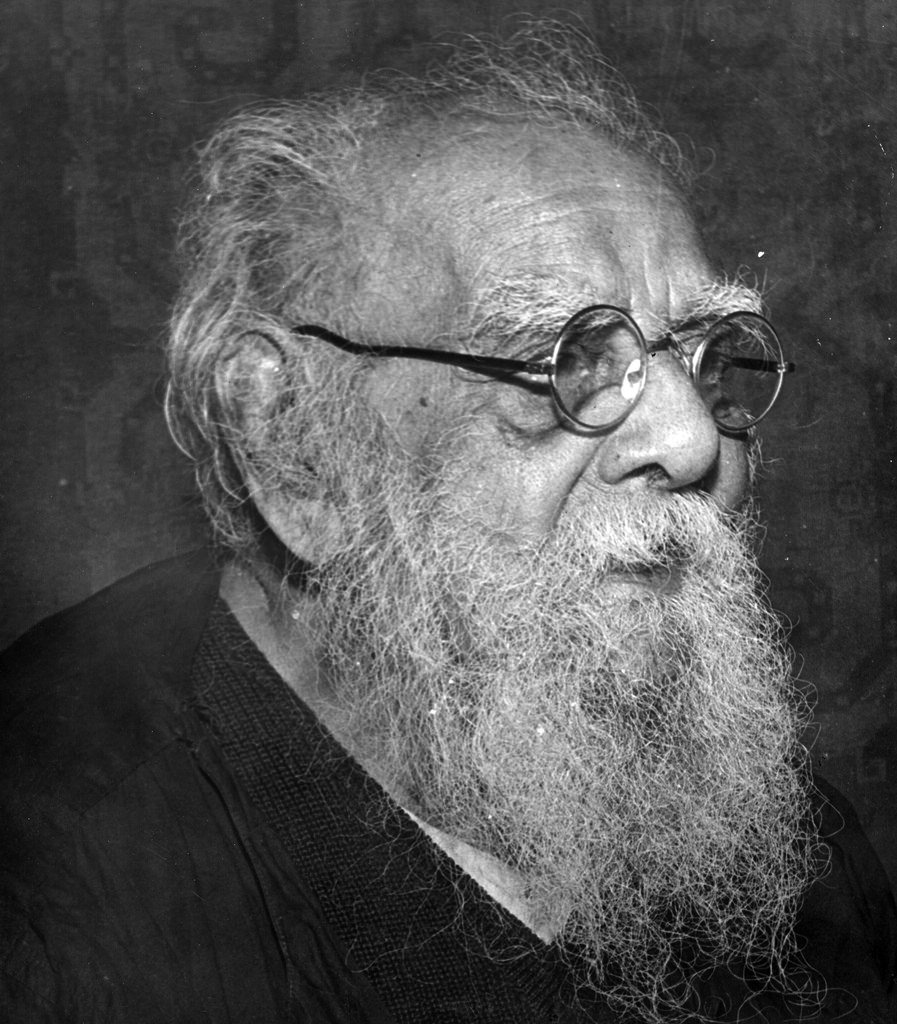
Periyar
One should observe the the context: Karnataka has rejected BJP and RSS, who have been working overtime to use the Mutths and temples for their Hindutva project. Tamil Nadu, despite Periyar's movement, has still the largest number of temples as well as caste violence against Dalits, yet the Sangh Parivar has no place in the State. Kerala, thanks to various communist and secular governments, is still a highly religious society. Hence, BJPs' target right now is South India.
The reason is simple. Its political success has reached at a saturation point in North India, where already there are contours of resurgence of Mandal forces. South has remained out of bounds for BJP. However, the party bosses think they have not lost everything. It is banking on the savarna hegemony, visible in all walks of life.
In the post-Mandal era, already, Dalits and OBCs have developed an all-India agenda. BJP, on the other hand, believes, today, savarnas, especially Brahmins, have got an all India liking for the party, known for being an expert in exploiting the insecurities of the upper castes. The whole Sengol thing is not merely meant for the new Parliament. BJP will forget it after it is used during the 2024 polls in order to blame Nehru for everything. DMK should remember: BJP will take up the challenge in Tamil Nadu and use it to denigrate the Dravidian movement.
Already, seers from Tamil Nadu, Kerala, Karnataka etc. are being used to propagate the Hindutva ideology. It is time for political parties to be careful and reach out to the people. They shouldn't allow themselves to be trapped in the Sangh Parivar propaganda to polarise people. Periyar's agenda is powerful enough. However, the Dravidian parties and those associate with it support caste violence and don't allow Dalits to live their life with dignity and self respect. They are falling in the BJP trap.
The whole drama is for the 2024 Lok Sabha polls. Opposition parts should fight the cause of India with inclusive politics. They must fight hatred and replace it with love and inclusive ideals. They must fight for the idea of India as espoused by our constitutional forefathers. They must let the secular socialist democratic republic of India live long and provide space and equal opportunities for all.
---
*Human rights defender

Comments

Shyam said…
Another brahmin hating journalist.Disgusting article!!!
Note: I hate Modi too.
Kiran said…
Adheenams sanyasis are non brahmins only,,
Anonymous said…
Here the word is Brahminacal, not Brahmin. The writer is criticising the Brahminical nature of the event -- an effort to appease the upper political caste in view of the ensuing polls, a requirement after Karnataka debacle

TRENDING

A comrade in culture and controversy: Yao Wenyuan’s revolutionary legacy

By Harsh Thakor*  This year marks two important anniversaries in Chinese revolutionary history—the 20th death anniversary of Yao Wenyuan, and the 50th anniversary of his seminal essay "On the Social Basis of the Lin Biao Anti-Party Clique". These milestones invite reflection on the man whose pen ignited the first sparks of the Great Proletarian Cultural Revolution and whose sharp ideological interventions left an indelible imprint on the political and cultural landscape of socialist China.

New RTI draft rules inspired by citizen-unfriendly, overtly bureaucratic approach

By Venkatesh Nayak* The Department of Personnel and Training , Government of India has invited comments on a new set of Draft Rules (available in English only) to implement The Right to Information Act, 2005 . The RTI Rules were last amended in 2012 after a long period of consultation with various stakeholders. The Government’s move to put the draft RTI Rules out for people’s comments and suggestions for change is a welcome continuation of the tradition of public consultation. Positive aspects of the Draft RTI Rules While 60-65% of the Draft RTI Rules repeat the content of the 2012 RTI Rules, some new aspects deserve appreciation as they clarify the manner of implementation of key provisions of the RTI Act. These are: Provisions for dealing with non-compliance of the orders and directives of the Central Information Commission (CIC) by public authorities- this was missing in the 2012 RTI Rules. Non-compliance is increasingly becoming a major problem- two of my non-compliance cases are...

History, culture and literature of Fatehpur, UP, from where Maulana Hasrat Mohani hailed

By Vidya Bhushan Rawat*  Maulana Hasrat Mohani was a member of the Constituent Assembly and an extremely important leader of our freedom movement. Born in Unnao district of Uttar Pradesh, Hasrat Mohani's relationship with nearby district of Fatehpur is interesting and not explored much by biographers and historians. Dr Mohammad Ismail Azad Fatehpuri has written a book on Maulana Hasrat Mohani and Fatehpur. The book is in Urdu.  He has just come out with another important book, 'Hindi kee Pratham Rachna: Chandayan' authored by Mulla Daud Dalmai.' During my recent visit to Fatehpur town, I had an opportunity to meet Dr Mohammad Ismail Azad Fatehpuri and recorded a conversation with him on issues of history, culture and literature of Fatehpur. Sharing this conversation here with you. Kindly click this link. --- *Human rights defender. Facebook https://www.facebook.com/vbrawat , X @freetohumanity, Skype @vbrawat

Celebrating 125 yr old legacy of healthcare work of missionaries

Vilas Shende, director, Mure Memorial Hospital By Moin Qazi* Central India has been one of the most fertile belts for several unique experiments undertaken by missionaries in the field of education and healthcare. The result is a network of several well-known schools, colleges and hospitals that have woven themselves into the social landscape of the region. They have also become a byword for quality and affordable services delivered to all sections of the society. These institutions are characterised by committed and compassionate staff driven by the selfless pursuit of improving the well-being of society. This is the reason why the region has nursed and nurtured so many eminent people who occupy high positions in varied fields across the country as well as beyond. One of the fruits of this legacy is a more than century old iconic hospital that nestles in the heart of Nagpur city. Named as Mure Memorial Hospital after a British warrior who lost his life in a war while defending his cou...

N-power plant at Mithi Virdi: CRZ nod is arbitrary, without jurisdiction

By Krishnakant* A case-appeal has been filed against the order of the Ministry of Environment, Forest and Climate Change (MoEF&CC) and others granting CRZ clearance for establishment of intake and outfall facility for proposed 6000 MWe Nuclear Power Plant at Mithi Virdi, District Bhavnagar, Gujarat by Nuclear Power Corporation of India Limited (NPCIL) vide order in F 11-23 /2014-IA- III dated March 3, 2015. The case-appeal in the National Green Tribunal at Western Bench at Pune is filed by Shaktisinh Gohil, Sarpanch of Jasapara; Hajabhai Dihora of Mithi Virdi; Jagrutiben Gohil of Jasapara; Krishnakant and Rohit Prajapati activist of the Paryavaran Suraksha Samiti. The National Green Tribunal (NGT) has issued a notice to the MoEF&CC, Gujarat Pollution Control Board, Gujarat Coastal Zone Management Authority, Atomic Energy Regulatory Board and Nuclear Power Corporation of India Limited (NPCIL) and case is kept for hearing on August 20, 2015. Appeal No. 23 of 2015 (WZ) is filed, a...

Epic war against caste system is constitutional responsibility of elected government

Edited by well-known Gujarat Dalit rights leader Martin Macwan, the book, “Bhed-Bharat: An Account of Injustice and Atrocities on Dalits and Adivasis (2014-18)” (available in English and Gujarati*) is a selection of news articles on Dalits and Adivasis (2014-2018) published by Dalit Shakti Prakashan, Ahmedabad. Preface to the book, in which Macwan seeks to answer key questions on why the book is needed today: *** The thought of compiling a book on atrocities on Dalits and thus present an overall Indian picture had occurred to me a long time ago. Absence of such a comprehensive picture is a major reason for a weak social and political consciousness among Dalits as well as non-Dalits. But gradually the idea took a different form. I found that lay readers don’t understand numbers and don’t like to read well-researched articles. The best way to reach out to them was storytelling. As I started writing in Gujarati and sharing the idea of the book with my friends, it occurred to me that while...

Beyond the rhetoric: Gujarat’s 2047 promise and its hidden faultlines

By Rajiv Shah    A few days ago, I met a veteran Gujarat-based economist, the author of several books offering a critical evaluation of the state’s economy, poverty, and gender discrimination . Also present was a retired Gujarat-cadre bureaucrat with an economics background, known for his popularity in the cities and districts where he served during his heyday.

Is India emulating west, 'using' anti-terror plank to justify state-supported violence?

Fahad Ahmad, Baljit Nagra*  Prime Minister Justin Trudeau has accused India of being involved in the assassination of Hardeep Singh Nijjar, a Canadian Sikh leader, on Canadian soil. Narendra Modi’s right-wing Hindu nationalist Indian government is defiant and denies involvement. Indian officials have instead admonished Canada for being a “ safe haven ” for Sikh “terrorism,” a pejorative for Sikh self-determination .

NHRC seeks action report on contaminated water outbreak in Ahmedabad

By A Representative   The National Human Rights Commission (NHRC) in New Delhi has issued notices to the Secretary of the Water Supply Department in Gandhinagar , the Ahmedabad District Collector and the Municipal Commissioner of Ahmedabad, seeking an action-taken report within four weeks on allegations of human rights violations arising from a major outbreak of waterborne diseases in Behrampura , Danilimda ward of Ahmedabad city.