By Moin Qazi*
Bribery and corruption continue to pose a significant challenge in India. India’s ranking in the annual corruption index, released by Berlin-based non-government organisation Transparency International (TI), slid to 81 among a group of 180 countries In 2016 India was 79th among 176 countries. The index uses a scale of 0 to 100, where 0 is highly corrupt and 100 is very clean. India’s score in the latest ranking, however, remained unchanged at 40. In 2015, the score was 38. The Corruption Perception Index also singled out India as one of the “worst offenders” in the Asia-Pacific region.
Corruption is harmful in different ways. It is anti-national. It is anti-poor since the resources meant for poverty alleviation schemes get syphoned off by corrupt politicians and bureaucrats. It is amongst the most debilitating economic illnesses that afflict large parts of the world. It erodes the quality of life for ordinary citizens, devastates the moral fabric of society, and impedes growth. India is now caught in a situation where many sectors are steeped in endemic corruption, including those charged with controlling the corruption itself, from the politicians who write the laws to the police charged with enforcing it.
In the last four decades, despite several government programmes for the welfare of the rural poor, poverty remains endemic. Either the nets were not cast wide or there were too many holes blown in them. The cruel reality is that money is irrelevant. Even the government feels that 85 percent of the spending does not reach the poor. It is either sponged by the ‘delivery mechanism’ — the consultants, advisers, their equipment and studies — or it gets pocketed.
This has become a touchstone for all government programmes and is now parroted in all Indian development literature. Much of the Western world aid is running down bureaucratic ratholes. Corruption is a huge, insidious problem in India that has eaten into every aspect of life. It can lead to pervasive distrust in the government, generating civil strife, violence, and conflict. The results, moreover, are disastrous for people.
No political or administrative theoretician has come up with methods “to flush out the cholesterol of partisan politics” especially in the field of maintenance of law and order. Disruptive political practices and partisan enforcement of laws abetted by “committed bureaucracy” with the active connivance of the intellectuals trading in law have been responsible for the people losing faith in the system and becoming gradually nonchalant towards good governance. The people learn by the example of their leaders—not by the precepts they hypocritically profess and proclaim.
The police system at the village level is too ineffective to provide security. Many would tend to agree with the often made comment of villagers about police: “these tormentors whether living or dying, it makes no difference to them. When alive, they suck our blood and when dead, they bake their bread on our funeral pyres.” The arcane laws and the brute power that police enjoys, make it very difficult for people on the ground to work with total freedom.
This is where the local politician fits in. While the poor do not have the money to purchase services that are their right or to bribe the public servant, they have a vote that the politician wants. The politician does a little bit to make life a little more tolerable for his poor constituents– a seat in a good school for the lucky few, a government job for the even luckier, on occasion the unexpected munificence of a loan waiver, or more commonly, a phone call that helps them get a police case registered. For all this, the politician gets the gratitude of his voters. However, he then also has little reason to improve their lot more broadly by reforming the system—for that would do him out of his current job. No wonder so few politicians express enthusiasm about reforms..
Moreover, the poor understand that the politicians need money to offer them these services. So they are willing to look the other way if he extorts bribes from corporations or the wealthy, or if he is a criminal. Moreover, the system is self-sustaining. Every village official must be paid not just to expedite the application-form for development schemes but specifically not obstruct it. A middle-class idealist can stand for office promising reforms, but the poor voters know there is little one person can do. Moreover, who will provide the patronage while the incorruptible, but consequently poor, the idealist is fighting the system? Why not stay with the devil you know.
There is no easy solution to the problem. The corrupt police officials have a rollicking time at the expense of helpless citizens. In fact, there is no link between corruption and poverty. It is easier to convert a corrupt constable rather than a rank officer into an honest person. Rank officers get so carried away by the glamour of and competition evident among their peers, and the aspirations of their family and wives, that corruption and bribes become a part of their lives. Surely education is a failure here.
The police system at the village-level is too ineffective to provide security. Many would tend to agree with the often-made comment of villagers about police, “these tormentors whether living or dying, it makes no difference to them. When alive, they suck our blood and when dead, they bake their bread on our funeral pyres.” The arcane laws and the brute power that the police enjoys, make it very difficult for people on the ground to work with total freedom. Indian voters favour a familiar family pedigree, partly because of a cultural reverence for the family and because of habits in some regions that trace back centuries.
These are more important in politics than individual qualities or merits in India and they strike at the very core of democracy. Grassroots activists and student leaders with no patronage matter little, and given the huge money and muscle power involved in elections, non-family upstarts can only dream of power from the sidelines. In fact, its impact goes beyond politics, with the reign of dynasties extending to most businesses.
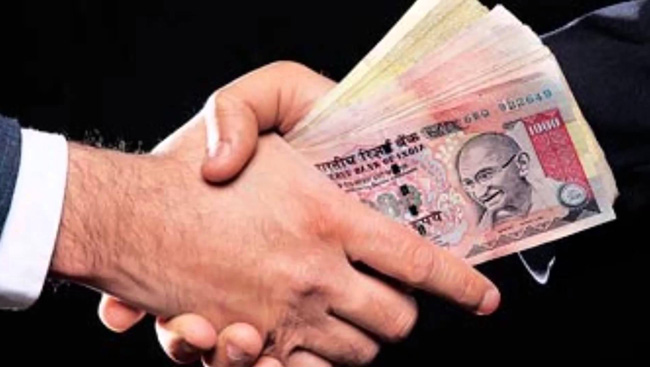
Like the mythological hydra, corruption is a many-headed foe that insinuates itself into every part of the social fabric—weakening the body politic and jeopardising prospects for economic growth. It can wither only after the heads are lopped off. Petty corruption includes slipping banknotes to the police and to officials to get paperwork done. Businessmen have to offer “seed money” to avoid red tape.
Corruption has been a long-standing problem in India that successive regimes and governments have battled and mostly failed. In his magnum opus, Arthashastra, written nearly three centuries before the Christian era, Kautilya, the classical master of statecraft observed: “Just as it is impossible to know when a fish moving in water is drinking it, so it is impossible to find out when government servants in charge of undertakings misappropriate money.”
The phrase, ‘probity in public life’ has become an oxymoron. Although national anti-corruption agencies can be crucial in preventing corruption before it becomes rampant, not only are they difficult to set up but they often fail to achieve their goals once they have been established. They may be so beholden to the political masters that they dare not investigate even the most corrupt government officials; they may lack the power to prosecute or they may be poorly staffed.
The time to start popping the corks would be when corrupt officials are actually convicted and penalised. Unfortunately, India’s criminal justice system has a truly pathetic record on this front. As long as that remains true, much-publicised arrests serve little or no purpose. They certainly do not act as effective deterrents to potential bribe-takers or bribe-givers. Corruption is too often seen as merely a moral issue. Not enough people realise just how crippling an economic factor it can be. The cost of the bribes clearly must be factored into the business model and hence into the costs.
The government must realise increasing corruption can act as a speed-breaker in the Indian growth story. There is a need for a strong political will to disrupt the grim calculus. Without a strong civil society or an independent judiciary to check government power, the political class can become complacent. It may be true that every journey begins with a single step. However, we have a long distance to cover to rid the society of the termites of corruption and it may require longer sprints as time is running out.
—
*Development expert
Comments