RTI activist’s murder: M’shtra govt must make public, publicise info sought by Junawane


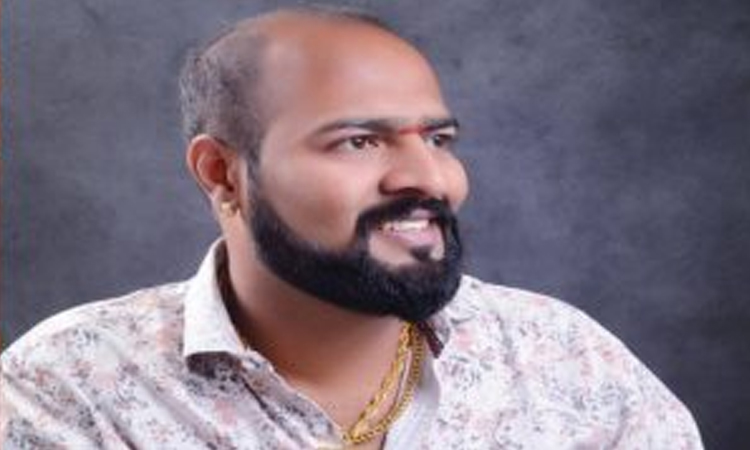
On November 1, 2018, yet another RTI user was killed in Maharashtra for seeking information to expose corruption and wrongdoing. According to media reports, Rohit Ashok Junawane was brutally attacked by nine armed assailants near his residence in Aundh, Pune and died of the injuries.
The National Campaign for Peoples’ Right to Information (NCPRI) has written to the Chief Minister of Maharashtra, demanding immediate action in the matter. The letter calls upon the government to ensure that all the information sought by Junawane is put in the public domain and widely publicized, which would act as a deterrent against such attacks in the future. The letter is also copied to the State Chief Information Commissioner of Maharashtra for necessary action.
Junawane’s killing marks the 78th murder of an RTI user who has been silenced for seeking to show truth to power. The government has failed to implement the Whistle Blowers Protection Act passed by Parliament in 2014 despite the increasing number of attacks and murders of RTI users. Maharashtra has seen the highest number of murders of RTI users.
Text of the letter signed by Anjali Bhardwaj, Nikhil Dey, Pankti Jog, Pradip Pradhan, Rakesh Dubbudu, Shaikh Ghulam Rasool and Venkatesh Nayak:
***
The National Campaign for Peoples’ Right to Information (NCPRI) is gravely concerned about the murder of RTI user, Rohit Ashok Junawane. According to media reports, he was brutally attacked by nine armed assailants near his residence in Aundh, Pune and died of the injuries sustained while undergoing treatment on November 1, 2018.
As per media reports, Rohit Ashok Junawane had filed an RTI application at the Pune Municipal Corporation’s Aundh ward seeking information regarding the illegal construction of the house of the main accused in the murder case and his involvement with the Mathadi Labourer’s Union, five days prior to his murder.
Media reports further stated that Mr. Junawane had also been intimated and threatened at the time of filing the RTI application. (“Milk Supplier hacked to death in Aundh by gang of nine men”, November 2nd 2018, Times of India, “Pune man sickled to death by 9 for seeking details of a construction project under RTI”, November 3rd 2018, Times Now, “Milkman killed in Pune for seeking information under RTI”, November 2nd, 2018).
The NCPRI strongly condemns the murder of Mr. Junawane. We urge the Maharashtra government to ensure a thorough investigation into the murder. The state government must ensure that all the information sought by Mr. Junawane is put in the public domain and widely publicized, which would act as a deterrent against such attacks in the future.
Considering the alarming increase in the number of attacks on RTI users in the country, it is imperative that the Whistleblowers’ Protection Act, 2011 (No. 17 of 2014), which is critical to protect people who expose corruption and wrongdoing, be effectively implemented. We hope your government will take steps to urge the central government to implement the law, and in the meantime set up necessary mechanisms to protect whistleblowers.

Comments

TRENDING

From plagiarism to proxy exams: Galgotias and systemic failure in education

By Sandeep Pandey*   Shock is being expressed at Galgotias University being found presenting a Chinese-made robotic dog and a South Korean-made soccer-playing drone as its own creations at the recently held India AI Impact Summit 2026, a global event in New Delhi. Earlier, a UGC-listed journal had published a paper from the university titled “Corona Virus Killed by Sound Vibrations Produced by Thali or Ghanti: A Potential Hypothesis,” which became the subject of widespread ridicule. Following the robotic dog controversy coming to light, the university has withdrawn the paper. These incidents are symptoms of deeper problems afflicting the Indian education system in general. Galgotias merely bit off more than it could chew.

Covishield controversy: How India ignored a warning voice during the pandemic

Dr Amitav Banerjee, MD *  It is a matter of pride for us that a person of Indian origin, presently Director of National Institute of Health, USA, is poised to take over one of the most powerful roles in public health. Professor Jay Bhattacharya, an Indian origin physician and a health economist, from Stanford University, USA, will be assuming the appointment of acting head of the Centre for Disease Control and Prevention (CDC), USA. Bhattacharya would be leading two apex institutions in the field of public health which not only shape American health policies but act as bellwether globally.

The 'glass cliff' at Galgotias: How a university’s AI crisis became a gendered blame game

By Mohd. Ziyaullah Khan*  “She was not aware of the technical origins of the product and in her enthusiasm of being on camera, gave factually incorrect information.” These were the words used in the official press release by Galgotias University following the controversy at the AI Impact Summit in Delhi. The statement came across as defensive, petty, and deeply insensitive.

Farewell to Saleem Samad: A life devoted to fearless journalism

By Nava Thakuria*  Heartbreaking news arrived from Dhaka as the vibrant city lost one of its most active and committed citizens with the passing of journalist, author and progressive Bangladeshi national Saleem Samad. A gentleman who always had issues to discuss with anyone, anywhere and at any time, he passed away on 22 February 2026 while undergoing cancer treatment at Dhaka Medical College Hospital. He was 74. 

Growth without justice: The politics of wealth and the economics of hunger

By Vikas Meshram*  In modern history, few periods have displayed such a grotesque and contradictory picture of wealth as the present. On one side, a handful of individuals accumulate in a single year more wealth than the annual income of entire nations. On the other, nearly every fourth person in the world goes to bed hungry or half-fed.

From ancient wisdom to modern nationhood: The Indian story

By Syed Osman Sher  South of the Himalayas lies a triangular stretch of land, spreading about 2,000 miles in each direction—a world of rare magic. It has fired the imagination of wanderers, settlers, raiders, traders, conquerors, and colonizers. They entered this country bringing with them new ethnicities, cultures, customs, religions, and languages.

Thali, COVID and academic credibility: All about the 2020 'pseudoscientific' Galgotias paper

By Jag Jivan*    The first page image of the paper "Corona Virus Killed by Sound Vibrations Produced by Thali or Ghanti: A Potential Hypothesis" published in the Journal of Molecular Pharmaceuticals and Regulatory Affairs , Vol. 2, Issue 2 (2020), has gone viral on social media in the wake of the controversy surrounding a Chinese robot presented by the Galgotias University as its original product at the just-concluded AI summit in Delhi . The resurfacing of the 2020 publication, authored by  Dharmendra Kumar , Galgotias University, has reignited debate over academic standards and scientific credibility.

Conversion laws and national identity: A Jesuit response response to the Hindutva narrative

By Rajiv Shah  A recent book, " Luminous Footprints: The Christian Impact on India ", authored by two Jesuit scholars, Dr. Lancy Lobo and Dr. Denzil Fernandes , seeks to counter the current dominant narrative on Indian Christians , which equates evangelisation with conversion, and education, health and the social services provided by Christians as meant to lure -- even force -- vulnerable sections into Christianity.

Unpaid overtime, broken promises: Indian Oil workers strike in Panipat

By Rosamma Thomas  Thousands of workers at the Indian Oil Corporation refinery in Panipat, Haryana, went on strike beginning February 23, 2026. They faced a police lathi charge, and the Central Industrial Security Force fired into the air to control the crowd.