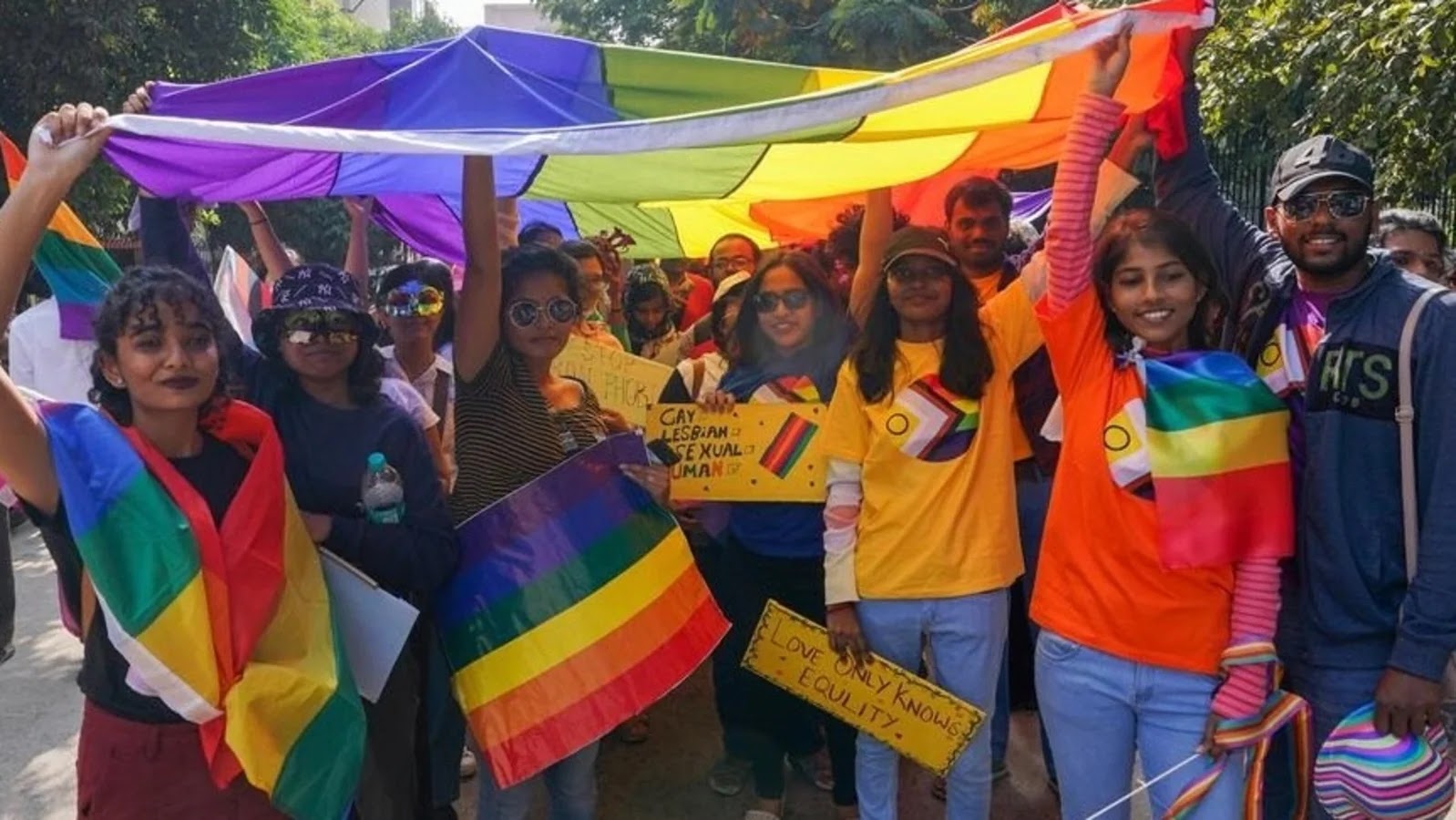
Thousands of cases pending in Indian courts, why waste time on same sex marriage?

By NS Venkataraman* 

Thousands of litigations and cases are pending in lower, middle and apex courts in India for several years. Some of the cases have been pending for over ten years without judgement being delivered. The ground reality is that after completion of hearing , judges take long time to deliver the judgement. Apart from this, stay orders are frequently given by the higher court over the judgement delivered by the lower courts. Further, several hearings are delayed due to adjournment, etc.
Apart from such issues , one frequently heard complaint is that the cases are entertained by the courts with regard to issues , which normally should be handled and disposed off by government. It is often said that the judges over reach themselves in the choice of cases to be admitted for hearing. As a result, the work load of the courts have heavily increased causing more delays.
Litigants rush to the court seeking judgements on really social issues which have no legal implications or involve interpretation of the provisions in the constitution. For example, a case has been filed in the Supreme Court claiming that more married men commit suicide than the married women and therefore , a National Commission for Men should be set up immediately. It is not yet known whether Supreme Court would admit this case also for hearing.
Recently, Supreme court has thought it fit to hear case relating to same sex marriage.
Most people in India consider the concept of so called same sex marriage as nauseating, un Indian and is in violation of the traditional concepts of man woman relationship based on which Indian ethos are founded. There is huge concern amongst cross section of discerning Indians that this concept of same sex marriage is obnoxious, counter productive and unnatural and would destroy the sanctity of marriage, upset the family relationships and cause social tensions and upheaval.
It is good that Government of India has submitted a strong note to Supreme Court objecting to the idea with valid arguments. Instead of accepting the Government of India’s views and considering it’s merits , Supreme Court appears to have rejected the views of the government and has now referred this to a five judges panel.
In such circumstances, this subject is going to be in public domain in India for discussions and debate in the coming months. This is a scenario which India can do without.
Obviously, this concept of same sex marriage have been developed in some European countries and has already caused considerable family disruptions in the region. In countries like Norway, the concept of single mother and multiple partners for women even without marriage wedlock and same sex marriage have been legalized. This scenario obviously indicates that the quality and life style of people in those countries and thought process of those ruling the countries are really deteriorating and not advancing.
India has traditionally laid stress on strong family bonds and faithful and smooth family relationships, which is based on the concept of marriage with one man and one woman. This concept has certainly strengthened the social base and quality of life and family harmony in India and has stood the test of time It can be said that Indian traditional thoughts and practices with regard to marriage can well become the benchmark for the world civilization.
European countries which have thoughtlessly entertained the idea of same sex marriage should learn from India , instead of India emulating such obnoxious practice from European countries.
It is particularly sad that courts in India are reopening or recreating new issues with regard to social and personal life style of people and in the process ,paving the way for confusion and social tension and anarchy.
The common man thinks that judges should be eminent people with balanced views and creative mindset and should be clearly aware that their judgements should solve problems and not create problems.
With the judges giving a lead, the print, visual and social media are discussing this subject with huge focus, giving space for the sick minded individuals who think that the same sex marriage is a sign of freedom for individuals to live in the way they want. Such campaigners do not seem to have the wisdom to realise that same sex marriage means a degradation of human value system and uncontrolled mental make up.
Finally, one question to the apex court. In case, some sick minded people approach the court pleading for human animal marriage , will the court entertain? This question arises, since same sex marriage is no difference in concept with the concept of human animal marriage.
---
*Nandini Voice For The Deprived, Chennai

Comments

TRENDING

Plastic burning in homes threatens food, water and air across Global South: Study

By Jag Jivan  In a groundbreaking  study  spanning 26 countries across the Global South , researchers have uncovered the widespread and concerning practice of households burning plastic waste as a fuel for cooking, heating, and other domestic needs. The research, published in Nature Communications , reveals that this hazardous method of managing both waste and energy poverty is driven by systemic failures in municipal services and the unaffordability of clean alternatives, posing severe risks to human health and the environment.

From protest to proof: Why civil society must rethink environmental resistance

By Shankar Sharma*  As concerned environmentalists and informed citizens, many of us share deep unease about the way environmental governance in our country is being managed—or mismanaged. Our complaints range across sectors and regions, and most of them are legitimate. Yet a hard question confronts us: are complaints, by themselves, effective? Experience suggests they are not.

From colonial mercantilism to Hindutva: New book on the making of power in Gujarat

By Rajiv Shah  Professor Ghanshyam Shah ’s latest book, “ Caste-Class Hegemony and State Power: A Study of Gujarat Politics ”, published by Routledge , is penned by one of Gujarat ’s most respected chroniclers, drawing on decades of fieldwork in the state. It seeks to dissect how caste and class factors overlap to perpetuate the hegemony of upper strata in an ostensibly democratic polity. The book probes the dominance of two main political parties in Gujarat—the Indian National Congress and the BJP—arguing that both have sustained capitalist growth while reinforcing Brahmanic hierarchies.

Kolkata event marks 100 years since first Communist conference in India

By Harsh Thakor*   A public assembly was held in Kolkata on December 24, 2025, to mark the centenary of the First Communist Conference in India , originally convened in Kanpur from December 26 to 28, 1925. The programme was organised by CPI (ML) New Democracy at Subodh Mallik Square on Lenin Sarani. According to the organisers, around 2,000 people attended the assembly.

Economic superpower’s social failure? Inequality, malnutrition and crisis of India's democracy

By Vikas Meshram  India may be celebrated as one of the world’s fastest-growing economies, but a closer look at who benefits from that growth tells a starkly different story. The recently released World Inequality Report 2026 lays bare a country sharply divided by wealth, privilege and power. According to the report, nearly 65 percent of India’s total wealth is owned by the richest 10 percent of its population, while the bottom half of the country controls barely 6.4 percent. The top one percent—around 14 million people—holds more than 40 percent, the highest concentration since 1961. Meanwhile, the female labour force participation rate is a dismal 15.7 percent.

Urgent need to study cause of large number of natural deaths in Gulf countries

By Venkatesh Nayak* According to data tabled in Parliament in April 2018, there are 87.76 lakh (8.77 million) Indians in six Gulf countries, namely Bahrain, Kuwait, Oman, Qatar, Saudi Arabia and the United Arab Emirates (UAE). While replying to an Unstarred Question (#6091) raised in the Lok Sabha, the Union Minister of State for External Affairs said, during the first half of this financial year alone (between April-September 2018), blue-collared Indian workers in these countries had remitted USD 33.47 Billion back home. Not much is known about the human cost of such earnings which swell up the country’s forex reserves quietly. My recent RTI intervention and research of proceedings in Parliament has revealed that between 2012 and mid-2018 more than 24,570 Indian Workers died in these Gulf countries. This works out to an average of more than 10 deaths per day. For every US$ 1 Billion they remitted to India during the same period there were at least 117 deaths of Indian Workers in Gulf ...

The architect of Congolese liberation: The life and legacy of Patrice Lumumba

By Harsh Thakor*  Patrice Émery Lumumba remains a central figure in the history of African decolonization, serving as the first Prime Minister of the independent Republic of the Congo. Born on July 2, 1925, Lumumba emerged as a radical anti-colonial leader who sought to unify a nation fractured by decades of Belgian rule. His tenure, however, lasted less than seven months before his dismissal and subsequent assassination on January 17, 1961.

Celebrating 125 yr old legacy of healthcare work of missionaries

Vilas Shende, director, Mure Memorial Hospital By Moin Qazi* Central India has been one of the most fertile belts for several unique experiments undertaken by missionaries in the field of education and healthcare. The result is a network of several well-known schools, colleges and hospitals that have woven themselves into the social landscape of the region. They have also become a byword for quality and affordable services delivered to all sections of the society. These institutions are characterised by committed and compassionate staff driven by the selfless pursuit of improving the well-being of society. This is the reason why the region has nursed and nurtured so many eminent people who occupy high positions in varied fields across the country as well as beyond. One of the fruits of this legacy is a more than century old iconic hospital that nestles in the heart of Nagpur city. Named as Mure Memorial Hospital after a British warrior who lost his life in a war while defending his cou...

Epic war against caste system is constitutional responsibility of elected government

Edited by well-known Gujarat Dalit rights leader Martin Macwan, the book, “Bhed-Bharat: An Account of Injustice and Atrocities on Dalits and Adivasis (2014-18)” (available in English and Gujarati*) is a selection of news articles on Dalits and Adivasis (2014-2018) published by Dalit Shakti Prakashan, Ahmedabad. Preface to the book, in which Macwan seeks to answer key questions on why the book is needed today: *** The thought of compiling a book on atrocities on Dalits and thus present an overall Indian picture had occurred to me a long time ago. Absence of such a comprehensive picture is a major reason for a weak social and political consciousness among Dalits as well as non-Dalits. But gradually the idea took a different form. I found that lay readers don’t understand numbers and don’t like to read well-researched articles. The best way to reach out to them was storytelling. As I started writing in Gujarati and sharing the idea of the book with my friends, it occurred to me that while...