
Prosecute BSF personnel for torturing woman near West Bengal border fence

Kirity Roy, Secretary, Banglar Manabadhikar Suraksha Mancha (MASUM), writes to the Chairman, National Human Rights Commission, on a woman physically assaulted by BSF in routine manner in public place and falsely implicated:

***
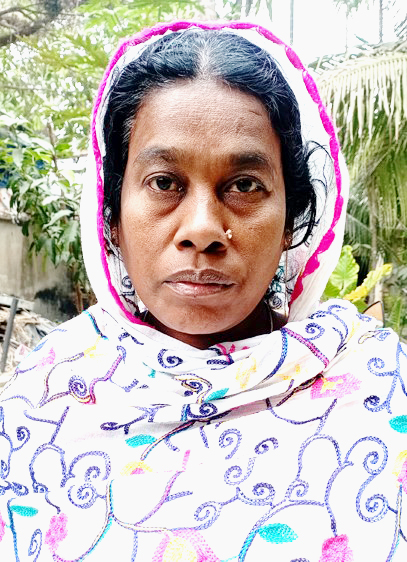
I would like to draw your immediate attention to the incident of Mrs. Sahida Bibi, 42 years of age, resides at village Gobra (Brahmonpara) under Block & Police Station Swarupnagar at North 24 Parganas in West Bengal, who suffered torture by a BSF person from D Company, 112 Battalion of BOP Mihir (Gobindapur).
Around 9 am on 27th December 2022, Sahida Bibi was on the way to her field. At Gate No 18 of the border fences, Avijit Sil, a BSF man questioned about the lunch box she was carrying and found beef meat. He suddenly kicked the lunch box, the food littered on the ground and severely beat her while the victim lady fell on the ground.
The incident entails an apparent violation of Article 21 of the Constitution of India, the Universal Declaration of Human Rights, and Article 7 of the International Covenant on Civil and Political Rights (ICCPR) of which India is a party. The incident and subsequent impunity legitimize our long-standing demand for immediate ratification of the United Nations Convention against Torture and Other Cruel, Inhuman or Degrading Treatment and Punishment.
Hence, I seek your intervention in the aforementioned incident with the following demands to get justice:
1. Under the particular law, should prosecute the perpetrator BSF personnel under appropriate penal provisions in an open court of law based on the complaint by the victim to the Officer in Charge of Swarupnagar Police Station, North 24 Parganas.
2. Recommend the authorities take all necessary measures to guarantee the physical and psychological security and integrity of the victim.
3. BSF authority should compensate her for all the medical expenses the victim incurred.
4. BSF of Mihir (Gobindapur) BOP should immediately withdraw the false FIR against Sahida Bibi.
5. Training needed for BSF persons that they should be devoid of communal identity while dealing with people who reside at the border area.

Fact-finding Report

Around 9 am on 19th December 2022, Sahida Bibi was on her way to work, accompanied by her son Omar Osman Khan, who is a fifth-grade student. On the CPWD road at the Gate No 18 at the border fence, where she met BSF Constable Avijit Seal, who enquired about the tiffin box she was carrying. The box had her lunch – rice and a few pieces of beef meat. About to show him of the content in the box, the constable was furious knowing the beef items he immediately kicked for which all the eatable items littered on the ground. The lady protested and questioned his behavior, while the constable used filthy languages. Suddenly the constable started beating her with a stick, pushed her on the ground but the thrashing continued. And in the course of action, the constable tore her saree and blouse. In the meantime, Post Commander of BOP Gobra, arrived on the spot and repeatedly ordered the constable To stop doing the nuisance and let him leave the lady. But the Avijit Seal ignored the order and continued thrashing. Later the lady complained of the incident to the Company Commander of BOP Mihir (Gobindapur) but no action was taken by him against the offender. Later in the day, the lady sensing a medical urgency visited the emergency department at Sarapul Rural Hospital at Swarupnagar Block. Sahida Bibi lodged a complaint to the local police station and based on that complaint Swarupnagar P.S. (Case No.1195/2022 dated 27th December 2022) was registered against the perpetrator BSF Avijit Seal, 112 Battalion. She narrated the whole incident to the Officer in Charge of Swarupnagar Police Station, a copy of FIR was attached along with this mail. I have attached the scan copies of her medical reports and FIR, along with this complaint. Zakir Hossain Fakir, a farmer, was the sole witness to the incident with Sahida Bibi. Based on her complaint on the night of 27th December 2022, the officers from Swarupnagar PS spoke to some of the witnesses of the incident and then they met the concerned person at the Gobra BOP. In retaliation, BSF too filed a complaint at Swarupnagar P.S. (Case No.1199/22 dated 27th December 2022 under section 188/506) against the victim Sahida Bibi. During the fact-finding MASUM noted that many people who were witness to the incident, due to the fear of BSF, had kept mum. In the meantime, the FIR by BSF against Sahida Bibi, the ACJM Basirhat had granted bail which she was falsely subjected to. On 22nd January 2023, two BSF men visited her house with a letter written in English, and asked her to sign on the paper. The lady is illiterate and does not understand what is written on the paper. Sensing some abnormality, on the advice of the panchayat Pradhan and other villagers she refused to sign the letter. Since the incident, BSF men are pressing her to withdraw the case against them by forcing her to sign on a written statement which is ineligible to her.
Comments

TRENDING

Plastic burning in homes threatens food, water and air across Global South: Study

By Jag Jivan  In a groundbreaking  study  spanning 26 countries across the Global South , researchers have uncovered the widespread and concerning practice of households burning plastic waste as a fuel for cooking, heating, and other domestic needs. The research, published in Nature Communications , reveals that this hazardous method of managing both waste and energy poverty is driven by systemic failures in municipal services and the unaffordability of clean alternatives, posing severe risks to human health and the environment.

Economic superpower’s social failure? Inequality, malnutrition and crisis of India's democracy

By Vikas Meshram  India may be celebrated as one of the world’s fastest-growing economies, but a closer look at who benefits from that growth tells a starkly different story. The recently released World Inequality Report 2026 lays bare a country sharply divided by wealth, privilege and power. According to the report, nearly 65 percent of India’s total wealth is owned by the richest 10 percent of its population, while the bottom half of the country controls barely 6.4 percent. The top one percent—around 14 million people—holds more than 40 percent, the highest concentration since 1961. Meanwhile, the female labour force participation rate is a dismal 15.7 percent.

Swami Vivekananda's views on caste and sexuality were 'painfully' regressive

By Bhaskar Sur* Swami Vivekananda now belongs more to the modern Hindu mythology than reality. It makes a daunting job to discover the real human being who knew unemployment, humiliation of losing a teaching job for 'incompetence', longed in vain for the bliss of a happy conjugal life only to suffer the consequent frustration.

From colonial mercantilism to Hindutva: New book on the making of power in Gujarat

By Rajiv Shah  Professor Ghanshyam Shah ’s latest book, “ Caste-Class Hegemony and State Power: A Study of Gujarat Politics ”, published by Routledge , is penned by one of Gujarat ’s most respected chroniclers, drawing on decades of fieldwork in the state. It seeks to dissect how caste and class factors overlap to perpetuate the hegemony of upper strata in an ostensibly democratic polity. The book probes the dominance of two main political parties in Gujarat—the Indian National Congress and the BJP—arguing that both have sustained capitalist growth while reinforcing Brahmanic hierarchies.

The greatest threat to our food system: The aggressive push for GM crops

By Bharat Dogra  Thanks to the courageous resistance of several leading scientists who continue to speak the truth despite increasing pressures from the powerful GM crop and GM food lobby , the many-sided and in some contexts irreversible environmental and health impacts of GM foods and crops, as well as the highly disruptive effects of this technology on farmers, are widely known today. 

History, culture and literature of Fatehpur, UP, from where Maulana Hasrat Mohani hailed

By Vidya Bhushan Rawat*  Maulana Hasrat Mohani was a member of the Constituent Assembly and an extremely important leader of our freedom movement. Born in Unnao district of Uttar Pradesh, Hasrat Mohani's relationship with nearby district of Fatehpur is interesting and not explored much by biographers and historians. Dr Mohammad Ismail Azad Fatehpuri has written a book on Maulana Hasrat Mohani and Fatehpur. The book is in Urdu.  He has just come out with another important book, 'Hindi kee Pratham Rachna: Chandayan' authored by Mulla Daud Dalmai.' During my recent visit to Fatehpur town, I had an opportunity to meet Dr Mohammad Ismail Azad Fatehpuri and recorded a conversation with him on issues of history, culture and literature of Fatehpur. Sharing this conversation here with you. Kindly click this link. --- *Human rights defender. Facebook https://www.facebook.com/vbrawat , X @freetohumanity, Skype @vbrawat

UP tribal woman human rights defender Sokalo released on bail

By  A  Representative After almost five months in jail, Adivasi human rights defender and forest worker Sokalo Gond has been finally released on bail.Despite being granted bail on October 4, technical and procedural issues kept Sokalo behind bars until November 1. The Citizens for Justice and Peace (CJP) and the All India Union of Forest Working People (AIUFWP), which are backing Sokalo, called it a "major victory." Sokalo's release follows the earlier releases of Kismatiya and Sukhdev Gond in September. "All three forest workers and human rights defenders were illegally incarcerated under false charges, in what is the State's way of punishing those who are active in their fight for the proper implementation of the Forest Rights Act (2006)", said a CJP statement.

Would breaking idols, burning books annihilate caste? Recalling a 1972 Dalit protest

By Rajiv Shah  A few days ago, I received an email alert from a veteran human rights leader who has fought many battles in Gujarat for the Dalit cause — both through ground-level campaigns and courtroom struggles. The alert, sent in Gujarati by Valjibhai Patel, who heads the Council for Social Justice, stated: “In 1935, Babasaheb Ambedkar burnt the Manusmriti . In 1972, we broke the idol of Krishna , whom we regarded as the creator of the varna (caste) system.”

May the Earth Be Auspicious: Vedic ecology and contemporary crisis in Ashok Vajpeyi’s poetry

By Ravi Ranjan*  Ashok Vajpeyi, born in 1941, occupies a singular position in contemporary Hindi poetry as a poet whose work quietly but decisively reorients modern literary consciousness toward ethical, ecological, and civilizational questions. Across more than six decades of writing, Vajpeyi has forged a poetic idiom marked by restraint, philosophical attentiveness, and moral seriousness, resisting both rhetorical excess and ideological simplification.