
Sengol drama 'upper caste' move with eye on 2024 polls. Target: South Indian states


By Vidya Bhushan Rawat*
The new parliament building opened on February 28. However, it looked as if it is not Parliament but part of Pratinidhisabhas started by erstwhile princely states in India. The BJP for long has been acting as if India is a kingdom and Narendra Modi the new king of India. Even at the coronations of kings, you find a large number of people and dignitaries, but look at the opening ceremony -- we had only one face as if he built everything.
Modi and BJP have always loved #dynasts provided they are Brahminical in nature. All the heroes of the Sangh Parivar and Hindutva are actually dynasts and not really those who emerged from democratic struggle. They hate Jawaharlal Nehru only because he converted India to a secular democracy where people alone matter. Nehru would have turned a dictator and anointed himself as the king of India, if he had desired, but he opted for political democracy.
Many blame Nehru for being arrogant and Brahminical in his views, but there is a huge difference between Nehru, his thoughts and actions, and those of the Sangh Parivar. Those who think that Nehru and RSS are the same are actually helping the cause of Hindutva in disguise. You cannot defend the indefensible. Nehru accepted Ashok Chakra as the symbol of our republic.
Indeed, if Nehru had agreed to all that is being termed about Sengol then people like Rajagopalachari would have been happier, but he never opted for the symbol of kingdom for our new republic. The real issue is, Modi and BJP don't have much respect for history of modern India, as their organisation and leaders were on the wrong side during the struggle for freedom. They cannot erase this fact.
Hence, they go about reinventing and redirecting historical facts. And for this, they go about highlighting how great was 'Hindu' -- actually Brahminical or upper caste -- kingdom. It is a fact that Sengol has nothing to do with Cholas and more with a Mutth in Tamil Nadu. Tody this Mutth is dominated by the powerful Vellalar community.
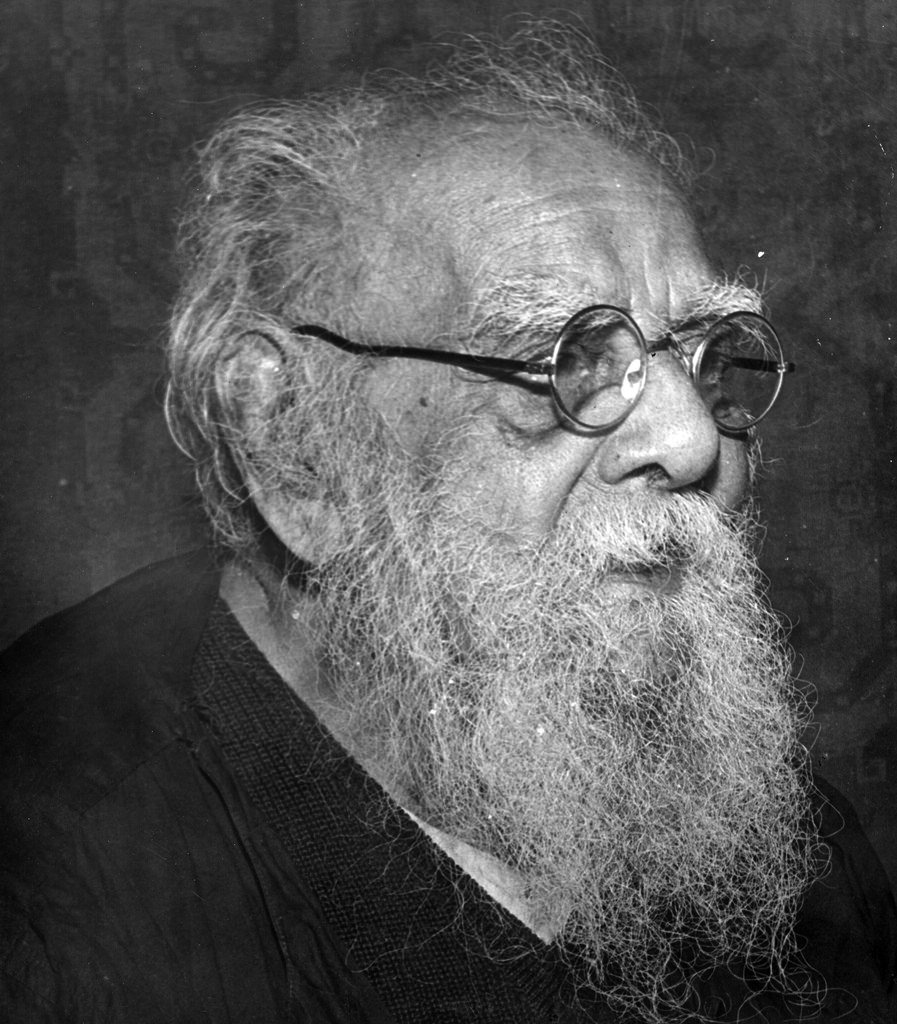
Periyar
One should observe the the context: Karnataka has rejected BJP and RSS, who have been working overtime to use the Mutths and temples for their Hindutva project. Tamil Nadu, despite Periyar's movement, has still the largest number of temples as well as caste violence against Dalits, yet the Sangh Parivar has no place in the State. Kerala, thanks to various communist and secular governments, is still a highly religious society. Hence, BJPs' target right now is South India.
The reason is simple. Its political success has reached at a saturation point in North India, where already there are contours of resurgence of Mandal forces. South has remained out of bounds for BJP. However, the party bosses think they have not lost everything. It is banking on the savarna hegemony, visible in all walks of life.
In the post-Mandal era, already, Dalits and OBCs have developed an all-India agenda. BJP, on the other hand, believes, today, savarnas, especially Brahmins, have got an all India liking for the party, known for being an expert in exploiting the insecurities of the upper castes. The whole Sengol thing is not merely meant for the new Parliament. BJP will forget it after it is used during the 2024 polls in order to blame Nehru for everything. DMK should remember: BJP will take up the challenge in Tamil Nadu and use it to denigrate the Dravidian movement.
Already, seers from Tamil Nadu, Kerala, Karnataka etc. are being used to propagate the Hindutva ideology. It is time for political parties to be careful and reach out to the people. They shouldn't allow themselves to be trapped in the Sangh Parivar propaganda to polarise people. Periyar's agenda is powerful enough. However, the Dravidian parties and those associate with it support caste violence and don't allow Dalits to live their life with dignity and self respect. They are falling in the BJP trap.
The whole drama is for the 2024 Lok Sabha polls. Opposition parts should fight the cause of India with inclusive politics. They must fight hatred and replace it with love and inclusive ideals. They must fight for the idea of India as espoused by our constitutional forefathers. They must let the secular socialist democratic republic of India live long and provide space and equal opportunities for all.
---
*Human rights defender

Comments

Shyam said…
Another brahmin hating journalist.Disgusting article!!!
Note: I hate Modi too.
Kiran said…
Adheenams sanyasis are non brahmins only,,
Anonymous said…
Here the word is Brahminacal, not Brahmin. The writer is criticising the Brahminical nature of the event -- an effort to appease the upper political caste in view of the ensuing polls, a requirement after Karnataka debacle

TRENDING

Plastic burning in homes threatens food, water and air across Global South: Study

By Jag Jivan  In a groundbreaking  study  spanning 26 countries across the Global South , researchers have uncovered the widespread and concerning practice of households burning plastic waste as a fuel for cooking, heating, and other domestic needs. The research, published in Nature Communications , reveals that this hazardous method of managing both waste and energy poverty is driven by systemic failures in municipal services and the unaffordability of clean alternatives, posing severe risks to human health and the environment.

Economic superpower’s social failure? Inequality, malnutrition and crisis of India's democracy

By Vikas Meshram  India may be celebrated as one of the world’s fastest-growing economies, but a closer look at who benefits from that growth tells a starkly different story. The recently released World Inequality Report 2026 lays bare a country sharply divided by wealth, privilege and power. According to the report, nearly 65 percent of India’s total wealth is owned by the richest 10 percent of its population, while the bottom half of the country controls barely 6.4 percent. The top one percent—around 14 million people—holds more than 40 percent, the highest concentration since 1961. Meanwhile, the female labour force participation rate is a dismal 15.7 percent.

Swami Vivekananda's views on caste and sexuality were 'painfully' regressive

By Bhaskar Sur* Swami Vivekananda now belongs more to the modern Hindu mythology than reality. It makes a daunting job to discover the real human being who knew unemployment, humiliation of losing a teaching job for 'incompetence', longed in vain for the bliss of a happy conjugal life only to suffer the consequent frustration.

The greatest threat to our food system: The aggressive push for GM crops

By Bharat Dogra  Thanks to the courageous resistance of several leading scientists who continue to speak the truth despite increasing pressures from the powerful GM crop and GM food lobby , the many-sided and in some contexts irreversible environmental and health impacts of GM foods and crops, as well as the highly disruptive effects of this technology on farmers, are widely known today. 

History, culture and literature of Fatehpur, UP, from where Maulana Hasrat Mohani hailed

By Vidya Bhushan Rawat*  Maulana Hasrat Mohani was a member of the Constituent Assembly and an extremely important leader of our freedom movement. Born in Unnao district of Uttar Pradesh, Hasrat Mohani's relationship with nearby district of Fatehpur is interesting and not explored much by biographers and historians. Dr Mohammad Ismail Azad Fatehpuri has written a book on Maulana Hasrat Mohani and Fatehpur. The book is in Urdu.  He has just come out with another important book, 'Hindi kee Pratham Rachna: Chandayan' authored by Mulla Daud Dalmai.' During my recent visit to Fatehpur town, I had an opportunity to meet Dr Mohammad Ismail Azad Fatehpuri and recorded a conversation with him on issues of history, culture and literature of Fatehpur. Sharing this conversation here with you. Kindly click this link. --- *Human rights defender. Facebook https://www.facebook.com/vbrawat , X @freetohumanity, Skype @vbrawat

Epic war against caste system is constitutional responsibility of elected government

Edited by well-known Gujarat Dalit rights leader Martin Macwan, the book, “Bhed-Bharat: An Account of Injustice and Atrocities on Dalits and Adivasis (2014-18)” (available in English and Gujarati*) is a selection of news articles on Dalits and Adivasis (2014-2018) published by Dalit Shakti Prakashan, Ahmedabad. Preface to the book, in which Macwan seeks to answer key questions on why the book is needed today: *** The thought of compiling a book on atrocities on Dalits and thus present an overall Indian picture had occurred to me a long time ago. Absence of such a comprehensive picture is a major reason for a weak social and political consciousness among Dalits as well as non-Dalits. But gradually the idea took a different form. I found that lay readers don’t understand numbers and don’t like to read well-researched articles. The best way to reach out to them was storytelling. As I started writing in Gujarati and sharing the idea of the book with my friends, it occurred to me that while...

Would breaking idols, burning books annihilate caste? Recalling a 1972 Dalit protest

By Rajiv Shah  A few days ago, I received an email alert from a veteran human rights leader who has fought many battles in Gujarat for the Dalit cause — both through ground-level campaigns and courtroom struggles. The alert, sent in Gujarati by Valjibhai Patel, who heads the Council for Social Justice, stated: “In 1935, Babasaheb Ambedkar burnt the Manusmriti . In 1972, we broke the idol of Krishna , whom we regarded as the creator of the varna (caste) system.”

'Restructuring' Sahitya Akademi: Is the ‘Gujarat model’ reaching Delhi?

By Prakash N. Shah*  ​A fortnight and a few days have slipped past that grim event. It was as if the wedding preparations were complete and the groom’s face was about to be unveiled behind the ceremonial tinsel. At 3 PM on December 18, a press conference was poised to announce the Sahitya Akademi Awards . 

From colonial mercantilism to Hindutva: New book on the making of power in Gujarat

By Rajiv Shah  Professor Ghanshyam Shah ’s latest book, “ Caste-Class Hegemony and State Power: A Study of Gujarat Politics ”, published by Routledge , is penned by one of Gujarat ’s most respected chroniclers, drawing on decades of fieldwork in the state. It seeks to dissect how caste and class factors overlap to perpetuate the hegemony of upper strata in an ostensibly democratic polity. The book probes the dominance of two main political parties in Gujarat—the Indian National Congress and the BJP—arguing that both have sustained capitalist growth while reinforcing Brahmanic hierarchies.