 |
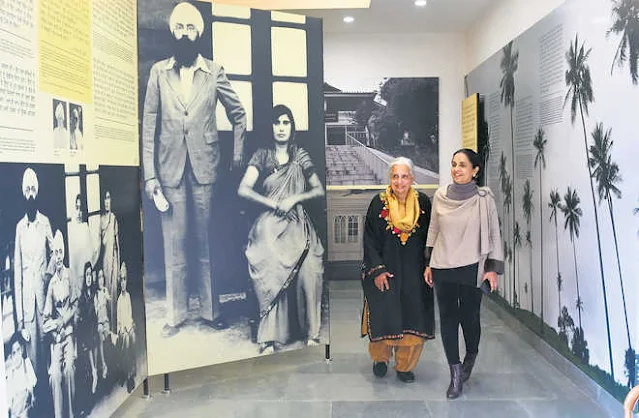
| Dr Diwan Singh Kalepani museum off Chandigarh |
Did Netaji Subhas Chandra Bose ignore the massacre carried out by the Japanese army in Andaman and Nicobar islands during the Second World War? It would seem so, if one goes by the account of Mohinder Singh Dhillon, who authored a book in memory of his father, 'A Titan in the Andamans, Dr Diwan Singh Kalepani'. Dr Diwan Singh was tortured to death by the Japanese soldiers in the cellular jail in Andaman in 1944.
While the book does not seem to be available, Dhillon, based on his direct interaction with people in Port Blair in late 1960s, described in an article he wrote in “The Tribune” in 1998 on what happened to his father, who was a doctor in Netaji’s Azad Hind Fauj, and president of the Indian Independence League in Port Blair, as also 2,000 other like-minded persons, even as graphically describing the reign of terror by the Japanese soldiers.
A former professor in Ludhiana, Dhillon was appointed founder-president of the Government College in Port Blair in 1968. His wife, Gurdarshan Kaur, also a professor in Ludhiana, also accompanied him. Kaur is quoted as telling “The Tribune” , on reaching Port Blair by ship, they saw “a sea of people at the port… The moment we stepped out of the ship, people started embracing my husband. Some of them were crying. It was an unbelievable scene.”
When they reached their accommodation, the house was filled with people. “Some were crying and some were narrating stories of Dr Diwan Singh. It seemed a body was lying in the next room. It was terrifying,” she recalled. The couple stayed there for two years, listening to tales of the “unsung martyr”.
“It was then that Mohindar Singh realised the family had not given the due respect to Dr Diwan Singh,” Kaur said. After returning from Andaman, he started collecting documents and material on his father’s life and compiled them into a book -- a biography titled “A Titan in the Andamans” -- followed by a museum dedicated to his father, which took shape in 2001 in Siswan, about 15 km from Chandigarh.
Dhillon's account acquires significance against the backdrop of Prime Minister Narendra Modi's decision to instal a Bose statue in the colonial canopy at the India Gate, termed by his protagonists as something long overdue, with critics pointing towards how Netaji tried to rope in German and Japanese fascist help to free India.
Dr Dewan Singh ‘Kalepani’ served as doctor in Dagshai, or Daagh-e-Shahi, one of the oldest cantonment towns in the Solan district of Himachal Pradesh. An unsung hero or the Indian freedom struggle, during his posting in Dagshai, he gave the call for ‘swaraj’.
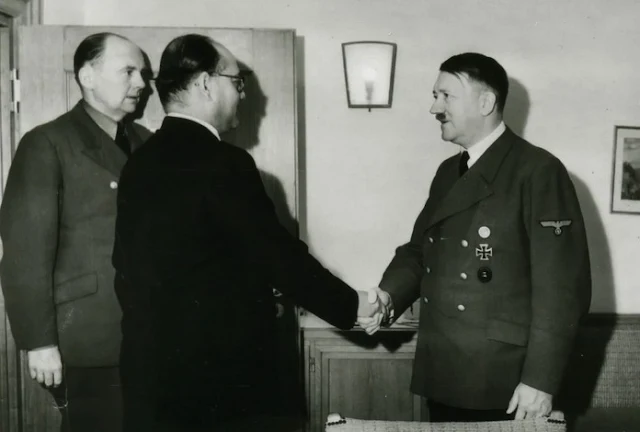 |
| Netaji with Hitler |
As a ‘punishment’, he was packed off to Rangoon and then to the Andaman Islands, where, apart from serving the local people, in 1937 he established a Gurdwara. The Imperial Japanese Navy captured the island in 1942, and a year later, Dr Diwan Singh was arrested on charges of espionage. After suffering brutal torture for 82 days, he died on January 14, 1944.
Pointing out that Netaji visited Andaman when Dr Diwan Singh was languishing in the cellular jail, Dhillon in his “The Tribune” article titled "The unknown massacre at Andamans: A Slice of History", said, "Posterity will ask uncomfortable questions about the vandalism of the Japanese and the role played by them for the freedom of India in collaboration with Subhas Chandra Bose.”
According to Dhillon, “Ironically, Bose was in Port Blair between December 29-31, 1943. He visited the cellular jail where Diwan Singh, the president of the Indian Independence League and hundreds of his companions, were languishing, but he did not visit them. After wining, dining and dancing in the Ross Island he went back to Singapore.”
He commented, "This is how Tojo helped Bose to get freedom for India from the British”, insisting, “Japanese barbarism must be unfolded to convince the world about the ‘dirty war’ waged by the Japanese”, but lamented, “The boundaries of Japanese misdeeds are wide and scattered."
According to Dhillon, who last served as education adviser to the Punjab government, the "massacres carried out by the Germans and Japanese" was well documented, but historians “have failed to do justice to all that occurred in East and South-East Asia."
Pointing out that Netaji visited Andaman when Dr Diwan Singh was languishing in the cellular jail, Dhillon in his “The Tribune” article titled "The unknown massacre at Andamans: A Slice of History", said, "Posterity will ask uncomfortable questions about the vandalism of the Japanese and the role played by them for the freedom of India in collaboration with Subhas Chandra Bose.”
According to Dhillon, “Ironically, Bose was in Port Blair between December 29-31, 1943. He visited the cellular jail where Diwan Singh, the president of the Indian Independence League and hundreds of his companions, were languishing, but he did not visit them. After wining, dining and dancing in the Ross Island he went back to Singapore.”
He commented, "This is how Tojo helped Bose to get freedom for India from the British”, insisting, “Japanese barbarism must be unfolded to convince the world about the ‘dirty war’ waged by the Japanese”, but lamented, “The boundaries of Japanese misdeeds are wide and scattered."
According to Dhillon, who last served as education adviser to the Punjab government, the "massacres carried out by the Germans and Japanese" was well documented, but historians “have failed to do justice to all that occurred in East and South-East Asia."
He added, "For Asians, World War II started in 1931 with the occupation of South-East Manchuria; for Africans in 1935 with the attack on Abyssinia; for Europeans in 1939 and for Americans in December 1941. For the Chinese, 1930s were most terrible as they suffered humiliation and horrors. They underwent the worst tortures that Japanese soldiers indulged in, and were made victims of their indescribable ruthlessness."
Pointing out that "the story of China, particularly that of Nanking, would have gone into oblivion but for a few Americans and Europeans who were witnesses to crimes committed by the Japanese", he wondered as to why “the massacre of Port Blair in the Andaman Islands has failed to stir the consciousness of mankind."
Stating that the story of the Japanese carnage in the Andaman and Nicobar Islands was "unknown" to its countrymen and the government is “indifferent to this important event of history", Dhillon wrote, it all began with 20,000 Japanese soldiers landing at different places in South Andamans on March 23, 1942.
Pointing out how groups of Japanese soldiers "pounced like hungry wolves on shops, looting everything they could lay their hands on", he added, "A young man Zulfikar Ali picked up his BB gun and fired a few shots in the air to scare them away. The Japanese ran away but came back soon with a large armed force and laid siege of the town. In the meantime Zulfi, as he was called, somehow escaped to another area to avoid the Japanese wrath."
Continued Dhillon, who died at the age of 86 in 2007, "They ransacked the whole town and misbehaved with women and young girls. They asked the villagers to produce the boy (Zulfi) next morning, failing which they would have to face the consequences. While they were leaving they set fire to the house, and in no time the rising flames engulfed the nearby houses too as they were made of wood."
At that time, Dr Diwan Singh was Director, Health, and President of the Indian Independence League (IIL), Azad Hind Fauj’s peace committee and Seva Samiti. He would meet the Governor to seek intervention for the mitigation of people’s misery. He was arrested on October 23, 1943 after he lodged complaint to the Governor about how the Japanese had arrested eight high-ranking Indian officials in a spy case in October 1943 and tortured to death.
On entering the jail, said Dhillon, Dr Diwan Singh was jeered, abused and beaten mercilessly. In a week’s time, all his 2,000 associates who were the members of the peace committee, the IIL, Azad Hind Fauj and the Seva Samiti were also arrested and huddled in the jail.
“The Japanese beat and tortured them with water treatment, electric shocks, hanging them upside down, and burning heaps of paper under their thighs. A very large number of them died, some committed suicide and a few made false confessions to save their lives. They were taken to a far-flung place, killed and buried”, Dhillon noted.
He continued, “Dr Diwan Singh was brutally tortured for 82 days, a parallel of which is difficult to find in human history. He was hung with his hair from the ceiling. At other occasions, his ankles were tied to ceiling, water was pumped through his mouth and nostrils, and he was tied to a stake, and his bones were crunched and subjected to electric shocks... He died on January 14, 1944.”
According to him, after Dr Diwan Singh’s death the Japanese let loose a reign of terror, which turned the island into an inferno. He estimates, “Out of the total population of 40,000 in Port Blair, 30,000 were annihilated.”
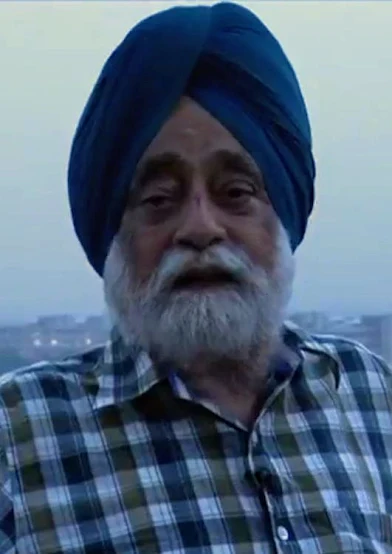 |
| Mohinder Singh Dhillon |
Stating that the story of the Japanese carnage in the Andaman and Nicobar Islands was "unknown" to its countrymen and the government is “indifferent to this important event of history", Dhillon wrote, it all began with 20,000 Japanese soldiers landing at different places in South Andamans on March 23, 1942.
Pointing out how groups of Japanese soldiers "pounced like hungry wolves on shops, looting everything they could lay their hands on", he added, "A young man Zulfikar Ali picked up his BB gun and fired a few shots in the air to scare them away. The Japanese ran away but came back soon with a large armed force and laid siege of the town. In the meantime Zulfi, as he was called, somehow escaped to another area to avoid the Japanese wrath."
Continued Dhillon, who died at the age of 86 in 2007, "They ransacked the whole town and misbehaved with women and young girls. They asked the villagers to produce the boy (Zulfi) next morning, failing which they would have to face the consequences. While they were leaving they set fire to the house, and in no time the rising flames engulfed the nearby houses too as they were made of wood."
At that time, Dr Diwan Singh was Director, Health, and President of the Indian Independence League (IIL), Azad Hind Fauj’s peace committee and Seva Samiti. He would meet the Governor to seek intervention for the mitigation of people’s misery. He was arrested on October 23, 1943 after he lodged complaint to the Governor about how the Japanese had arrested eight high-ranking Indian officials in a spy case in October 1943 and tortured to death.
On entering the jail, said Dhillon, Dr Diwan Singh was jeered, abused and beaten mercilessly. In a week’s time, all his 2,000 associates who were the members of the peace committee, the IIL, Azad Hind Fauj and the Seva Samiti were also arrested and huddled in the jail.
“The Japanese beat and tortured them with water treatment, electric shocks, hanging them upside down, and burning heaps of paper under their thighs. A very large number of them died, some committed suicide and a few made false confessions to save their lives. They were taken to a far-flung place, killed and buried”, Dhillon noted.
He continued, “Dr Diwan Singh was brutally tortured for 82 days, a parallel of which is difficult to find in human history. He was hung with his hair from the ceiling. At other occasions, his ankles were tied to ceiling, water was pumped through his mouth and nostrils, and he was tied to a stake, and his bones were crunched and subjected to electric shocks... He died on January 14, 1944.”
According to him, after Dr Diwan Singh’s death the Japanese let loose a reign of terror, which turned the island into an inferno. He estimates, “Out of the total population of 40,000 in Port Blair, 30,000 were annihilated.”
Frankly, I know little of Bose except what I have read in bits and pieces, but this story is horrifying. Why are they coming out now--so late in the day--and why isn't there any historian who has written about the Japanese of those days?
ReplyDeleteI compliment Rajiv Shah for true, old school reporting, fact and document based, not 'x says this, y says that, which is true only time will tell'
ReplyDeletekind which is current now. But keep in mind the situation then. Big armies on the move, atocities on every side. What could Bose have done against the Japanese?
His aim was to free his motheralnd from the British, the Japanese were not our colonial masters. Churchill had said, I will align with the devil if he will help me defeat Hitler. For Bose the British were the enemy, not the Japanese. His actions stirred Indian hearts, he was a patriot. That is how we remember him. Nehru defended INA soldiers after the war.
fake story.
ReplyDeleteWhile the story can be true, it doesn't portray that those who were tortured were actually British loyalists and spies.Also his father had refused to speak against Britishers in 1943, thereby proving himself a British loyalist and so Japanese had every right to torture him and do what they did. Nanking is totally fake and there are enough evidences if u google
ReplyDeleteMr Unknown, are you justifying Japanese fascist torture? What kind of person you are
ReplyDeleteCan you send me your email or Contact number where I can reach you Mr. Shah. Thanks
ReplyDeletePls see Contact Us
ReplyDeleteBose was either immoral, ignoring Japanese mass murders, torture and exploitation or Bose was an idiot who actually thought the Japanese would treat Indians with any respect. A complete idiot and immoral man both.
ReplyDeleteSKVAM, refrain from using derogatory words for a person you aren't an inkling of. Had he been immoral, he wouldn't have dedicated his life for the freedom of his country. As to this incident, I agree that it was a big mistake from his side. But that doesn't make him "immoral" and doesn't give you the right to point fingers at such a sacrificial figure.
DeletePlease check this
ReplyDeleteJapanese occupation of the Andaman and Nicobar Islands - Wikipedia https://share.google/t0tAeOxrUN5Wbk70g