
In the leaning golden sun, 65 year old Hari Ganpat Nikam dived like dolphin under a wooden contraption in the Vashishti River. He emerged a whole minute later bearing a beautiful woven basket, his right hand placed firmly on its mouth. As he brought the basket closer, he gradually removed his hand. Inside, tens of small fish and crabs shimmered in the evening light.
Tonight’s fish curry was sorted.
In Chiplun and throughout Western Ghats, tribal Katkari communities have devised an ingenious way of catching riverine fish. This is through what is called as Bandhan. Bandhan is a fishing dam made from wood and vines from riparian trees. It involves laying a strong wooden log (called Vila made of Ain wood, Terminalia elliptica) across the stream, supported by wooden branches in the upstream parallel to the stream.
The river is excavated below the horizontal log and woven baskets (called Toke) made of a riparian plant (Sherni, Homonoia riparia) are placed under the dam. Now sheer magic happens on the upper side. Small, strategically placed holes are dug into the gravel which create an unbelievable suction force. Hollow bamboo stalks (Naada) are stuck in these holes and then they are hidden by stones. Fish do not see the holes due to the boulders and are sucked right through to be caught in the baskets below!
While it sounds easy, it is sheer fish engineering, if there is such word! fisherfolk building these dams are fish-river-engineers and know the moods of the river and the fish like their family members. Chandrakant tells me that bandhan has to be entirely inline with the river and not raised like a dam, otherwise the fish will not be trapped. He easily listed more than 14 fish species caught including carps, eels, catfish, prawns and crabs (local names: Suteri, Pati, Kharba, Dok, Pitlandi, Keng, Jhinge, Tika, Khaval, Khadas, Ahir, Vaam, Shivda, etc.)
In the wide Vashishti riverbed, we met several fisherfolk who showed us fish habitats like hides, pools, riffles, riparian banks, plants. Chiplun block in Maharashtra has about 500-600 bandhans. Thousands of Katkari tribals depend on these appropriate technology structures of their nutritional needs and livelihoods.
No notice was served, they were not even told about this. Their empty hut stood at the riverbank. Their bandhan was broken by a JCB while desilting this tributary of Vashishthi. Dredging the river for flood control has been the primary response of the Water Resource Department, Chiplun Municipal Corporation and also some voluntary organizations. Sati Bridge was strewn with heaps of garbage.
Dredged silt was heaped in mounds on the riverbanks. Open channels vomited more garbage into the river. A typical urban Indian river.
Ketan asked me, “Do you see all the trash? We remove it every evening. It gets caught in our traps. We clean the river. We catch fish. Do we cause floods?” I had no answers. His voice softened. “Do you see the bank there? It was scrapped and mud mounds were heaped on its sides. “The bank was covered with grasses. Ducks lived there. They laid eggs and had chicks. We could hear them. Where would they go? Did they cause floods?”
I had no answers.
River desilting or dredging is going on at a fast pace in Chiplun.
It is high time that these haphazard and misleading projects are seen for what they are.
This is a story of Chiplun, a town of about 70,000 and its surrounding area in the western shadows of Sahyadri Mountain ranges, 50 kms from the Arabian Sea. We were uninitiated about several issues and River Researcher Malhar Indulkar and Veteran activist Rajan Indulkar of Shramik Sahayog introduced me and Abhay Kanvinde to the landscape and its people.
In July 2021, Chiplun town of coastal Maharashtra was submerged in flood waters for several days. West-flowing Vashisthi river crossed its Highest Flood Level (HFL) in Muradpur gauging station on the 22ndJuly 2021. On the night of 21st July, the river breached its banks and water filled up in the city rapidly. More than 80% of Chiplun was under water on the 22 and 23rd of July. More than 1231 people were rescued by various agencies including NDRF (National Disaster Response Force). Most of the ground floors of buildings were submerged and this led to tragic incidents like death of 8 patients on ventilator support in a Covid ward of a hospital. A boat which was launched to rescue the patients capsized and 2 people lost their lives.
Vashishti and its major tributary Jagbudi (literally meaning “one that floods the world) crossed their HFLs by 5 and 6 meters at gauging stations and the discharge of Vashisthi was recorded to be 2.81 Lakh Cusecs.
After the floods, there was a huge protest in Chiplun understandably as the economic losses crossed Rs 1000 crores and human tragedy was beyond monetary compensation. People came together in the form of Chiplun Bachao Samiti (Save Chiplun Committee) and spontaneous protests burst forth.
Several JCBS were crawling through the riverbeds, excavating silt, gravel and pebbles. Like most complicated issues, there are many facets to river dredging. Vashisthi river and estuary have indeed been silted up substantially. Many fishing and shipping ports like Gowalkot which were functioning till 1999 are now defunct and one of the major reasons is raised riverbed levels and silting. However, the gravel fans deposited by 2021 floods are distinctly different than the fine silt of the river deposited over the years.
There was no study of the river profile, its cross sections and how these are changing over the years, of the erosion and deposition following the floods, of new and old sediments, of important habitats and pools submerged by gravel, of broken or weakened riverbanks. JCB operators simply scraped the rivers nonchalantly.
Old Riparian patches, which in fact held the banks together were cut. Karanj trees (Pongamia pinnata) more than 70 years old lining banks for nearly half a kilometer were cut in the dredging work by Naam Foundation. Otter habitats, fish habitats were swept clean.
An entire island near the Farshi bridge with an area of about 2.5 acres has been dredged out of the river! The island had palm plantation by the nearby village and was a cultural site for the festival of a local deity Karanjeshwari (“Goddess of the Riparian Trees”). It is fitting that when a riparian area is destroyed, there is no place for the festival of a riparian goddess.
Upper end of Juad Island near Bahadur Sheikh Bridge has also been dredged off. Now, the work is on going in full swing by the Water Resources Department. We saw several JCBs dredging riverbanks without a clue about what they are supposed to be doing. The JCB operators had no clear instructions of how deep they were to excavate, what precautions to take, where to stop, etc. Dredged mud banks stood wobbly at 90 degree angles. The angle makes them susceptible to toe erosion at the bottom and they will collapse in the river in the first flood, again silting the riverbeds.
Dredging and cutting river banks. The angle of the banks makes them susceptible to collapse
There are studies that show that channel cross section enlargement in fact increases the flood wave velocity, speeding the arrival of flood peaks in the downstream (Rose and Peters 2001). No such studies have been undertaken before either decision of the dredging or before the dredging itself or even subsequent to dredging.Breaking the bandhan
After visiting several the bandhans, I saw them as somewhat of a heritage structure. And then we met Ketan Nikam and his brother standing on a river bank further downstream near the city. Ketan was wringing his hands. Their bandhan had been broken and thrown out of the riverbed.No notice was served, they were not even told about this. Their empty hut stood at the riverbank. Their bandhan was broken by a JCB while desilting this tributary of Vashishthi. Dredging the river for flood control has been the primary response of the Water Resource Department, Chiplun Municipal Corporation and also some voluntary organizations. Sati Bridge was strewn with heaps of garbage.
.jpg) |
| Fish caught in woven baskets of bandhans |
Ketan asked me, “Do you see all the trash? We remove it every evening. It gets caught in our traps. We clean the river. We catch fish. Do we cause floods?” I had no answers. His voice softened. “Do you see the bank there? It was scrapped and mud mounds were heaped on its sides. “The bank was covered with grasses. Ducks lived there. They laid eggs and had chicks. We could hear them. Where would they go? Did they cause floods?”
I had no answers.
River desilting or dredging is going on at a fast pace in Chiplun.
Greenwashing false solutions
Some of the biggest threats to Indian Rivers today are projects labeled as River Rejuvenation, riverfront development and river dredging. In the name of riverfront development, river widths are being pinched, river banks and even riverbeds are being concretized, their lateral and longitudinal connectivity is being broken and riparian areas are being reclaimed. In the name of river rejuvenation, river bottoms are being scraped, meanders are being straightened and banks are being destabilized. In the name of river desilting, JCBs are roaming freely inside fragile riverbeds, muck is being disposed on riverbanks or in the nearby low lying areas. Unstable riverbanks and unregulated muck dumping is an open invitation to further destructive floods.It is high time that these haphazard and misleading projects are seen for what they are.
This is a story of Chiplun, a town of about 70,000 and its surrounding area in the western shadows of Sahyadri Mountain ranges, 50 kms from the Arabian Sea. We were uninitiated about several issues and River Researcher Malhar Indulkar and Veteran activist Rajan Indulkar of Shramik Sahayog introduced me and Abhay Kanvinde to the landscape and its people.
In July 2021, Chiplun town of coastal Maharashtra was submerged in flood waters for several days. West-flowing Vashisthi river crossed its Highest Flood Level (HFL) in Muradpur gauging station on the 22ndJuly 2021. On the night of 21st July, the river breached its banks and water filled up in the city rapidly. More than 80% of Chiplun was under water on the 22 and 23rd of July. More than 1231 people were rescued by various agencies including NDRF (National Disaster Response Force). Most of the ground floors of buildings were submerged and this led to tragic incidents like death of 8 patients on ventilator support in a Covid ward of a hospital. A boat which was launched to rescue the patients capsized and 2 people lost their lives.
Vashishti and its major tributary Jagbudi (literally meaning “one that floods the world) crossed their HFLs by 5 and 6 meters at gauging stations and the discharge of Vashisthi was recorded to be 2.81 Lakh Cusecs.
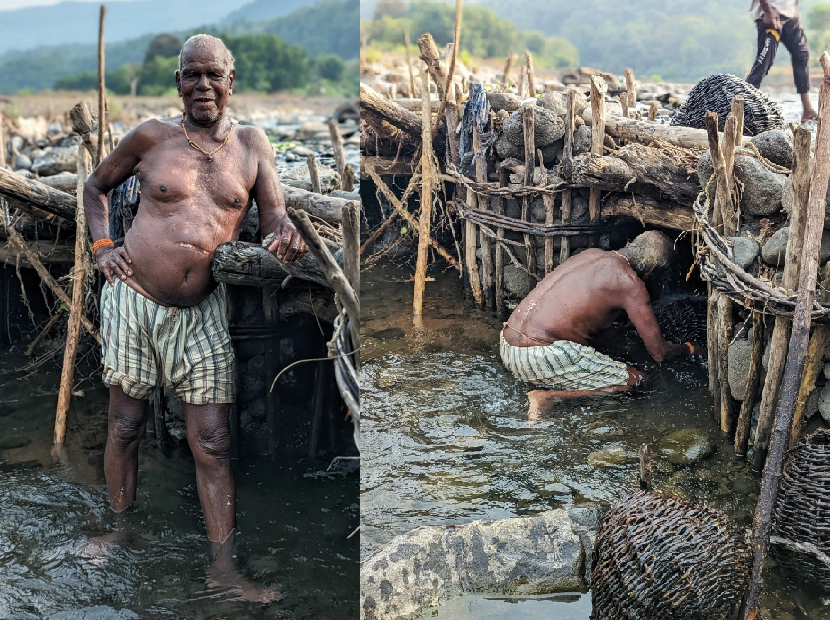 |
| Hari Ganpat Nikam |
One solution for all the problems: Dredging
While the reasons behind the July 2022 flood are multifarious, easiest approach was taken by the Water Resource Department, Chiplun Municipal Corporation and some voluntary organizations. This approach was dredging Vashishthi, Vaitarni and Shiv rivers to increase their flood carrying capacity.Several JCBS were crawling through the riverbeds, excavating silt, gravel and pebbles. Like most complicated issues, there are many facets to river dredging. Vashisthi river and estuary have indeed been silted up substantially. Many fishing and shipping ports like Gowalkot which were functioning till 1999 are now defunct and one of the major reasons is raised riverbed levels and silting. However, the gravel fans deposited by 2021 floods are distinctly different than the fine silt of the river deposited over the years.
There was no study of the river profile, its cross sections and how these are changing over the years, of the erosion and deposition following the floods, of new and old sediments, of important habitats and pools submerged by gravel, of broken or weakened riverbanks. JCB operators simply scraped the rivers nonchalantly.
Old Riparian patches, which in fact held the banks together were cut. Karanj trees (Pongamia pinnata) more than 70 years old lining banks for nearly half a kilometer were cut in the dredging work by Naam Foundation. Otter habitats, fish habitats were swept clean.
An entire island near the Farshi bridge with an area of about 2.5 acres has been dredged out of the river! The island had palm plantation by the nearby village and was a cultural site for the festival of a local deity Karanjeshwari (“Goddess of the Riparian Trees”). It is fitting that when a riparian area is destroyed, there is no place for the festival of a riparian goddess.
 |
| Dredging and cutting of the river bank |
Dumped
As if in a dark comedy, we saw many cases of excavated material is being dumped on the riverbank itself. This material will collapse into the river after the first rains. To further the farce, excavated material from the rivers was also dumped into the wetlands in and around Chiplun. A silted river may still carry a flood efficiently, but a destroyed and filled up (called reclaimed) urban wetland will increase the flood peak and lead to flash floods. It took a stern letter from the Collector of Chiplun in May 2022 to stop this unrestrained dumping within city limits. So, the same goes on outside city limits now.Dredging and cutting river banks. The angle of the banks makes them susceptible to collapse
Problems of unplanned dredging
There are several studies highlighting the complexities of dredging for flood control in coastal river systems. Only large scale uniform dredging can have any notable impact on flood stages, but it can lead to increased storm surges which outweigh the benefits of dredging. On the other hand, small scale dredging leads to moderate flood control benefits but causes more pronounced erosion effects in the upstream and downstream of the dredged section.In conclusion
Several organizations came together to protest breaking of Bandhans and to demand for a more holistic policy of river dredging in Vashisthi on the 12 December, 2022. They have received no response till now. |
| Open drains dump garbage in the river |
Recommendations
- Include in EIA notification mandatorily requiring environmental clearances, EIAs and public consultation for the activities that have been done without clearances like dredging and erasing an entire island.
- Constitute a study to understand the post-flood channel profiles of Vashisthi Basin river. This study should point to the areas of erosion and deposition following 2021 floods, comparing it with past satellite images. The study of river cross sections should be a regular activity.
- Mark and register ecologically and socially important areas like bandhan dams, deep pools and eroded banks in the channels. These exercises have to be done in consultation with the fisherfolk as they are aware of the past and present river conditions and are also good guides about the location of deep pools and eroded banks.
- Minimise dredging and devise a dredging plan based on the study of the extent of channel change post floods. Consult fluvial geomorphology experts for devising this plan and consider the impacts of dredging on the upstream and downstream while balancing the pros and cons.
- Entrust the task of dredging to tribal communities and limit the use of JCBs into the river.
- Devise a plan for depositing the excavated material to strengthen eroded river sections rather than dumping them on the banks or filling up wetlands and water bodies.
- It is being accepted world over that in-channel interventions like dredging lead to unintended consequences in the upstream and downstream. There is a need to constitute a detailed study on Vashisthi floods to come up with long term solutions. Dredging of a river which has been ravaged by floods is a short term local solution, if at all, at best. With changing climate, such floods are expected to be more frequent, intense and wide spread and catastrophic. A long term, sustainable plan which hold the Municipal Corporation, Environment Department, Water Resources Department, and the Disaster Management Department accountable is the need of the hour.
Unless a scientific, participatory approach to flood control is implemented, haphazard dredging will only exacerbate the issue. Both for Chiplun and also for the upstream and downstream.
---
Source: South Asia Network on Dams, Rivers and People. Pix: Abhay Kanvinde
Comments
Post a Comment
NOTE: Hateful, abusive comments won't be published. -- Editor