It is more than seventy years now, since India attained independence from British rule and drafted a well balanced Constitution, which form the basis for Indian democratic process. Several national and state elections have been conducted and the victorious political party has taken over the governance in a smooth manner. Over the years, there have been building up of great awareness amongst the people about their fundamental rights and freedom of speech. While for an outsider, it may look like a noisy democracy in India, with protests, allegations and counter allegations and even corruption charges being raised and framed and complaints about dynastic political culture being developed with number of political parties coming under the grip of family control, still the ground reality is that democracy as an institution is surviving and thriving.
Of course, in any democratic country, people have the freedom to express their views and involve themselves in public activities which may be different for different people or different groups. In such situation, there is bound to be discussions and controversies about the way forward. The advocates of democracy would say that such conditions are the essence of democracy and noise in a democratic country very well proves that democracy is thriving.
In recent times, there have been allegations in India that central government and some of the state governments are curtailing the freedom of speech, indulging in arbitrary arrests and framing motivated corruption charges.
Of course, at the same time, it is also pointed out that freedom of individuals cannot be absolute in any society and liberty cannot be merely a personal affair and it has to be a social contract. While freedom of speech and action are important , abuse of freedom of speech and action by any individual or group or political party has to be closely monitored by the government and if necessary, restricted to ensure the orderly process of democracy.
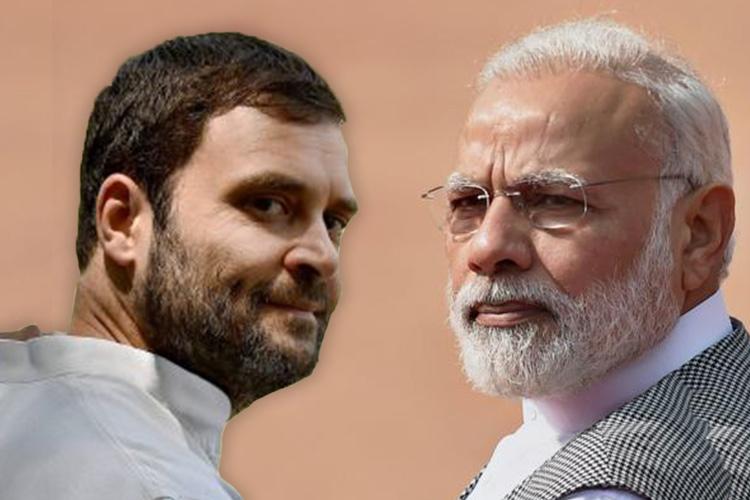
Now, with the court verdict going against Rahul Gandhi, who is a Congress party member and his being disqualified from his parliamentary membership as per the prevailing law, the Congress party and several opposition parties have joined together and are accusing the Modi government of taking arbitrary action against Rahul Gandhi and also initiating anti corruption proceedings and investigation against several members of the opposition parties. These opposition parties have coined a new term “Indian democracy in danger”, as if the process of Indian democracy have collapsed or derailed under the weight of what they call as “dictatorship type of governance by Mr. Modi”.
The question is whether Indian democracy is really in danger or whether such accusations are being made by certain political parties and individuals as a strategy to save themselves from being investigated against by the government. Now, these opposition parties have approached the Supreme Court claiming that investigative agencies are being misused and the court has agreed to hear the case.
One of the promises made by Mr. Modi during the election campaign and repeatedly after , is that he would eradicate corruption in India by appropriate strategies. Several proactive initiatives have been made to promote transparency in governance by introducing digitalization in a massive way to avoid middle men in transactions and so many other similar steps. In the process, it is inevitable that the investigating agencies have to probe any corrupt dealing that it come across and in the process raids and enquiries have to necessarily take place.
It is important to keep in view that punishment for an individual for the corrupt dealings or any objectionable activity are provided by the judiciary and not by the investigating agencies or the government. The criticism of the opposition parties against the so called “arbitrary investigation” is unacceptable, as it virtually means that investigation should not be carried out at all. How can corrupt dealings and objectionable activities be identified and brought to justice without launching investigations?
The other argument by the critics appear to be that only the members of the opposition parties are being targeted and not the members of the ruling parties. In such case, the critics can file case in the court against the corrupt dealing of any ruling party member, which has not been done so far. For example, it is said that Adani group is corrupt and Modi government has favoured Adani group in an unacceptable way. If it is so, what prevent the critics from taking the issue to the court , instead of confining themselves only to media outburst?
In recent time, several members of the opposition parties and critics have used several abusive term against Mr. Modi i and have gone to the extent of calling him as thief and so many other highly derogatory terms. After using such abusive language against the Prime Minister, they have gone scot free. Is it not a proof that democracy thrives in India as even abuse of freedom to malign as important a person as Prime Minister is being tolerated?
Certainly , democracy is not in danger in India. It is as vibrant as democracy in any other country like USA, UK, Canada and so on.
One can even say that there are some aspects , where Indian democracy can even be a role model for other democracies in the world, when we see persons belonging to different political parties who criticize each other still maintain good personal relationships.
---
*Trustee, Nandini Voice For The Deprived, Chennai
Comments