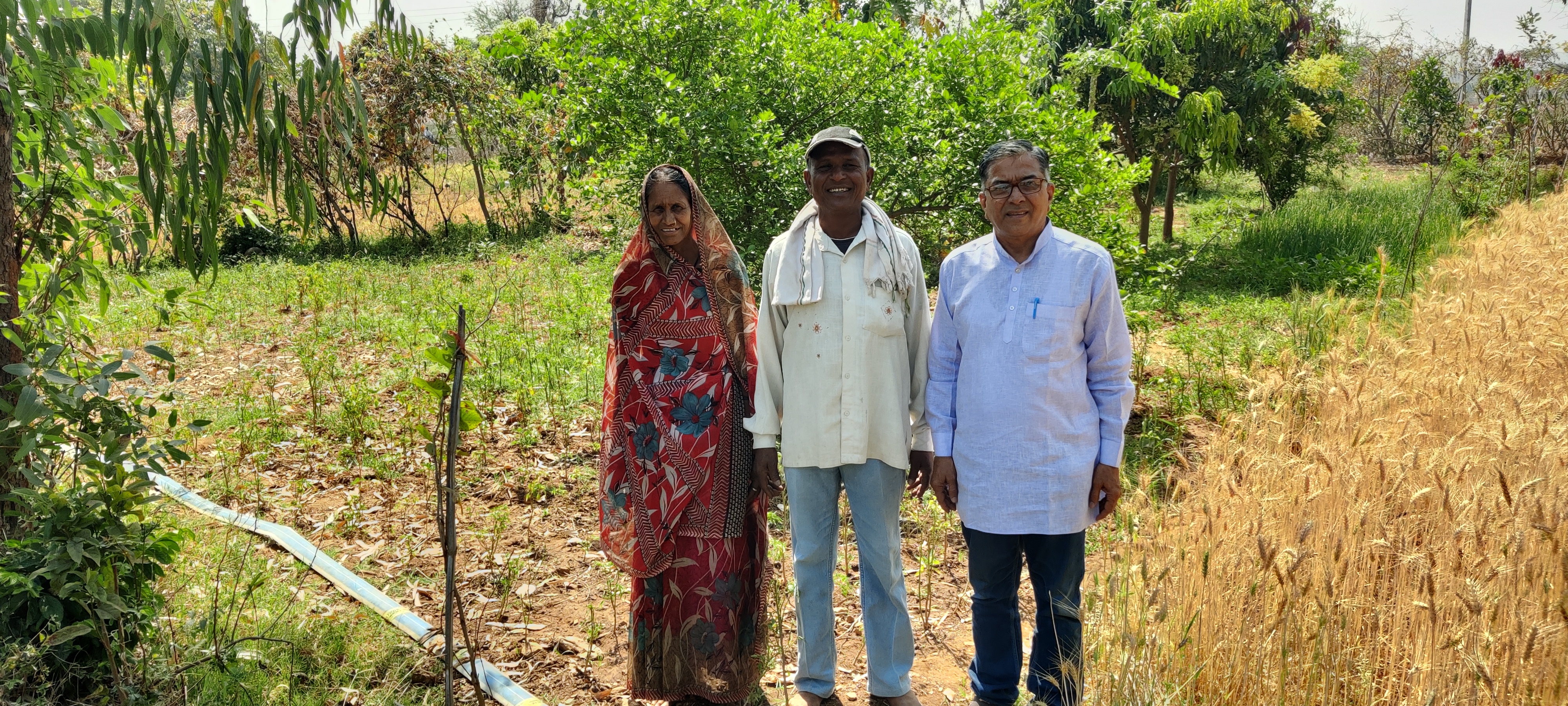
Vaagdhara is one of the few voluntary organizations in the country which has centered its work around the vision of swaraj—or self-rule based on increasing self-reliance of rural communities. It has worked with this vision for nearly two decades in the tri-junction area of three states—Rajasthan, Madhya Pradesh and Gujarat, with most concentration in South Rajasthan (particularly Banswara district). This is a region known for heavy concentration of tribal communities, particularly bhil adivasis. These efforts have so far reached an estimated one hundred thousand (one lakh) households spread over about 1000 villages.
The concepts of swaraj, gram swaraj and self-reliance of rural communities have a special significance in the context of tribal communities with their more distinct social and cultural features and identities. In particular there is a clear need to recognize the special strengths and virtues of tribal communities and to build on them on the basis of understanding instead of neglecting and even displacing them.
Vaagdhara has been working with such an understanding. Its understanding of swaraj –conceptually as well as in terms of implementation-- is captured in its three basic precepts—True Farming, True Childhood and True Democracy.
True farming is based on understanding the strengths of traditional practices of bhil communities and strengthening them. These include practices of Helma (in which instead of hiring workers farmers cooperate with each other to meet the peak work needs of each other) and Hangri (mixed farming systems which have evolved keeping in mind the special needs of the area). The effort of Vaagdhara has been to build further on these strengths while at the same protecting them.
Research by Vaagdhara revealed that despite the erosion caused by external forces in more recent times in biodiversity, as many as about 100 kinds of foods were being grown or were otherwise available in the villages through collection from forests. Without caring or understanding this, such villages were being called backward while monoculture farming areas were being called the most advanced.
Vaagdhara worked to strengthen the community’s own faith in its traditional good practices and systems while offering opportunities to improve these further through better methods of manure preparation, making available plants to create new gardens and creating an organizational base of volunteers and facilitators from among them and supporting them.
The tribal communities already had rich traditions in soil conservation practice, in protecting plants from pests and diseases, seed preservation and food storage/preservation practices. Vaagdhara helped to establish a better and wider understanding of these, as well as to suggest and offer some improvements.
Vaagdhara’s approach has been to support natural and organic farming. While some farmers adopt this entirely, as this only means going back to their strengths lost in recent times, others take their own time. This is accompanied by significant soil and water conservation measures. The overall result is to improve soil quality significantly, contributing to carbon absorption as well as improving the moisture retention quality of soil. The planting of mostly indigenous species of trees gets a lot of emphasis, which can be found in orchards and also in the middle of crops, again contributing to soil and water conservation as well as to carbon absorption. Apart from fruit trees, other trees which are useful for meeting the needs of fodder, fuel and small timber are also grown, as also bamboo, which can meet cash needs in difficult times. What is grown is most closely linked to what is eaten by family and has good nutrition value. Apart from cattle and goats, a more recent trend has been to keep buffaloes also, thereby increasing farm level milk supply. Dependence on market has been minimized for food and on most farms there is now no need to purchase chemical fertilizers or pesticides.
Secondly, the concept of True Childhood is sought to be realized by checking child exploitation, ensuring education of all children, improving child nutrition, securing higher child participation in decision making and taking steps to check alienation of higher school children and youth from their communities. Kitchen gardens to improve nutrition have been widely created and in addition special campaigns to make better use of raw local foods for more nutritious dishes have been carried out, targeted more and mothers and children. Child Rights Committees have been organized in villages and active attempts to end gender discrimination at childhood level are made.
The concept of true democracy is based on strengthening community organizations as well as making much better use of government schemes and programs, particularly the ones like MG--NREGA which can contribute to advancing the objectives of swaraj based approach. NREGA work, for example, can contribute much to soil and water conservation work. Communities are increasingly involved in preparing micro programs which are helpful for them as well as for facilitating better implementation of government programs in keeping with community’s priorities. These efforts are advanced by having several organizations of people centered around swaraj based progress at various levels called Janjatiya Swaraj Sangathna (JSS) or Janjatiya Vikas Manch (JVM), saksham samoohs of women in villages , their facilitators and volunteers or swaraj mitras. Tribal sovereignty conclaves have been organized from time to time and swaraj yatras have been taken up more regularly at local level, but once also all the way from Banswara to Jaipur, in the process taking Vaagdhara’s message to a wide area and also establishing a wider dialogue with the government.
These efforts of Vaagdhara based on its understanding of swaraj have been a source of hope and constructive work in a region spread over about a 1000 villages in Central India.
---
The writer is Honorary Convener, Campaign to Save Earth Now. His recent books include ‘Protecting Earth for Children', ‘Man over Machine' and ‘India’s Quest for Sustainable Farming and Healthy Food'
Comments