
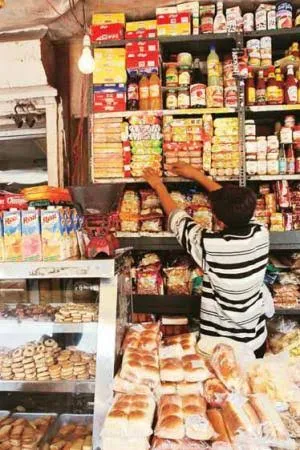
A recent study has revealed that India’s marginalised and economically weak are consuming high quantities of ultra-processed and packaged food. In a country that faces one of the world’s gravest double burden of malnutrition, the lowest income quintile has gone from facing hunger to relying on unhealthy snacks.
This finding reinforces the concern that sub-optimal or poor nutrition is escalating diet related non communicable diseases (DR-NCDs) in India, putting at risk millions, particularly children across all socio-economic categories.
Releasing the study on 20 March, 2023 at the Constitution Club of India, New Delhi, at the MPs Round-table: Children Nutrition and Ultra-Processed Food, organized by Peoples’ Vigilance Committee on Human Rights (PVCHR) and People’s Initiative for Participatory Action on Food Labeling (PIPAL), senior Members of Parliament (MPs) and civil society representatives, called for urgent policy measures to make healthier foods available in the market and introduce clear warnings on packaged food to guide people’s choices.
India is home to around 45 million children who are stunted and 15 million who are obese. It is also the epicentre of adult obesity, diabetes and cardiovascular diseases. With 65% deaths every year due to NCDs, India is on the brink of a diet-linked health catastrophe. Poor nutrition, as a result of growing consumption of ultra-processed foods containing high levels of sugar, sodium, saturated fats, is considered by experts as a key risk factor, the study reveals.
Speaking at the event, Ashok Bajpai, senior Rajya Sabha MP from BJP, said, “Ultra-processed foods and drinks are relatively cheap and ready-to-eat which saves cost and time for daily wage earners. This important study has revealed that Dalit families or those from backward classes who have a meagre income, are relying more and more on these easy to purchase food items, without realising the negative impact it has on their health."
We, as representatives of the people, can play an important role in ensuring that packaged food available in the market is healthy and contains safe limits of negative nutrients," he added.
PIPAL – a national grassroots initiative for a healthier food system, conducted this survey in two districts of Uttar Pradesh and Bihar – Varanasi and Gaya. More than 90% of respondents who were queried on their consumption of ultra-processed and packaged food, have a daily earning of Rs 400 or less, and about 40% are from the Dalit (Musahar) community. Majority of those surveyed are not literate.
The survey found that Dalit families are spending 94% of their income on food and about 15% of that expenditure is towards ultra-processed and packaged foods such as chocolates, carbonated drinks, jellies, biscuits and chips. Compared to this, their spending on healthcare and education is a meagre 1.3% and 0.5%. Findings also point to the fact that families with lower on no literacy were likely to spend more on packaged food.
 Releasing the survey, founder and CEO of PVCHR, and one of the authors, Dr Lenin Raghuvanshi, said, “Adverse impact of ultra-processed food and beverages is even more pronounced on children who are stunted or have received inadequate nutrition early in their life. They are more susceptible to obesity and may have a higher risk of NCDs as adults."
H underlined, "For a country that bears the double burden of malnutrition, the best policy solution to ensure a healthier tomorrow for our children would be to make clear warnings regarding high content of sugar, sodium and saturated fat, mandatory on the front of all packaged food".
"It would convey to the vulnerable and poor, about the health harms of the packaged food and influence their purchasing decisions. It will also hopefully motivate+ the highly profitable and fast-growing food industry to make their products healthier”, Dr Raghuvanshi added.
India is one of the global leaders in the food and beverage industry with a sales volume of 34 million tonnes. As per forecasts of the Euromonitor data, India was set to emerge as the third largest market for packaged food in the world by 2020, after China and the United States, the study said.
BP Saroj, BJP MP from Machhlisahar, observed, “In Uttar Pradesh, especially in Varanasi, ready to eat or ready to heat ultra-processed food, is fast becoming the food of choice for the migrant workforce who neither have time nor resource for cooked meals.”
A member of the Consultative Committee, Ministry of Food Processing Industries, Saroj stated, “It is the right time for a policy instrument that can empower people to make healthier choices and save lives. Evidence from across the world and India has shown that a simple front-of-pack label that warns people about unhealthy ingredients will have the most impact. We provide our support to FSSAI and eagerly await an FOPL regulation that is good for the people of this country. It is the need of the hour.”
With the debilitating impact of poor diets more than ever in focus, PVCHR and PIPAL hosted this evnt, timing it with the ongoing Parliament session. Present at the deliberation were Imran Pratapgarhi, Rajya Sabha MP and member of the Parliamentary Standing Committee on Health; Suhsil Kumar Singh, representing Aurangabad constituency; Sakal Deep Rajbhar, Member, Rajya Sabha; Sanghmitra Maurya, representing Badaun constituency and member of Parliamentary Standing Committee on Health; Pakauri Lal Kol representing Robertsganj constituency; and Netta D’Souza, Chairperson of the All India Mahila Congress.
Also present were Ashok Thakur, Director, NAFED; Rajesh Pratap Singh, ex-assistant director, Home Ministry; Dr OP Vyas, ex-joint registrar, National Human Rights Commission; members of civil society Shruti Nagvanshi and Pandit Vikash Maharaj; sarod maestro Varun Pathak; and Chairman, Bench of Magistrates Child Welfare committee and pediatrician Dr Arun Gupta.

H underlined, "For a country that bears the double burden of malnutrition, the best policy solution to ensure a healthier tomorrow for our children would be to make clear warnings regarding high content of sugar, sodium and saturated fat, mandatory on the front of all packaged food".
"It would convey to the vulnerable and poor, about the health harms of the packaged food and influence their purchasing decisions. It will also hopefully motivate+ the highly profitable and fast-growing food industry to make their products healthier”, Dr Raghuvanshi added.
India is one of the global leaders in the food and beverage industry with a sales volume of 34 million tonnes. As per forecasts of the Euromonitor data, India was set to emerge as the third largest market for packaged food in the world by 2020, after China and the United States, the study said.
BP Saroj, BJP MP from Machhlisahar, observed, “In Uttar Pradesh, especially in Varanasi, ready to eat or ready to heat ultra-processed food, is fast becoming the food of choice for the migrant workforce who neither have time nor resource for cooked meals.”
A member of the Consultative Committee, Ministry of Food Processing Industries, Saroj stated, “It is the right time for a policy instrument that can empower people to make healthier choices and save lives. Evidence from across the world and India has shown that a simple front-of-pack label that warns people about unhealthy ingredients will have the most impact. We provide our support to FSSAI and eagerly await an FOPL regulation that is good for the people of this country. It is the need of the hour.”
With the debilitating impact of poor diets more than ever in focus, PVCHR and PIPAL hosted this evnt, timing it with the ongoing Parliament session. Present at the deliberation were Imran Pratapgarhi, Rajya Sabha MP and member of the Parliamentary Standing Committee on Health; Suhsil Kumar Singh, representing Aurangabad constituency; Sakal Deep Rajbhar, Member, Rajya Sabha; Sanghmitra Maurya, representing Badaun constituency and member of Parliamentary Standing Committee on Health; Pakauri Lal Kol representing Robertsganj constituency; and Netta D’Souza, Chairperson of the All India Mahila Congress.
Also present were Ashok Thakur, Director, NAFED; Rajesh Pratap Singh, ex-assistant director, Home Ministry; Dr OP Vyas, ex-joint registrar, National Human Rights Commission; members of civil society Shruti Nagvanshi and Pandit Vikash Maharaj; sarod maestro Varun Pathak; and Chairman, Bench of Magistrates Child Welfare committee and pediatrician Dr Arun Gupta.
Comments