
BBC documentary row: Delhi varsity students detained for holding protest meeting

By A Representative

On March 24, even as commemorating the martyrs Bhagat Singh, Sukhdev and Rajguru on their 92nd martyrdom day, several left-wing students’ organisations -- bsCEM, BASF, Fraternity Movement, SIO, AISA and SFI -- held a protest against the recent action of debarring several students for organising the screening of the banned BBC documentary on Prime Minister Narendra Modi's role in Gujarat riots.
The meeting was organised under the banner of the Bhagat Singh Chhatra Ekta Manch. 
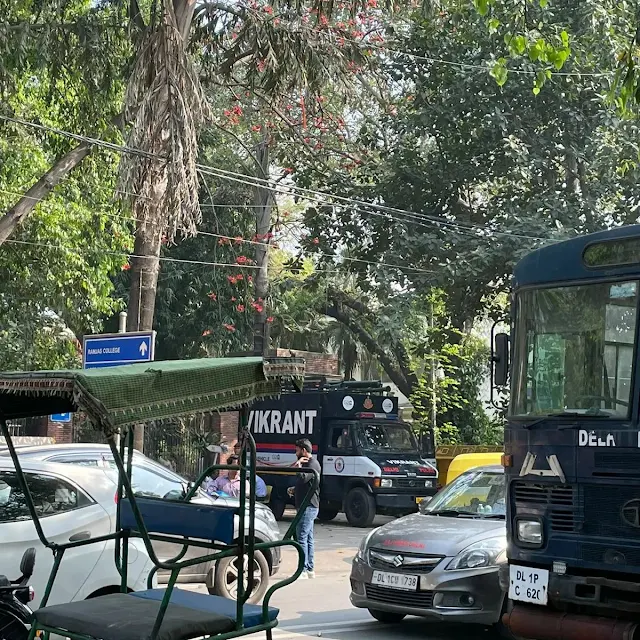
In no time, claimed student sources, approximately 100 guards and 100 Delhi police force, including 50 CRPF men, that marched into Delhi University.
Students were manhandled and detained, the sources said. Women and queer students were attacked to the extend that their clothes were pulled and derogatory statements were made. Women guards stated that “girls like you deserve to be treated as such.”
The students’ demands included:
  • Take back the arbitrary notice of debarring students.
  • Take back the arbitrary notice asking apology for democratic activity.
  • Stop inflicting FIRs on the students.
  • Allot auditorium in the campus for democratic programs to students.
  • Apologies to the students for their mental harassment. And we will struggle until the university authority fulfills our demands.

Comments

TRENDING

Swami Vivekananda's views on caste and sexuality were 'painfully' regressive

By Bhaskar Sur* Swami Vivekananda now belongs more to the modern Hindu mythology than reality. It makes a daunting job to discover the real human being who knew unemployment, humiliation of losing a teaching job for 'incompetence', longed in vain for the bliss of a happy conjugal life only to suffer the consequent frustration.

Hoping against despair after Myanmar President’s visit to India

By Nava Thakuria  Myanmar President U Min Aung Hlaing’s five-day official visit to India from 30 May to 3 June 2026 drew attention both in New Delhi and in India’s northeastern region, where policymakers and residents closely follow developments in the neighbouring country. The visit was significant because it touched on several issues of mutual concern, including security cooperation, border management, connectivity projects, trade, and regional stability.

Beyond data: The economist who refused to remain in the ivory tower

By Vikas Meshram   There are few people who are born into privilege yet choose to dedicate their lives to the cause of the poor. Jean Drèze is one such individual. Born on January 22, 1959, in Leuven, Belgium, into the family of a distinguished economist, Drèze has become one of the most influential voices in the study of poverty, inequality, and social policy in India. Having lived in India since 1979, he adopted Indian citizenship in 2002 and has since played a pivotal role in shaping some of the country's most important welfare initiatives.