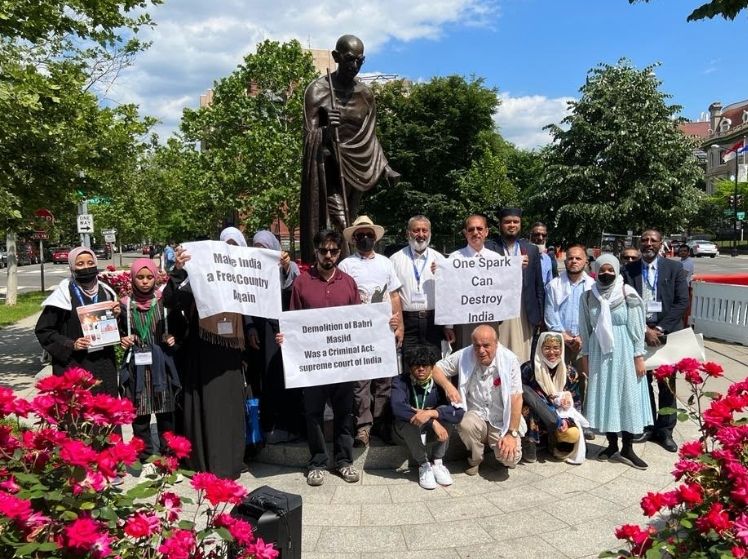
The Indian American Muslim Council (IAMC), claiming to be the largest advocacy organization of Indian Muslims, which organised a protesters near the Embassy of India in Washington, DC, has apprehended that the fate of hundreds of Indian mosques, such as the Gyanvapi masjid in Varanasi, might end up in the courts for many years.
Claiming that India’s Muslims, the country’s largest minority group with more than 200 million adherents, "have received the brunt of the persecution, including demolitions of their homes, businesses and places of worship by local authorities, acts of deadly violence and calls for genocide", IAMC said, "Mosques around the country, including those that have stood for centuries, are at risk of demolition."
Calling for an end to "human rights abuses and assaults on religious freedom in India", IAMC said in a statement following the protest, the participants included people of multiple faiths, pleading restoration India to a secular democracy in India, where people of many faiths live together.
Pointing out that "Christians also face persecution, such as assaults and mob violence at houses of worship, IAMC called the current state an "autocracy governed by the far-right Hindu extremist BJP", citing reports of sharp rise in "persecution of Muslims, Christians, Dalits and other minority groups".
The protest took place at the base of the statue of Mahatma Gandhi in Gandhi Memorial Plaza. The Indian embassy along Massachusetts Avenue was in the background, even as people took part in a Muslim prayer service, chanted and gave speeches.
Comments
Post a Comment
NOTE: Hateful, abusive comments won't be published. -- Editor