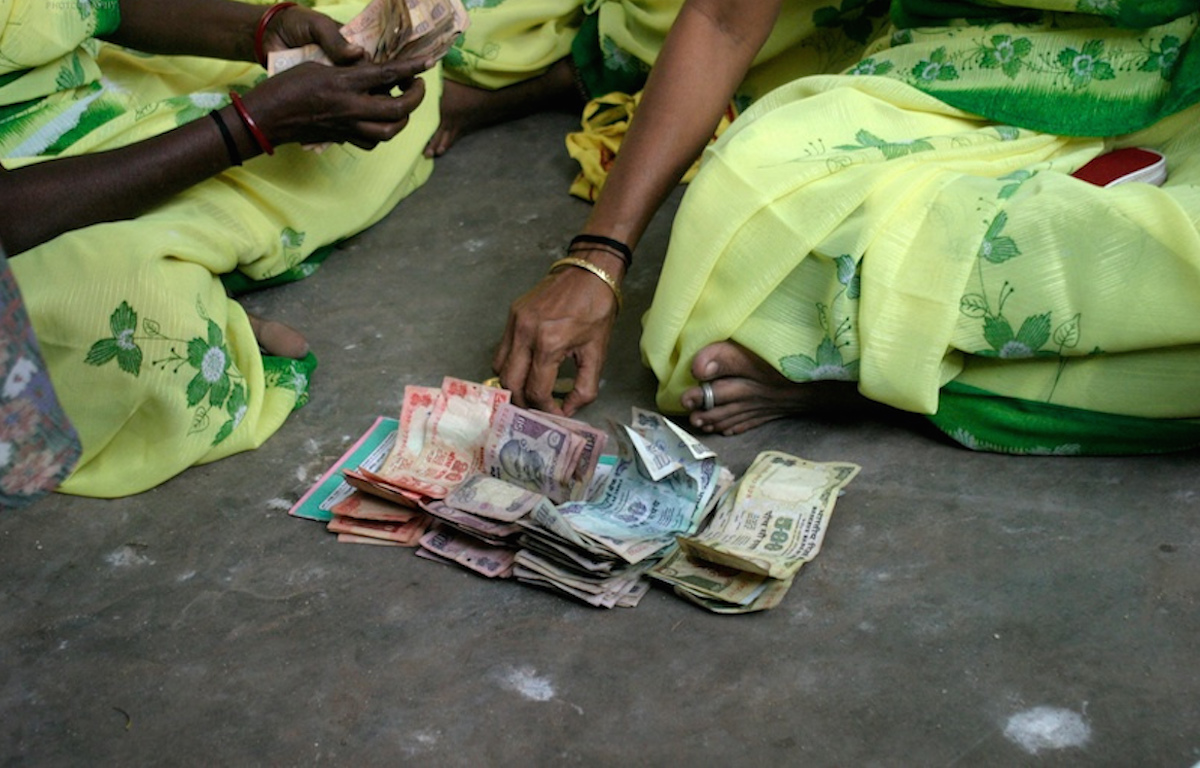
Women worldwide disproportionately face barriers to financial access that prevents them from participating in the economy and improving their lives. Providing access to finance for women is crucial for financial inclusion and, consequently, inclusive growth.
To deliberate and encourage dialogue and discussion for growth, the Gender Impact Studies Center (GISC) of IMPRI Impact and Policy Research Institute, New Delhi, organized a web policy talk by Mr S. S. Bhat, Chief Executive Officer Friends of Women’s World Banking India, Ahmedabad on ‘Access to Finance for Women’ as a part of its series The State of Gender Equality – #GenderGaps.
The session was started by the moderator, Chavi Jain, by introducing the speaker and the discussants and inviting Prof. Vibhuti Patel to start the deliberation.
Importance of access to finance for women
Prof. Vibhuti Patel, Visiting Professor, IMPRI, New Delhi; Former Professor, Tata Institute of Social Sciences (TISS), Mumbai, began by expressing her gratitude to IMPRI for holding a policy talk on the important yet usually ignored topic of financial inclusion of women and inviting her.Adding to the importance of holding such discussions, Mr S S Bhatt stated, “Unless we make noise, make our priorities clear, bring up certain innovative and scalable models, problems like these will be unable to grab the world’s attention.”
Prof. Vibhuti Patel also welcomed and thanked the panellists for attending the talk. She then began the discussion by deliberating on the importance of the topic to be discussed, i.e. the importance of access to finance for women by telling how many crucial sectors of developing economies, including that of India, rely heavily on women. Furthermore, many women-owned businesses in India contribute significantly to GDP and hence to economic growth.
In addition, as highlighted by Mr S. S. Bhatt, CEO, Friends of Women’s World Banking India, Ahmedabad, financial inclusion has a multiplier effect in boosting overall economic growth by reducing poverty and economic inequality at a national level (RBI’s report). Prof. Vibhuti Patel said that these women entrepreneurs don’t possess proper financing sources and rather possess only a handful of bootstrap funding from borrowings from friends, family, and relatives, and by selling off their jewellery. Therefore, she held that it is vital that women be financed to help these businesses grow and encourage the setting up of more such businesses.
In India, many women-owned businesses have unmet financial needs of $60 bn to $220 bn per year. He furthermore said that women own a mere 13 per cent of India’s MSMEs of which 98 per cent are micro-enterprises. He also added that the pandemic added to the dismay of women empowerment in India as a majority of funds dedicated to women empowerment was transferred to the health sector.
These were:
1. Difficulty in investing and growing their businesses
2. Difficulty faced by women in collecting and saving income and therefore in having better control of their earnings and undertaking personal and productive expenditure, and shelling the household from income shock.- Ms Swati Chaudhary
3. Problems in pulling their families out of poverty.
Therefore Prof. Patel stated that the financial inclusion of women is important for profound development impact by making good business sense for companies and economies and increasing the economic participation of women.
He explained that FWWB works on the grassroots level by providing information access and financial literacy, financially empowering women through livelihood and entrepreneurship support, emphasizing technology integration, and finally providing credit support to women belonging to lower economic classes all across India. He proudly stated that FWWB had helped 10 mn women in 40 years. Mr S S Bhatt elucidated and applauded some of the policy support by gov. and RBI in the pursuit of financial inclusion of women in terms of the Nationalization of banks, liberalization of account opening requirements, and building an extensive network of branches of banks.
1. Extensive sex-aggregated data to complement the production of Gender-smart products
2. Laying emphasis on other financial products such as credit, savings, insurance, remittance, etc along with bank access.
3. Making striding efforts towards increasing awareness and financial literacy
4. Technology usage training
5. Improving network and accessibility
6. Recruiting trained and sensitized human resources to deal with this segment.
7. Ensuring an overall enabling environment on regulations and policies
8. Increasing fintech usage
To input Mr Bhatt’s recommendations, Prof Vibhuti also put forward her recommendations: –
1. Mobilizing public opinion for gender-responsive budgeting in the area of credit support
2. Differential rate of interest for women
3. Strengthening the accountability system for private microfinance institutions.
“Women are untapped gold, and therefore, we need to make financial products work well for women”, said Ms Swati Chaudhary.
She based her statement on the following reasons:
1. Products designed for women suit the entire customer base with the converse being untrue
2. Even though women are slower to adapt and find it hard to be satisfied, they are comparatively more loyal customers than their male counterparts. Consecutively, women tend to use a lesser number of providers which leads to similar or lower acquisition costs and a higher customer lifetime value.
3. Women bring in more business as they are more likely to refer more customers and are also more likely to act on that recommendation
4. Women are stickier savers who save for larger purchases and are also reliable borrowers
5. Women are increasingly taking the role of the household finances manager and are hence valuable customers.
Hence, she proposed a data-driven tailored approach that focuses on
1. Overcoming women barriers
2. Identifying the unique needs of women through research and striving toward meeting these needs by providing women intuition and incentives to bank with the financial institution concerned.
1. Outreach- Identify networks of trusted sources and bring them onboard – This includes building a distribution channel through a network of trusted individuals, professionals, or groups across occupations and sectors.
2. Using unstructured data to tap into information that could give you meaningful results- Consuming all sorts of data be it heterogeneous, unstructured, or self-declared as all data makes sense without over questioning the product
3. Flexibility in providing credit in terms of other factors along with tenure – Breaking the barrier of preconceived notions of credit requirements and repayment methods. Instead, enquiring the customer about his credit requirements, look into his/her occupation, and then recommend the ideal credit scheme for the respective customer.
4. Engagement framework- Staying in constant contact with the customer to solve the problem of information asymmetry regarding the business of the customer, establishing trust and a safe environment for discussion.
5. Incentive Framework- Building an incentivizing framework to reward women for positive behavioural changes in women
6. Scalability through microenterprise development model- She described the model of Artha that is currently being used with the partnership of NABARD. This involves searching for women specializing in a specific skill, building their capacity, making toolkits, and credit linkages, and getting these women in touch with platform players. Such as getting good cooks in touch with Swiggy for establishing cloud kitchens.
Ms Sweta also proposed a well-defined and articulated vulnerability support fund for nano and micro-enterprises in vulnerable times.
“Every startup founder has a right to fail in vulnerable times like that of Covid 19 and in case of such an economic shock, these entrepreneurs must be supported to help them stride through the time of hardship and therefore support the ecosystem”, said Ms Sweta Aprameya.
Mr S S Bhatt put forward the following three points-
1. Ecosystem building- Building the required supporting ecosystem for women entrepreneurs and constantly bringing light to these issues
2. Policy focus- Policy focus must be intensified to deepen and widen the reach of the issue and to scale the success of women-specific supportive financial institutions
3. Awareness building
Following this, Ms Swati Chaudhary summed up her recommendations
1. Recognizing women as a distinct and important customer base
2. Gender disaggregated data
3. A coalition of the willing such as PSPs, BFSIs
Finally, Ms Sweta Aprameya put forward her points that include
1. Sensitization to combat the gender bias in the creditworthiness of women.
2. The support of investors and the government
The event was concluded by Prof. Vibhuti Patel by expressing the intellectual value of this discussion and by summing up the dialogue. Dr Simi Mehta, CEO of IMPRI, ended the talk by extending a vote of thanks to all the panellists for providing such valuable insights to develop a meaningful dialogue on such a crucial topic. Further, she and the other panellists expressed their hope for more such talks by IMPRI in the future.
---
Acknowledgement: Zubiya Moin is a Research Intern at IMPRI
Present scenario of the issue
Mr S S Bhatt highlighted that a total of 985 mn women globally are still financially excluded. Out of 1.75 bn banked women, 337 mn are inactive. Also highlighted by Ms Swati Chaudhary, Director – Network, Development, and Advocacy, India Women’s World Banking, even though the number of women accounts holders in India has increased from 43 per cent to 79 per cent, the usage of these accounts is still at 33 per cent despite the fact that women are more adept and resourceful in financial management.In India, many women-owned businesses have unmet financial needs of $60 bn to $220 bn per year. He furthermore said that women own a mere 13 per cent of India’s MSMEs of which 98 per cent are micro-enterprises. He also added that the pandemic added to the dismay of women empowerment in India as a majority of funds dedicated to women empowerment was transferred to the health sector.
Women’s financial inclusion barriers
Mr S S Bhatt classified the barriers into four categories.These were:
- Client-side barriers
- Low awareness
- Low level of financial literacy
- Insufficient collateral with most of the family’s assets being in the name of male members
- Lack of Identity proof
- Unacquaintance with technology- Prof. Vibhuti Patel added that this barrier emanates from the lack of cell phone access for females in India
- Restrictive social and cultural norms- Dwelling more on this barrier, Prof. Vibhuti Patel explained that most women are bound to take permission from male family members before opening a bank account and making financial transactions.
- Institutional barriers
- The gender gap in being creditworthy- as highlighted by Prof. Vibhuti, there is a huge gender gap created by formal banking institutions in terms of considering women comparatively less creditworthy than men.
- Limited understanding of consumer needs
- A mismatch between offerings and requirements
- Lack of gender-disaggregated data to support the designing of women-centric products
- Lack of data on business cases to serve women
- Lack of policy focus
- Very few scalable and replicable business models- Mr S S. Bhat stated that many institutions like Sewa bank and Mansdeshi bank are working in silos in specific areas
- Ecosystem barriers
- Lack of uniform ids
- Lack of tiered KYC
- Poor connectivity and infrastructure
- Lack of support from ecosystem players
Effects of low access to credit for women
Prof. Vibhuti further mentioned the impacts of low level of credit being extended to women which included-1. Difficulty in investing and growing their businesses
2. Difficulty faced by women in collecting and saving income and therefore in having better control of their earnings and undertaking personal and productive expenditure, and shelling the household from income shock.- Ms Swati Chaudhary
3. Problems in pulling their families out of poverty.
Therefore Prof. Patel stated that the financial inclusion of women is important for profound development impact by making good business sense for companies and economies and increasing the economic participation of women.
Existing organizations and policy support
Prof. Vibhuti Patel and Mr S S Bhatt praised the organizations such as Sewa bank, Mandeshi bank and Women’s World Bank, and Friends of Women’s world bank (FWWB) working towards achieving the vision of financial inclusion of women. Mr S S Bhatt further explained how FWWB promotes and tries to achieve its goal of financial inclusion of women through the sustainable model of inclusive development.He explained that FWWB works on the grassroots level by providing information access and financial literacy, financially empowering women through livelihood and entrepreneurship support, emphasizing technology integration, and finally providing credit support to women belonging to lower economic classes all across India. He proudly stated that FWWB had helped 10 mn women in 40 years. Mr S S Bhatt elucidated and applauded some of the policy support by gov. and RBI in the pursuit of financial inclusion of women in terms of the Nationalization of banks, liberalization of account opening requirements, and building an extensive network of branches of banks.
Pathways- Overcoming Barriers
Mr S S Bhatt further in his talk put forward various measures which can be taken by the government and the institutions to combat the problem of financial exclusion of women.1. Extensive sex-aggregated data to complement the production of Gender-smart products
2. Laying emphasis on other financial products such as credit, savings, insurance, remittance, etc along with bank access.
3. Making striding efforts towards increasing awareness and financial literacy
4. Technology usage training
5. Improving network and accessibility
6. Recruiting trained and sensitized human resources to deal with this segment.
7. Ensuring an overall enabling environment on regulations and policies
8. Increasing fintech usage
To input Mr Bhatt’s recommendations, Prof Vibhuti also put forward her recommendations: –
1. Mobilizing public opinion for gender-responsive budgeting in the area of credit support
2. Differential rate of interest for women
3. Strengthening the accountability system for private microfinance institutions.
Women-centric customer proposition
Emphasizing, particularly this aspect, Ms Swati Chowdhary stated that since women constitute the world’s largest and fastest-growing market, we need to look at women as a distinct customer base.“Women are untapped gold, and therefore, we need to make financial products work well for women”, said Ms Swati Chaudhary.
She based her statement on the following reasons:
1. Products designed for women suit the entire customer base with the converse being untrue
2. Even though women are slower to adapt and find it hard to be satisfied, they are comparatively more loyal customers than their male counterparts. Consecutively, women tend to use a lesser number of providers which leads to similar or lower acquisition costs and a higher customer lifetime value.
3. Women bring in more business as they are more likely to refer more customers and are also more likely to act on that recommendation
4. Women are stickier savers who save for larger purchases and are also reliable borrowers
5. Women are increasingly taking the role of the household finances manager and are hence valuable customers.
Hence, she proposed a data-driven tailored approach that focuses on
1. Overcoming women barriers
2. Identifying the unique needs of women through research and striving toward meeting these needs by providing women intuition and incentives to bank with the financial institution concerned.
The approach for institutions to financial inclusion of women
Ms Shweta Aprameya, Founder and CEO, ARTH; Co-founder, HAPPY, dwelled upon the ideal approach for financial institutions to sell their services by drawing from her experiences at ARTH. She described a step-by-step approach:1. Outreach- Identify networks of trusted sources and bring them onboard – This includes building a distribution channel through a network of trusted individuals, professionals, or groups across occupations and sectors.
2. Using unstructured data to tap into information that could give you meaningful results- Consuming all sorts of data be it heterogeneous, unstructured, or self-declared as all data makes sense without over questioning the product
3. Flexibility in providing credit in terms of other factors along with tenure – Breaking the barrier of preconceived notions of credit requirements and repayment methods. Instead, enquiring the customer about his credit requirements, look into his/her occupation, and then recommend the ideal credit scheme for the respective customer.
4. Engagement framework- Staying in constant contact with the customer to solve the problem of information asymmetry regarding the business of the customer, establishing trust and a safe environment for discussion.
5. Incentive Framework- Building an incentivizing framework to reward women for positive behavioural changes in women
6. Scalability through microenterprise development model- She described the model of Artha that is currently being used with the partnership of NABARD. This involves searching for women specializing in a specific skill, building their capacity, making toolkits, and credit linkages, and getting these women in touch with platform players. Such as getting good cooks in touch with Swiggy for establishing cloud kitchens.
Ms Sweta also proposed a well-defined and articulated vulnerability support fund for nano and micro-enterprises in vulnerable times.
“Every startup founder has a right to fail in vulnerable times like that of Covid 19 and in case of such an economic shock, these entrepreneurs must be supported to help them stride through the time of hardship and therefore support the ecosystem”, said Ms Sweta Aprameya.
Way Ahead
To conclude the session, Prof. Vibhuti Patel invited the panellists to put forward the way ahead toward the financial inclusion of women.Mr S S Bhatt put forward the following three points-
1. Ecosystem building- Building the required supporting ecosystem for women entrepreneurs and constantly bringing light to these issues
2. Policy focus- Policy focus must be intensified to deepen and widen the reach of the issue and to scale the success of women-specific supportive financial institutions
3. Awareness building
Following this, Ms Swati Chaudhary summed up her recommendations
1. Recognizing women as a distinct and important customer base
2. Gender disaggregated data
3. A coalition of the willing such as PSPs, BFSIs
Finally, Ms Sweta Aprameya put forward her points that include
1. Sensitization to combat the gender bias in the creditworthiness of women.
2. The support of investors and the government
The event was concluded by Prof. Vibhuti Patel by expressing the intellectual value of this discussion and by summing up the dialogue. Dr Simi Mehta, CEO of IMPRI, ended the talk by extending a vote of thanks to all the panellists for providing such valuable insights to develop a meaningful dialogue on such a crucial topic. Further, she and the other panellists expressed their hope for more such talks by IMPRI in the future.
---
Acknowledgement: Zubiya Moin is a Research Intern at IMPRI
Comments