.jpg)
Launched in 2015, the Smart City project was expected to conclude in 2020. This large scale urban infrastructure renewal and retrofitting initiative was meant to make Indian cities – 100 of them were chosen – climate change resilient and sustainable. Housing, electricity, water, waste management, efficient transport and robust digitalization were all planned, along with better governance.
Project implementation did not occur as planned, and the project was extended to 2023. Considering all the data available till March 2022, Centre for Financial Accountability (CFA), assessed the progress on the project, to find that it had flopped. Seven Years of Smart Cities Mission in India: A Review details the scale of the flop, visible even to those who did not keep track of data, given how frequently cities have flooded in rains in recent years.
The Centre committed Rs 48,000 crore to this project, Rs 100 crore for each city. This contribution would be matched with a similar amount from the states and local bodies of the respective cities; it was estimated that over five years over Rs 2 lakh crore would be spent, considering also the possible intersections with other schemes such as Swachh Bharat.
Such provisioning was in sharp contrast to the earlier Jawaharlal Nehru National Urban Renewal Mission, launched in 2005 with a budget of Rs 60,000 crore, which took the economic ability of state and local governments into consideration and offered a ratio of 90:10 for Centre and State governments as contribution for funds in the Northeast. Under the Smart City Mission (SCM), if many cities were chosen from one state, the state government was saddled with an enormous burden.
SCM also provided for funding through Public-Private Partnership. Projects that have been implemented in this mode are usually in the commercial infrastructure, real estate and social infrastructure sectors; manufacturing and communications have attracted little interest from private players. Funds were drawn also from international institutions like the Asian Development Bank, World Bank and Japan International Cooperation Agency.
The report also notes the by-passing of democratic procedures in the implementation of the scheme, which is through a Special Purpose Vehicle (SPV), a limited company creating a parallel structure for implementing urban projects along with municipal bodies. Digital and online modes were used for citizen participation in decision-making about proposed projects, leading to the exclusion of marginalized communities with no access to the internet.
SCM also provided for funding through Public-Private Partnership. Projects that have been implemented in this mode are usually in the commercial infrastructure, real estate and social infrastructure sectors; manufacturing and communications have attracted little interest from private players. Funds were drawn also from international institutions like the Asian Development Bank, World Bank and Japan International Cooperation Agency.
The report also notes the by-passing of democratic procedures in the implementation of the scheme, which is through a Special Purpose Vehicle (SPV), a limited company creating a parallel structure for implementing urban projects along with municipal bodies. Digital and online modes were used for citizen participation in decision-making about proposed projects, leading to the exclusion of marginalized communities with no access to the internet.
This is reflected in the meagre expenses incurred on projects for the welfare of such communities. It remains unclear what role the SPVs created for the purpose of this project will serve, once the mission is completed. Who will be responsible for maintenance of projects implemented under this scheme after the project is completed? These questions are left unaddressed.
Even the definition of the Smart City was left vague. The Government of India document states: “There is no universally accepted definition of a smart city. It means different things to different people. The conceptualization of the smart city therefore, varies from city to city and country to country, depending on the level of development, willingness to change and reform, resources and aspirations of city residents. A smart city would have different connotation in India than, say, Europe. Even in India, there is not one way of defining a smart city.”
Despite all the efforts, India was ranked last on the Environmental Performance Index brought out by Yale University in 2022.
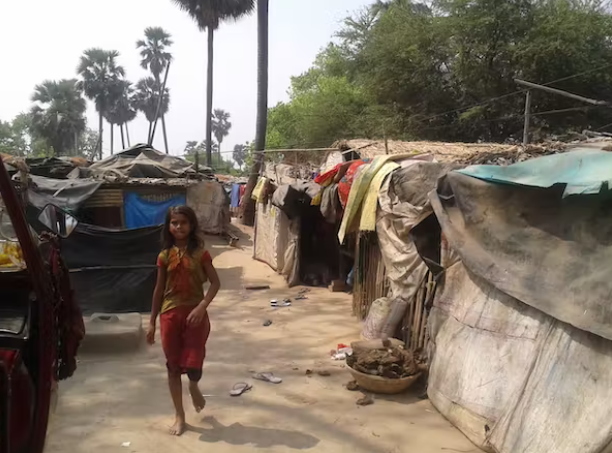 The CFA report notes the role of transnational corporations in building smart cities across the world – CISCO, IBM, Schneider Electric, Hitachi, Toshiba and other companies have a role too, in the promotion of the smart grid and communications networks. Given that India does not yet have a data privacy law, the involvement of global private corporations in the implementation of the Smart City project needs closer monitoring.
Even the definition of the Smart City was left vague. The Government of India document states: “There is no universally accepted definition of a smart city. It means different things to different people. The conceptualization of the smart city therefore, varies from city to city and country to country, depending on the level of development, willingness to change and reform, resources and aspirations of city residents. A smart city would have different connotation in India than, say, Europe. Even in India, there is not one way of defining a smart city.”
Despite all the efforts, India was ranked last on the Environmental Performance Index brought out by Yale University in 2022.
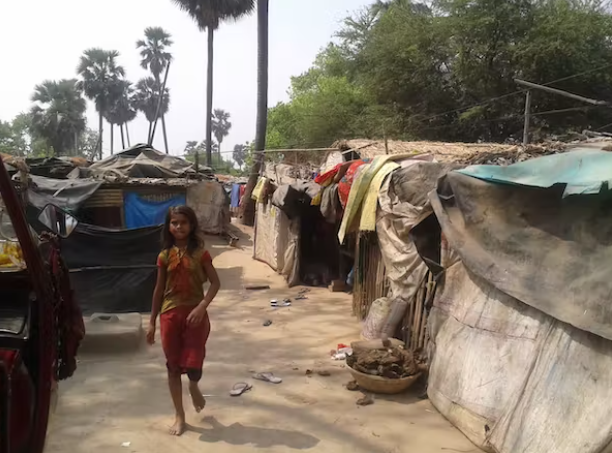
Inclusion of marginal communities -- street vendors, domestic workers, sanitation staff on contractual arrangements -- is unclear in SCM
The report notes that although allocation to the Ministry of Urban and Housing Affairs for the Smart City Mission has increased over the years, actual expenditure had seen a drastic fall since 2020-21, when Rs 6,450 crore was the budget estimate, Rs 4,300 crore was the revised estimate, and actual expenditure was Rs 3,195 crore. It might be possible to attribute this to the Covid pandemic; however, in 2019-20, the difference between Budget Estimate and actual expenditure was 47%, before the pandemic.
Funds released prior to 2019-20 may have been left unused since many cities took 18 months to get the Smart City Mission operational. Among the least performing cities on fund utilization, few had a project completion rate of 50%. Other than Srinagar and Itanagar among this list of 10 cities, all others had a completion rate of less than 22%.
“There have been astute attempts to manufacture high project completion rate by completing small/less-valued projects, which take lesser time,” the CFA report notes. For projects in PPP mode, a big chunk of the US$9,190 million allocation is accounted for a single project – International Agriculture Marketing Infrastructure Development, which would extend across the country. A press release in December 2021 indicated that loans would be offered for post-harvesting marketing infrastructure.
The CFA report indicates that this mode of “development” could be out of place in a democracy, given that decision-making is centralized and the SPVs function without inputs from elected representatives. As part of the SCM, Integrated Command and Control Centres would function, for a nationwide view of ICT infrastructure. “It is important to decide on a process to maintain data privacy and security of these data centres,” the report notes.
The inclusion of marginal communities – street vendors, domestic workers, sanitation staff on contractual arrangements with local governments and others -- is also unclear in the SCM. In Indore and Varanasi, for instance, demolition of old residential areas adversely impacted urban communities. Given that all this collective suffering has yielded so little, is it a wonder that Prime Minister Narendra Modi no longer mentions Smart Cities in his speeches?
---
*Freelance journalist
Funds released prior to 2019-20 may have been left unused since many cities took 18 months to get the Smart City Mission operational. Among the least performing cities on fund utilization, few had a project completion rate of 50%. Other than Srinagar and Itanagar among this list of 10 cities, all others had a completion rate of less than 22%.
“There have been astute attempts to manufacture high project completion rate by completing small/less-valued projects, which take lesser time,” the CFA report notes. For projects in PPP mode, a big chunk of the US$9,190 million allocation is accounted for a single project – International Agriculture Marketing Infrastructure Development, which would extend across the country. A press release in December 2021 indicated that loans would be offered for post-harvesting marketing infrastructure.
The CFA report indicates that this mode of “development” could be out of place in a democracy, given that decision-making is centralized and the SPVs function without inputs from elected representatives. As part of the SCM, Integrated Command and Control Centres would function, for a nationwide view of ICT infrastructure. “It is important to decide on a process to maintain data privacy and security of these data centres,” the report notes.
The inclusion of marginal communities – street vendors, domestic workers, sanitation staff on contractual arrangements with local governments and others -- is also unclear in the SCM. In Indore and Varanasi, for instance, demolition of old residential areas adversely impacted urban communities. Given that all this collective suffering has yielded so little, is it a wonder that Prime Minister Narendra Modi no longer mentions Smart Cities in his speeches?
---
*Freelance journalist
Comments