
A scholarly report, brought out by Oxfam India, claiming to “a movement against all forms of discrimination and one that aims to contribute to the building of a discrimination-free India”, has said that while there has been a decline in discrimination within the labour market in India over a decadal timeframe, this is characterised by high gender inequity so much so that the probability of a woman being employed in decent jobs has no bearing on her endowments.
Titled The India Discrimination Report 2022, the seeks to focus on differential access to labour market (absorption and wages), factor market (access to credit) and endowment market (access to hospitalisation) for different socio-religious and gender groups. Even as attempting to capture the extent of identity-based discrimination, it explains the gaps in access to employment and in wages, credit and health facilities in the context of formation of human capital across different castes, tribal and religious identities and gender.
Principal author of the report, Dr Amitabh Kundu, Professor Emeritus, L.J. University, Ahmedabad, talks to Counterview on major findings of the report.
Text:
A: Indeed, four of the six chapters of the Report, excluding that on Conclusion and Recommendations, analyse the trends and pattern of discrimination in labour market over the period from 2004 to 2020, focusing on gender, caste and religious dimensions. An attempt has been made here to statistically determine the magnitude of discrimination at different points of time. The Report argues that the inequality in access to employment and gaps in earnings across different groups of population can not be explained in terms of differences in their capabilities, such as levels of education, work experience and learning from family members or peer groups. A large part of the disparity is due to their social identities. Women, SC/ST and Muslims are taken as vulnerable groups and in each case comparison is made between their employment status with the rest of the population, in an attempt to bifurcate the total inequality/gap into two components: one due to difference in capabilities and the other attributed to gender, cast and religious identities.
I must add that, besides the labour market (access to employment and earnings), discrimination, factor market (access to credit) and endowment market (access to hospitalization) discrimination for SC/ST and gender groups have also been analysed in two chapters in the Report.
Q: What are the broad results of the study?
A: The Report attempts to capture the extent of identity-based discrimination, explaining the gaps in access to employment and in wages across different castes, tribal and religious identities and gender. The analysis of the labour market covers different types of jobs viz. regular, casual and self-employment and disparities in earnings following a standard methodology for determining discrimination.
The study demonstrates that discrimination within the labour market in India over the past decade and a half, is characterized by high gender inequity so much so that the probability of a woman being employed in decent jobs have no bearing on her endowments. In simple terms, this also means worker, non-worker status of women does not significantly depend on her educational qualifications as a large segment of women with equal level of education or experience are sitting outside the labour market. This leads to the alarming result, emerging from the methodology employed in the study, that gender discrimination is almost total in the country.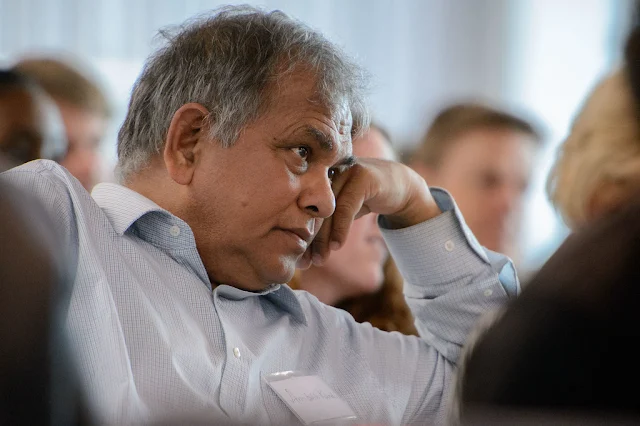
A: Discrimination against the SC/ST population in the labour market is notably high but has gone down marginally as their level of education and other measurable endowments have improved over time due to government policies of reservation, leading to their empowerment. Religion-based discrimination is relatively low only because Muslims get absorbed in low-value family-based occupations wherein they face less competition. In particular, their level of discrimination works out as low through the model in access to employment and wages because of their formal endowments that are also low. This result, however, must not lead to complacency. This low discrimination is largely because Muslims have certain professional skills in low-earning non-agricultural activities, acquired through family and peer group, in repair/maintenance, carpentry, construction etc. and these skills could not be included in the model due to non availability of national level data from any source. However, in urban labour market, discrimination in access to employment works out as very high, much more than against SC/ST population, and this has not gone down over the years.
Q: How did the pandemic affect labour market discrimination across different social and gender groups?
A: The study focuses on two quarters, one before the pandemic, January to March in 2020, and the first quarter of the pandemic viz. April-June 2020. The analysis of the data in two quarters, focusing on three vulnerable communities, SC/ST, Muslims and Women among regular workers, self-employed and casual workers suggests that the overall impact of the pandemic has been severe in urban areas due to the national lockdown, directly affecting urban business. The impact of the lockdown on agrarian economy has been low since it disrupted movement of goods and services, severely hitting the non agricultural activities. The sharpest rise in unemployment, here, is noted for Muslims paralyzing their system of livelihood. The increase in unemployment in the case of urban areas is alarmingly high but this is so both for SC/ST and Muslim population. The increase is high also for upper caste Hindu population but is somewhat modest. Q: How did the pandemic impact women’s engagement in labour market and their earnings?

Gender-based discrimination is found to be extremely high in all categories of employment and in both rural and urban areas. The high degree of gender discrimination manifests in a large segment of well-qualified women not ‘wanting’ to join the labour market because of household responsibilities or “social status” within the community or in caste hierarchy (wherein norms constrain their active participation in labour force). It is also patriarchy that makes a large segment of women, who have the same or even higher qualifications, stay outside employment, and this has shown no improvement over time, besides the gender bias and mindset of the employers.
Q: You mentioned of high gender based discrimination in labour market which has not declined over time. How about discrimination against SC/ST population vis-a-vis that against Muslims?A: Discrimination against the SC/ST population in the labour market is notably high but has gone down marginally as their level of education and other measurable endowments have improved over time due to government policies of reservation, leading to their empowerment. Religion-based discrimination is relatively low only because Muslims get absorbed in low-value family-based occupations wherein they face less competition. In particular, their level of discrimination works out as low through the model in access to employment and wages because of their formal endowments that are also low. This result, however, must not lead to complacency. This low discrimination is largely because Muslims have certain professional skills in low-earning non-agricultural activities, acquired through family and peer group, in repair/maintenance, carpentry, construction etc. and these skills could not be included in the model due to non availability of national level data from any source. However, in urban labour market, discrimination in access to employment works out as very high, much more than against SC/ST population, and this has not gone down over the years.
Q: How did the pandemic affect labour market discrimination across different social and gender groups?
A: The study focuses on two quarters, one before the pandemic, January to March in 2020, and the first quarter of the pandemic viz. April-June 2020. The analysis of the data in two quarters, focusing on three vulnerable communities, SC/ST, Muslims and Women among regular workers, self-employed and casual workers suggests that the overall impact of the pandemic has been severe in urban areas due to the national lockdown, directly affecting urban business. The impact of the lockdown on agrarian economy has been low since it disrupted movement of goods and services, severely hitting the non agricultural activities. The sharpest rise in unemployment, here, is noted for Muslims paralyzing their system of livelihood. The increase in unemployment in the case of urban areas is alarmingly high but this is so both for SC/ST and Muslim population. The increase is high also for upper caste Hindu population but is somewhat modest.

A: Gender discrimination in India is structural which results in great disparities between the earnings of men and women under ‘normal circumstances’ -- meaning the pre-Covid period. This can be inferred from the data for 2004-05 and 2018-19. The earning gaps are large, both in rural and urban areas for casual workers, ranging between 50 per cent and 70 per cent. The range is low for regular workers with the earnings of men exceeding those of women by 20 to 60 per cent. In the case of the self-employed, the disparity is much higher, with men earning 4 to 5 times that of women.
In the first pandemic quarter -- April-June 2020 -- women record high increase in unemployment in urban areas but it is similar to that of men. In rural areas, however, this is less than that of men. This is because here a majority of women are engaged in agriculture and household-based activities, wherein disruption due to lockdown is relatively less severe, except for casual employment. It is important to note that many persons in regular, casual or self-employed categories, despite not doing any work during the reference week due to certain exigency, report some income, because of the nature of the contract or employer-employee relationship. Women, however, are at a great disadvantage in this regard, both in rural and urban areas. While only 9 per cent among the self-employed men report not having any income for not doing work during the reference week in the pandemic, the figure is as high as 70 per cent for women as per the Periodic Labour Force Survey (PLFS) 2020. The study shows that the lockdown disrupted employment and wages for Muslims in rural areas while SC/ST groups bore the brunt of the losses in urban areas. Government machinery needs to address their specific problems, particularly in periods of such exigency.
In the first pandemic quarter -- April-June 2020 -- women record high increase in unemployment in urban areas but it is similar to that of men. In rural areas, however, this is less than that of men. This is because here a majority of women are engaged in agriculture and household-based activities, wherein disruption due to lockdown is relatively less severe, except for casual employment. It is important to note that many persons in regular, casual or self-employed categories, despite not doing any work during the reference week due to certain exigency, report some income, because of the nature of the contract or employer-employee relationship. Women, however, are at a great disadvantage in this regard, both in rural and urban areas. While only 9 per cent among the self-employed men report not having any income for not doing work during the reference week in the pandemic, the figure is as high as 70 per cent for women as per the Periodic Labour Force Survey (PLFS) 2020. The study shows that the lockdown disrupted employment and wages for Muslims in rural areas while SC/ST groups bore the brunt of the losses in urban areas. Government machinery needs to address their specific problems, particularly in periods of such exigency.
Comments