
The civil rights group, Indian Muslims for Secular Democracy (IMSD), terming the murderous attack on Salman Rushdie dastardly, has said that the “regime of fear” created by the infamous Iranian fatwa has “made sure that very few stood with Salman Rushdie, except for those Islamophobes who delighted in telling the world that this thuggery was ‘real Islam’.”
Floated by IMSD’s national convener Javed Anand, national co-convener Feroze Mithiborwala, and national committee member Arshad Alam, its statement, and signed by 60 prominent citizens from India and abroad, the statement says, “Thirty-three years later, we hear the same loud silence from Muslim countries and organizations.”
It regrets, “None of the prominent Indian Muslim organizations have condemned this barbarous attack on a prominent writer. It is this silence that emboldens the Islamophobes to paint the religion as a creed of violence and terror.”
Text:
The IMSD condemns the murderous attack on Salman Rushdie in the strongest possible terms. There cannot be any doubt that the assault on the world-renowned writer is due to the Iranian fatwa in 1989 which pronounced that Rushdie should be killed for blaspheming against the prophet of Islam.Despite the apology tendered by Rushdie for ‘hurting the sentiments of Muslims’, the fatwa against him remained in force; the bounty on his head was doubled. In Islamic theology, an apostate can be forgiven if he apologizes but the blasphemer against the prophet is not to be given any such quarter; he has to be summarily executed.
That a young Muslim man, Hadi Madar, who was not even born when 'Satanic Verses' was published, willed to execute the fatwa, only goes on to prove the extraordinary sway of such a theology.
Any such attack is designed to create a regime of fear. Translators of 'Satanic Verses' were killed, discussions on the book were violently repressed and bookstores were forced to take the novel off their shelves.
Any such attack is designed to create a regime of fear. Translators of 'Satanic Verses' were killed, discussions on the book were violently repressed and bookstores were forced to take the novel off their shelves.
The regime of fear made sure that very few stood with Salman Rushdie, except for those Islamophobes who delighted in telling the world that this thuggery was ‘real Islam’. Thirty-three years later, we hear the same loud silence from Muslim countries and organizations.
None of the prominent Indian Muslim organizations have condemned this barbarous attack on a prominent writer. It is this silence that emboldens the Islamophobes to paint the religion as a creed of violence and terror.
The recent murder of Kanhaiya Lal for another case of blasphemy by two Muslim fanatics, is another case in point of the intolerance within sections of the Indian Muslim community.
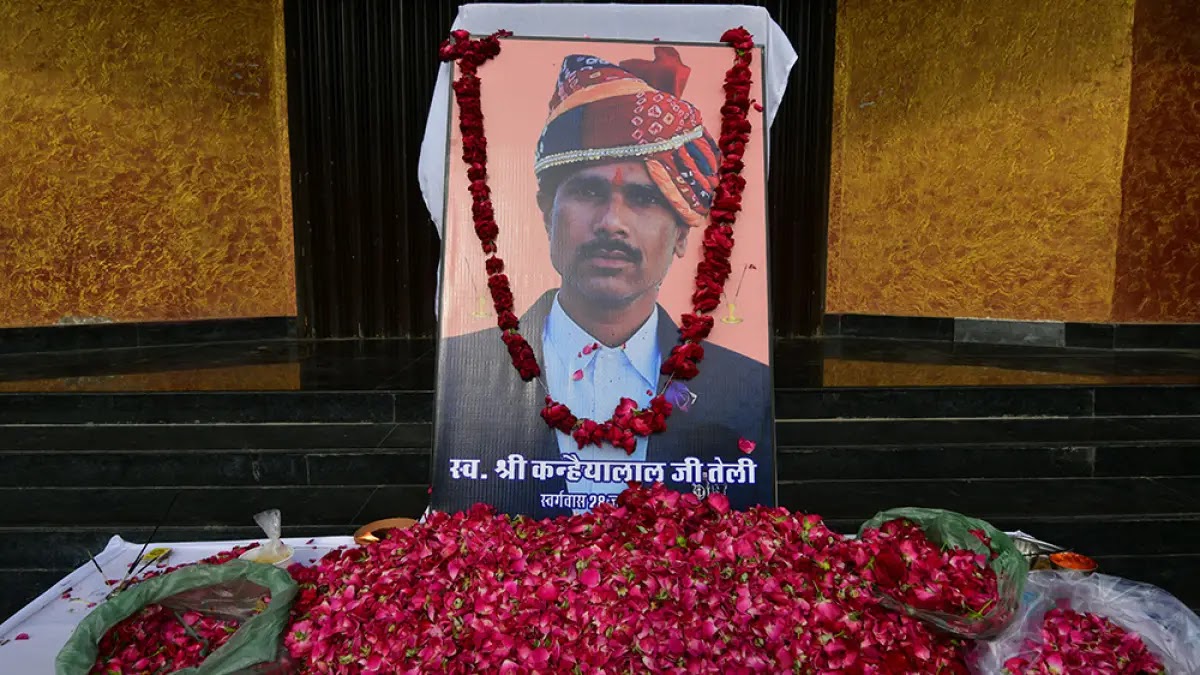
Muslim organizations only remember human rights when they are being attacked but don't extend same rights and dignity to others
It is rather rich on the part of Muslim organizations that they only remember human rights when they are being attacked but do not extend the same rights and dignity to others, Muslims or not, who differ from them on matters of religion. This is plain hypocrisy which does not help the Muslim cause. Being a minority, Indian Muslims should be championing a rights-based discourse on the importance of free speech and dissent.
It is unfortunate that despite living in a political democracy for 75 years, Muslim organizations today are demanding a national blasphemy law. Muslims do not need the Hindu right wing to argue that Islam and human rights are incompatible; they themselves have been advertising this position for long.
'Satanic Verses' was one of the first novels to inquire into the nature of Muslim immigration into Europe. And yet the irony is that Muslims burnt it to proclaim a politics of distinction and separateness. The IMSD firmly states that without free speech, freedom to read, write and dissent, we cannot uphold the freedoms enshrined in our constitution. And we believe that only by investing in these freedoms can we uphold the values of our republic. In this hour of grave crisis, we stand firmly with Salman Rushdie and wish him speedy recovery.
'Satanic Verses' was one of the first novels to inquire into the nature of Muslim immigration into Europe. And yet the irony is that Muslims burnt it to proclaim a politics of distinction and separateness. The IMSD firmly states that without free speech, freedom to read, write and dissent, we cannot uphold the freedoms enshrined in our constitution. And we believe that only by investing in these freedoms can we uphold the values of our republic. In this hour of grave crisis, we stand firmly with Salman Rushdie and wish him speedy recovery.
We once again appeal to all Muslim organizations to rethink their position on blasphemy; a form of politics which is doing Muslims more harm than good.
---
Click here for list of those who have endorsed the IMSD statement
Click here for list of those who have endorsed the IMSD statement
Comments
Post a Comment
NOTE: Hateful, abusive comments won't be published. -- Editor