As the crisis of climate change has aggravated rapidly, there is a strong reason for being highly cautious about development of any new coal projects. Nevertheless, countries of the global south cannot entirely ban such development as they have to be concerned also about their crucial energy needs as well and of developing their own resources within the country for this.
Countries of the global south have shown greater sense of responsibility than the developed and richest countries in this respect and they could have played an even more helpful role if the rich countries had kept to their earlier promises of generously helping the global south in this effort. Their promise of arranging a fund of 100 billion dollars a year for helping in this was a very modest effort which fell short of real needs, but the rich countries have been falling behind even in meeting this modest commitment of 100 billion dollars a year, which should be compared to the annual spending of 250 billion dollars in the USA alone on liquor!
Due to the absence of assured or significant support from rich countries in reducing their dependence on fossil fuels and other related tasks, countries of the global south have to be more cautious in balancing their climate change mitigation tasks with their essential development needs. This caution is well justified.
Having said this, it should be asserted that there is a clear need for being more restrictive towards the development of new large-scale coal projects and the need for being more restrictive and cautious is now much higher in times of aggravating climate change. The need for such caution will only increase in the coming days.
It is in this wider context that the controversial Deucha Pachami open pit coal mining project in Birbhum district of W.Bengal should be examined. From what we know of this project already at a very early stage, this is supposed to have the potential of very heavy yield of coal, although mining conditions are likely to be difficult and involve several hazards.
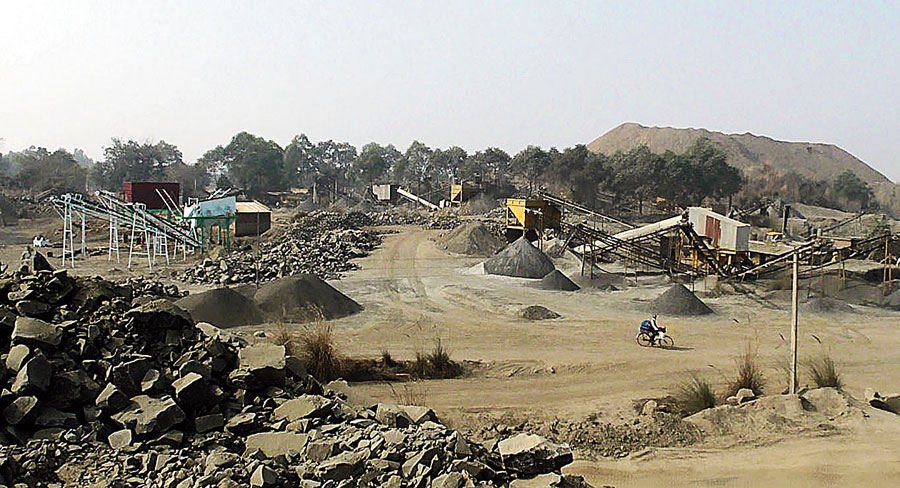
What we know with greater certainty is that nearly 21,000 people will be displaced and nearly half of these are from tribal communities. The tribal communities have been in the forefront of opposing this project to protect their villages and livelihoods, their farms and forests. In the past, according to reports, they have also opposed ecologically harmful stone mining and stone crushers. Clearly these tribal communities are very keen to protect their forests and farms and so they should be suitably encouraged in this endeavor to increase green cover in the area and ensure more sustainable livelihoods.
The clearly exhibited opposition of tribal communities, the threat of their displacement as well as the displacement of others, the destruction of forests as well as the need to be much more restrictive than before towards development of new massive coal projects—all these factors taken together are reason enough to stop this project once and for all.
Unfortunately the state government has been going ahead with scattered actions to promote and initiate the project without even taking the necessary environmental clearance and without initiating widespread public hearings and consultations. Although the Chief Minister Mamta Banerjee has stated that no coercion will be involved in acquiring land, the reality appears to be that it will be difficult to avoid coercion if the government goes ahead with this project. Hence it is better to give up this project at this early stage instead of incurring wasteful expenditure on it in times of resource scarcity.
---
The writer is Honorary Convener, Campaign to Save Earth Now. His recent books include ‘Planet in Peril’, ‘A Day in 2071’ and ‘When the Two Streams Met’
Comments
Post a Comment
NOTE: Hateful, abusive comments won't be published. -- Editor