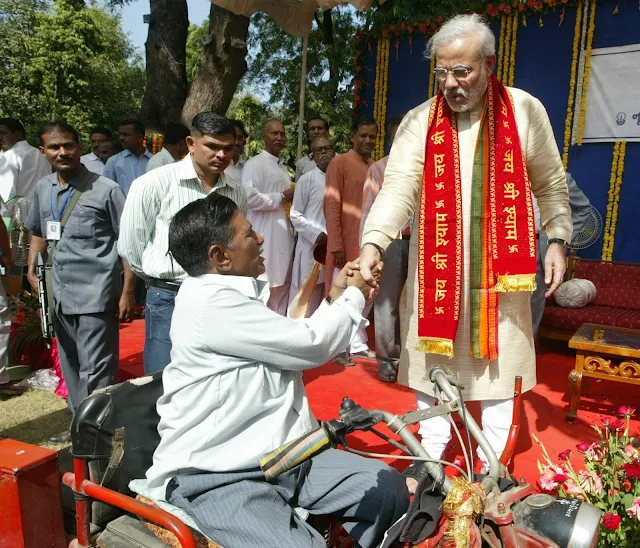
If responsibilities with respect to a most deserving and vulnerable section of our population increase significantly and the government also accepts that responsibilities have increased yet refuses to increase the budget in accordance with increased responsibilities, then surely this is a case of serious injustice.
If on top of it even the limited allocations are frequently cut mid-year and so revised estimates (RE) for several important schemes turn out eventually to be lower than the already low original allocations called Budget Estimates (BE), then surely this injustice is compounded further.
Well, this is what has been seen in recent years and this injustice has become even more severe in the latest budget for financial year 2022-23. At a time when there were very compelling reasons for an exceptionally significant, long overdue rise in allocations, the government has not cared at all to rise to the needs and deliver at least delayed justice.
There are several strong reasons for a significant rise in the allocations for Persons with Disabilities (PwD). Firstly, if recent times of the pandemic have been very tough for ordinary people, these times with all their problems and restrictions have been even more challenging and difficult for PwDs in terms of meeting even their basic needs and requirements.
Secondly, it has become clearer in recent times, particularly with the inclusion of more categories of disabilities, that the number of PwDs is higher than earlier estimates and so more allocations are needed for them. During the 2011 census the number of disabilities was 7 but when the Rights of Persons With Disabilities Act 2016 was passed 21 disabilities were included.
In order to implement Rights of Persons with Disabilities Act (RPDA) there is clearly need for additional resources. The Union Government and its Department for the Empowerment of Persons with Disabilities (DEPwD) also have the responsibility for implementing certain international conventions and agreements, particularly the United Nations Convention on the Rights of Persons with Disabilities (UNCRPD). In 2019 the Committee on the Rights of Persons with Disabilities (CRPD) made several recommendations for better and higher allocations linked to real needs.
There has been increasing realization of several neglected aspects and need for urgent work relating to these. Worldwide there is increasing consciousness of several hazardous products and technologies causing rapid increase in certain kinds of disabilities among children. There is urgent need for attending adequately to preventive aspects and research which can contribute to this.
Due to years of neglect, the backlog of attending to urgent needs has grown. According to the National Sample Survey Organisation's "Report on Disability 2018", only 24 per cent of the persons with locomotor disability, 31 per cent of persons with visual impairment and 19 per cent of people with hearing impairment, among those who are under medical advice for assistive devices, have been able to access this. What is more, only relatively smaller numbers have done this under government programs.
According to the DEPwD Annual Report for 2020-21 there has been a big disruption in the delivery of assistive devices. Clearly in view of all this a big intervention on the part of the government to improve the provision of assistive devices is urgently needed.
Last but not the least, due to the low allocations and cuts in recent times, the need for increase of funds has piled up. According to a recently released (February 2022) report titled "In Search of Inclusive Recovery" by the Centre for Budget and Governance Accountability, the ADIP scheme of Assistance to Disabled Persons for Aids and Appliances has seen frequent cuts.
Last but not the least, due to the low allocations and cuts in recent times, the need for increase of funds has piled up. According to a recently released (February 2022) report titled "In Search of Inclusive Recovery" by the Centre for Budget and Governance Accountability, the ADIP scheme of Assistance to Disabled Persons for Aids and Appliances has seen frequent cuts.
The pandemic has been even more challenging and difficult for PwDs in terms of meeting even their basic needs and requirements
In 2020-21 its actual expenditure was found to be Rs 189 crore compared to original allocation or BE of Rs. 230 crore. Next year in 2020-21 the BE of Rs. 220 crore was cut from Rs 220 crore to Rs 180 crore. Thus at the time of disruption and exceptional difficulties, this important scheme faced cuts instead of increases. Similarly the Deendayal Updhyaya Scheme for Rehabilitation faced a cut from Rs 130 crore to 83 crore worth of actual expenditure in 2020-21.
Next year the BE of Rs 125 crore was slashed to RE of Rs 105 crore. The Scheme for the Implementation of Rights of Persons with Disabilities Act (SIPDA) faced a cut from Rs 315 crore to Rs 217 crore in 2019-20, then from Rs 252 crore to Rs 103 crore next year, in terms of comparing BE with actual expenditure.
In 2021-22, the BE of Rs 210 crore, which in the first place was already much less than the BE of the two previous years was slashed further to Rs 147 crore while preparing the RE. Next, if we look at the allocations for scholarship programs , again there were cuts in the three previous years. The allocation for autonomous organisations was Rs 466 crore in 2020-21 but the actual expenditure was only Rs 281 crore.
The allocation for the national mental health programme has faced cuts in the three previous years. The allocations for the Indira Gandhi National Disability Pension scheme have been low, have stagnated and on top of it have faced cuts in the three previous years.
Overall the BE for PwDs declined from 0.0097 per cent of the GDP in 2020-21 to 0.0093 per cent in 2021-22. There was a decline in total allocation as well. Shockingly, at a time of huge unmet needs, the percentage share of unutilised resources against budget allocation increased from 4.90 per cent in 2018-19 to 15.66% in in 2019-20 to 34.99 per cent in 2020-21.
Keeping in view all these factors, clearly a big increase in allocation in this year’s budget was badly needed and overdue. However, the budget allocation for PwDs as a percentage of GDP has declined further in the BE for 2022-23 to 0.0084 per cent compared to 0.0093% in the previous year, an even bigger decline than in the previous year. There is no significant increase for any of the key schemes mentioned above and in fact for scholarships there is a decline.
One improvement in the insurance scheme has been highlighted by the government, but this can only be called a minor gain in the middle of the overall feeling of denial of justice.
---
*Honorary convener, Campaign to Save Earth Now; recent books include “India’s Quest for Sustainable Farming and Healthy Food”, “Protecting Earth For Children” and “Man over Machine”
Next year the BE of Rs 125 crore was slashed to RE of Rs 105 crore. The Scheme for the Implementation of Rights of Persons with Disabilities Act (SIPDA) faced a cut from Rs 315 crore to Rs 217 crore in 2019-20, then from Rs 252 crore to Rs 103 crore next year, in terms of comparing BE with actual expenditure.
In 2021-22, the BE of Rs 210 crore, which in the first place was already much less than the BE of the two previous years was slashed further to Rs 147 crore while preparing the RE. Next, if we look at the allocations for scholarship programs , again there were cuts in the three previous years. The allocation for autonomous organisations was Rs 466 crore in 2020-21 but the actual expenditure was only Rs 281 crore.
The allocation for the national mental health programme has faced cuts in the three previous years. The allocations for the Indira Gandhi National Disability Pension scheme have been low, have stagnated and on top of it have faced cuts in the three previous years.
Overall the BE for PwDs declined from 0.0097 per cent of the GDP in 2020-21 to 0.0093 per cent in 2021-22. There was a decline in total allocation as well. Shockingly, at a time of huge unmet needs, the percentage share of unutilised resources against budget allocation increased from 4.90 per cent in 2018-19 to 15.66% in in 2019-20 to 34.99 per cent in 2020-21.
Keeping in view all these factors, clearly a big increase in allocation in this year’s budget was badly needed and overdue. However, the budget allocation for PwDs as a percentage of GDP has declined further in the BE for 2022-23 to 0.0084 per cent compared to 0.0093% in the previous year, an even bigger decline than in the previous year. There is no significant increase for any of the key schemes mentioned above and in fact for scholarships there is a decline.
One improvement in the insurance scheme has been highlighted by the government, but this can only be called a minor gain in the middle of the overall feeling of denial of justice.
---
*Honorary convener, Campaign to Save Earth Now; recent books include “India’s Quest for Sustainable Farming and Healthy Food”, “Protecting Earth For Children” and “Man over Machine”
Comments
Post a Comment
NOTE: Hateful, abusive comments won't be published. -- Editor