 |
| Nemi Devi |
Freelance scholars and student volunteers interested in action-oriented research, socio-economic rights and related issues have carried out a survey on primary school children in a village in Jharkhand. A small writeup based on Road Scholarz’s twitter
thread:
***
We did a house-to-house survey of primary-school children in Dumbi, a fairly typical Dalit-Adivasi hamlet of Jharkhand. Out of 36 children, 30 could not read a single word. Many parents feel that their children are lapsing into illiteracy. Nemi Devi
explains.
Online learning is a fiction in Dumbi. With the village closed in the last 16 months, primary education is at a standstill. Most children are just milling around, some are working in the fields.
 |
| Kusmi Devi |
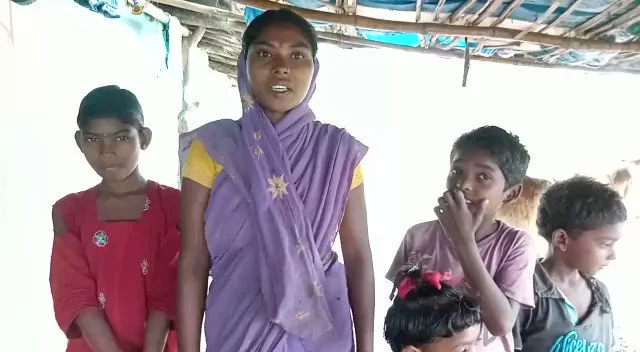
In almost every house there was a sad story of poor parents who are struggling to educate their children, but most have no smartphone and no money for tuitions. Kusmi Devi, mother of 4 illiterate children,
explains.
One of Kusmi’s daughters, Chandni, is in Class 5. She is unable to read a single word in hindi but she is expected to read this thick English textbook, with sentences like “gravity speeds up communication means, it also explains why Pisa leans”.
Even in the few houses of Dumbi where there is a smartphone, it is rarely used for online studying. Children easily get side-tracked –
here in a game of Ludo.
Bottom line: every single parent in Dumbi wants the local school to re-open as soon as possible. Who would guess that elementary education is a fundamental right in India?


Comments
Post a Comment
NOTE: Hateful, abusive comments won't be published. -- Editor