
Oratory is an important instrument in today’s times. Prime Minister Narendra Modi gave a new term, 'andolanjeevi', to his supporters which was countered by activists vehemently. Modi's speech was nothing but addressed to his audience, and now that includes the corporate bosses too, as he categorically said that private players are important for 'nation building'.
The second most important speech which was highly impressive. It exposed the Sangh Parivar agenda and governance of the last six years. Delivered by Mahua Moitra, Tranamool Congress member of Parliament in Lok Sabha, this extraordinary speech, full of passion, with each word coming from the heart, has rattled the ruling party.
The issue of farmers was strongly raised by Harsimaran Kaur, who was a minister a couple of months back, but is now opposing the government tooth and nail. She exposed BJP's double speak, pointing outhow the party has treated its allies. The Akali Dal was the oldest ally of BJP. Both parted company following the farm bills. Ironically, the Prime Minister 'complimented' women MPs for working hard to take the government to task.
But the most interesting speech in Parliament was that of Rahul Gandhi. His 'hum do hamare do’ slogan has distressed the ruling party. Rahul's speech in Parliament showed that, with experience, he is shining. It is good that he has been persistent in his approach over the last six seven years.
Unlike other top leaders who enjoyed ministerial positions during the UPA rule, Rahul threw his weight behind social justice, secularism and socialism. If Congress had stood ideologically strong on Hindutva ranting, it would not have been in such a huge decline.
It is extraordinary that Rahul used his time allocated for the budget discussion on the farmers’ issue and explained the three farm bills in the simplest way. Farmers in India have understood that he stands by them and people all over the country will soon see how 'hum do hamare do' will become a powerful slogan to explain the method of functioning of the current regime.
The most important part of Rahul’s speech was his request for two minutes’ silence for farmers who have died during the ongoing protest – the 'shaheed kisans'. This jolted those who did not speak a even one word for kisans and did not want to discuss the issue at all.
How insensitive can the regime be: It has been looking for conspiracy theories and has let loose its cyber goons to spread lies and calumny. Rahul's symbolic gesture will have a longtime impact and people will realise that there are ways and means to convey the message even when the party in power appeared determined not to allow him to speak on the issue.
While Congress is shaping up its ideology, its main problem is, it still does not have organisations in states. We don’t know what it is doing in West Bengal. Rahul has so far not visited Odisha. While Priyanka Gandhi has been active in Uttar Pradesh, albeit part time, there are many states where the party is not involved in any political action. It is important that ideological clarity of the party is complimented by the strong organisational network and alliances on the ground.
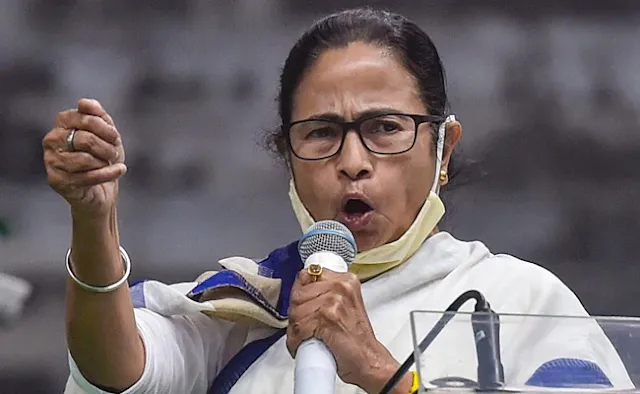 Meanwhile, as BJP goes whole hog in its effort to dislodge Mamata Banerjee, it was great to see Mamata respond to “India Today” anchor Rahul Kanwal, who tried to give him a lecture on freedom of expression and duties of media. She asked why Rajdeep Sardesai was taken off the air by the India Today group. When Rahul Kanwal 'reminded' her that Rajdeep was very much a part of the India Today group, she asked him back: Why was he not visible.
It is extraordinary that Rahul used his time allocated for the budget discussion on the farmers’ issue and explained the three farm bills in the simplest way. Farmers in India have understood that he stands by them and people all over the country will soon see how 'hum do hamare do' will become a powerful slogan to explain the method of functioning of the current regime.
The most important part of Rahul’s speech was his request for two minutes’ silence for farmers who have died during the ongoing protest – the 'shaheed kisans'. This jolted those who did not speak a even one word for kisans and did not want to discuss the issue at all.
How insensitive can the regime be: It has been looking for conspiracy theories and has let loose its cyber goons to spread lies and calumny. Rahul's symbolic gesture will have a longtime impact and people will realise that there are ways and means to convey the message even when the party in power appeared determined not to allow him to speak on the issue.
While Congress is shaping up its ideology, its main problem is, it still does not have organisations in states. We don’t know what it is doing in West Bengal. Rahul has so far not visited Odisha. While Priyanka Gandhi has been active in Uttar Pradesh, albeit part time, there are many states where the party is not involved in any political action. It is important that ideological clarity of the party is complimented by the strong organisational network and alliances on the ground.

As BJP goes whole hog in its effort to dislodge Mamata Banerjee, it was great to see Mamata respond to the India Today anchor
Currently, most “bania” channels are now organising its 'conclaves' in Kolkata. Basically, they are helping BJP build a positive atmosphere. Under the 'pretext' of conclaves, these channels give extraordinary space to BJP leaders to cry hoarse against other parties in the fray. They give one to one interviews. A particular kind of 'narrative' is being spread through 'experts', who are none other than members of one or the other BJP-supported coterie.
I don’t like Mamata's politics, but I must admit she is a street fighter and knows well how to counter the Modi-Shah duo. She has already raised the pitch by highlighting the 'outsider-insider' notion, which has made BJP uncomfortable. Rahul Kanwal asked Mamata as to why she was using this phrase. Her reply was, she has not spoken against anyone.
People from UP, Bihar, Rajasthan, Punjab, Gujarat, Jharkhand, South India have been living in Bengal and they are more Bengalis than Bengalis, she said, adding, all of them are happy. She insisted, UP should be run by UP wallah, Gujarat by people in Gujarat, and Punjab by Punjabis.
One cannot impose things from Delhi using Enforcement Directorate, CBI and other agencies to push BJP’s agenda, Mamata further said. She did not stop her. Her next line exposed the current regime. "If you love India and the idea of India then why are you appointing officials from one state in important positions?”, she queried.
Indeed, the government is least eligible to give a sermon on diversity, as it has never cared for it. It has been blatantly following favouritism. Officers from Gujarat are being given special positions at the PMO as well as the Central government. Are there no officers who can be trusted or capable of holding important positions?
As one can see, Mamata is fighting tooth and nail, and she knows her facts well. Mahua Moitra, too, has spoken with passion and conviction. At the same time, Rahul Gandhi's speech confirms that, when one speaks with ideological honesty, one would be able to fight much better. Modi and Shah speak powerfully because they are committed to their ideology and their constituency. The problem is with the “seculars” who are not committed to secularism or social justice.
Things appear to be changing now. Leaders seem to have realised that there is no other way but to stick to conviction and dedication to social justice, secularism and socialism to counter the casteist “varnadharmi” capitalists, the Sethji-Bhatji combine, to quote Jyotiba Phule.
It is time political leaders build an alliance at the ground level. There is no time for 'experiment'. The only thing they need to do is to build organisation. Indeed, there is a need to introspect honestly and make alliances which have ideological strength of Ambedkar-Phule-Periiyar-Birsa Munda-Bhagat Singh'. Such an alliance can engage in some give and take. It may not be permanent but it should have ideological strength.
Good days are returning as “netas” are working harder to make their strong points, whether in Parliament or outside. May their tribe increase.
---
*Human rights defender
I don’t like Mamata's politics, but I must admit she is a street fighter and knows well how to counter the Modi-Shah duo. She has already raised the pitch by highlighting the 'outsider-insider' notion, which has made BJP uncomfortable. Rahul Kanwal asked Mamata as to why she was using this phrase. Her reply was, she has not spoken against anyone.
People from UP, Bihar, Rajasthan, Punjab, Gujarat, Jharkhand, South India have been living in Bengal and they are more Bengalis than Bengalis, she said, adding, all of them are happy. She insisted, UP should be run by UP wallah, Gujarat by people in Gujarat, and Punjab by Punjabis.
One cannot impose things from Delhi using Enforcement Directorate, CBI and other agencies to push BJP’s agenda, Mamata further said. She did not stop her. Her next line exposed the current regime. "If you love India and the idea of India then why are you appointing officials from one state in important positions?”, she queried.
Indeed, the government is least eligible to give a sermon on diversity, as it has never cared for it. It has been blatantly following favouritism. Officers from Gujarat are being given special positions at the PMO as well as the Central government. Are there no officers who can be trusted or capable of holding important positions?
As one can see, Mamata is fighting tooth and nail, and she knows her facts well. Mahua Moitra, too, has spoken with passion and conviction. At the same time, Rahul Gandhi's speech confirms that, when one speaks with ideological honesty, one would be able to fight much better. Modi and Shah speak powerfully because they are committed to their ideology and their constituency. The problem is with the “seculars” who are not committed to secularism or social justice.
Things appear to be changing now. Leaders seem to have realised that there is no other way but to stick to conviction and dedication to social justice, secularism and socialism to counter the casteist “varnadharmi” capitalists, the Sethji-Bhatji combine, to quote Jyotiba Phule.
It is time political leaders build an alliance at the ground level. There is no time for 'experiment'. The only thing they need to do is to build organisation. Indeed, there is a need to introspect honestly and make alliances which have ideological strength of Ambedkar-Phule-Periiyar-Birsa Munda-Bhagat Singh'. Such an alliance can engage in some give and take. It may not be permanent but it should have ideological strength.
Good days are returning as “netas” are working harder to make their strong points, whether in Parliament or outside. May their tribe increase.
---
*Human rights defender
This idea is a pipe dream . The Gandhis cannot partner with anyone. Despite them being bankrupt of any talent required for leadership they cling on to the party. Every time Rahul opens his mouth most surely the BJP gains in the relevant elections of the time and / or gains supporters. Every time Rahul opens his mouth chants of "pappu" reverberate. How can this man and his party ever join with others seriously for any kind of alliance. The idea is a pipe dream. He is tainted and has to retire form politics for a minimum of 5 if not 10 years
ReplyDelete