Resolution by the Indian Association of Lawyers asking the Government of India to to intervene and ensure annulment of changes in existing labour laws initiated by several state government:
As the entire world is passing through an unprecedented crises and the situation in India is also very serious, there is a general consensus that all sections of the population must wholeheartedly cooperate with the state agencies and abide by lawful orders, directions and guidelines issued from time to time. Discipline is the key to the success of any strategy evolved to combat the pandemic.However, the nature and scale of the crisis essentially calls for wide ranging consultation and conscious and whole hearted participation of all sections of society, i.e., the political executive; the bureaucratic infrastructure; the huge work force serving as public servants under them, the frontline participants in the enterprise and the public at the grass roots.
A democratic set up has the great advantage of eliciting appropriate advice and consultation from different sources. The willing and voluntary participation of the civil society is a condition precedent for an effective way out of the unprecedented crisis.
However, the democratic rights of the citizens as well as the legal norms constitutionally provided in a democratic set up, can at no cost be treated as having been placed under suspension. The State can only win the trust of the citizens through insightful planning, compassionate execution and substantial welfare measures that reach the weaker and marginalized sections.
While the people are providing unquestioned support to the State and its agencies, the latter have been greatly unequal to the task. A hasty and unplanned lockdown has brought hunger, starvation and misery to various sections of the poorest countrymen.
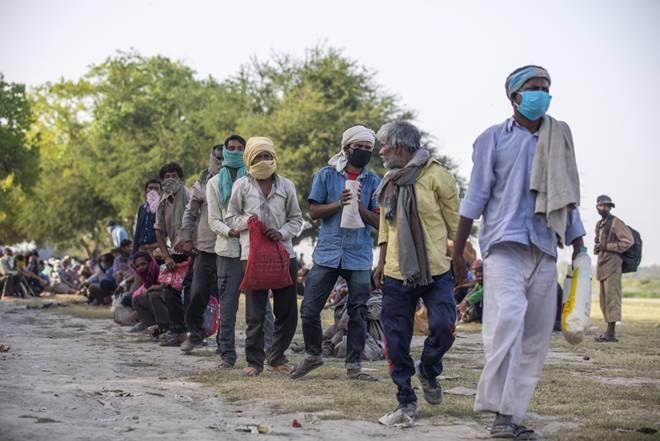
The injustice meted out to the migrant workers must put all of us to shame. It is most unfortunate that even after the imposition of an ill-planned lockdown not much has been done to take effective corrective measures. The poor have been left out wholly unprotected.
Taking undue advantage of the pathetic situation of the working class, particularly of the migrant workers, some of the State Governments have started axing the hard won rights of the trade unions by taking undue advantage of the massive powers conferred on them by the situation and introducing very harsh, inequitable, unjust and wholly unwarranted legislation which is patently against the interest of the working class.
Most of the Labour Laws are Central legislation and were enacted after fierce battle of the workers against the British regime and the British employers. Even Industrial Disputes Act was promulgated on 11th March, 1947 i.e. months before Independence. Article 37 of the Constitution of India provides that the Directive Principles are “nevertheless fundamental in the governance of the country and it shall be the duty of the State to apply these principles in making laws”. The next Article 38 (2) puts a mandate that:
“The State shall, in particular, strive to minimize the inequalities in income, and endeavour to eliminate inequalities in status, facilities and opportunities, not only amongst individuals but also amongst groups of people residing in different areas or engaged in different vocations”.
As such the deliberate act of curbing the labour laws is contrary to Constitutional goals and would obviously put the workers in a state of slavery, against which they fought in the Independence movement.
No doubt Covid-19 has created an extraordinary situation warranting extraordinary measures to deal with it. But that does not mean that Governments can suspend/abrogate/abuse laws so as to curtail the constitutionally guaranteed rights to the people.
The recent ordinance passed by the State of Uttar Pradesh, exempting application of a host of labour laws, including Minimum Wages Act, Migrant Labour Act, to industries under the pretext of kick starting the economy and to facilitating investment in the State.
The Government of Madhya Pradesh has also tampered with labour laws so as to turn labour in to slaves. Indian Association of Lawyers registers its strong protest against these undemocratic actions, which in fact will hurt the economy in the longer run due to conflicts.
The Indian Association of Lawyers expresses its deep anguish and sorrow over the gas tragedy in the Polymer factory near Vishakapattanam in Andhra Pradesh, causing death of 12 innocent citizens and health problems to hundreds of residents around the factory. Indian Association of Lawyers demands that the factory management be brought to book for flouting the safety laws and norms.
It is distressing to note the manner in which the Supreme Court of India has failed to act promptly, decisively and effectively in many Public Interest Litigation cases.
The Indian Association of Lawyers appeals to the Central government to intervene to get this anti-workers ordinance annulled. Indian Association of Lawyers further appeals to the Government of India to take urgent steps for initiating large scale welfare measures to save the poor from hunger, deprivation and malnutrition. Huge public investment is required forthwith to save the people on the one hand and to bring the economy back on the rails.
Indecision and delay in this regard has caused huge suffering to the people and damage to the economy. Appropriate steps in the right direction are required to be taken in an emergent and planned manner to save the people and the country from irreparable suffering and damage.
—
Signed by general secretaries Muralidhara, Prabhakar B, YS Lohit and Ajay Chalasani, and R.S.Cheema, president
Comments
Post a Comment
NOTE: Hateful, abusive comments won't be published. -- Editor