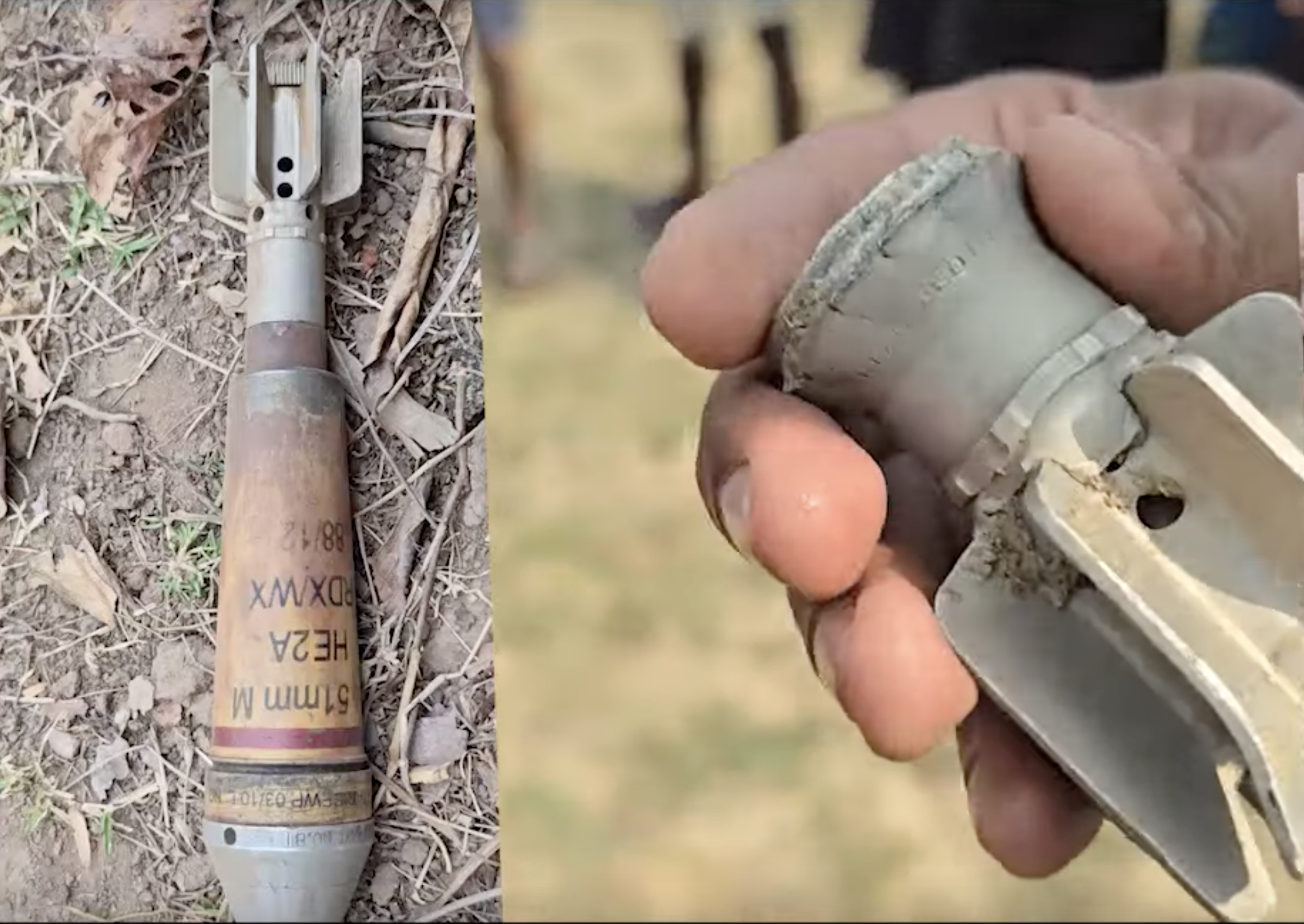
The civil rights network* Forum Against Corporatization and Militarization (FACAM) has said the death of two children caused by the mortar shell explosion in Bijapur, Chhattisgarh, highlights the grim reality of the larger Bastar area turning into a warzone in the name of countering Maoism.
Instead of taking responsibility for the incident which is a direct consequence of the "war on people for the sake of corporate interests", the authorities "have pinned the blame on the Maoists" and alleged that the mortar shell was "planted by them which caused the explosion."
Text:
On 12th May 2024, two children, Laxman and Boti Oyam from Gurga village, Bijapur district were unfortunately killed in an explosion after they unknowingly triggered an unexploded mortar shell buried in the soil. The mortar shell was left in the spot after the Indian state’s paramilitary carried out heavy mortar shelling in the forests dangerously close to the villages.The explosion happened near forests of Odspara village, Bijapur district on the banks of Indravati river where the children, along with other adults from their village had gone to gather tendu leaves. While they were gathering the leaves, the children were throwing rocks around, one of which hit the mortar shell and triggered the explosion. Twenty children were present in the area, out of whom two were killed.
The deaths of these children highlight the grim day-to-day reality of turning the larger Bastar area into a warzone in the name of countering Maoism. The villagers had anticipated this and had already requested the police to remove such unexploded mortar shells multiple times before this tragedy occurred.
Instead of taking responsibility for this loss of life, a direct consequence of the Indian state’s war on people for the sake of corporate interests, they have pinned the blame on the Maoists and alleged that it was an IED planted by them which caused the explosion.
Instead of taking responsibility for this loss of life, a direct consequence of the Indian state’s war on people for the sake of corporate interests, they have pinned the blame on the Maoists and alleged that it was an IED planted by them which caused the explosion.
Villager testimonies and ground reports vehemently prove otherwise. FACAM had previously reported that on 13th April 2024, a combing operation by the paramilitary forces had occurred in Odspara village during which one Raje Oyam, an Adivasi peasant woman was shot dead.
On a previous occasion in the same village, Ramesh Oyam, an Adivasi peasant, was shot dead when he was bathing in the Indravati river and on 13th April, one of the mortal shells fell into the vicinity of the deceased Ramesh Oyam’s house as well.
It was reported that the explosive device that had led to the death of the children on 12th May 2024 looked exactly like the mortar shell left behind in the combing operation of the state.
Furthermore, according to the villagers, the remnants of the explosive device had the serial numbers similar to the ones present in mortar shells used by security forces. The IED devices used by the Maoists are not as sophisticated as the explosive devices used by the state. The IED devices are usually country-made devices which are made using parts of a vehicle and other locally sourced parts.
Mortar shells lying around in the forest is a grave threat to the existence and culture of Adivasi peasants
This shell, as reported by the villagers, was much more sophisticated. In fact, the villagers argue that the paramilitary forces did not even come to the village even after the children died and released the statement pinning these deaths on the Maoists without even visiting the village or talking to the villagers!
Mortar shelling of this magnitude against the people of their own country finds no justification in the Indian state’s Constitution and is a grave violation of the democratic rights it claims to uphold.
Even in the case that the state claims that such measures are to combat the activities of the banned Communist Party of India (Maoist), the principle of proportionality must be applied wherein the Maoists are not employing any sort of armed activity in the same magnitude as the state’s, like those of aerial bombings and mortar shellings.
There is no legal or moral argument that excuses the Indian state’s genocidal policies against the Adivasi peasants. Mortar shells lying around in the forest is a grave threat to the existence and culture of Adivasi peasants, who have to walk on eggshells in their own forest lands, with the lives of their children and their families being put at risk when they go into the forest to gather tendu leaves.
Thus, the usage of mortar shells by the paramilitary must be stopped by the Indian state’s paramilitary forces.
FACAM demands an end to the usage of mortar shells and aerial bombs which create a heightened threat to the existence of Adivasi peasants on their own forest lands and restricts their livelihood.
FACAM demands an immediate judicial inquiry into the negligent murders of Laxman and Boti Oyam by the Indian state.
---
*All India Revolutionary Students Organization (AIRSO), All India Students Association (AISA), All India Revolutionary Women’s Organization (AIRWO), Ambedkar Student Association- DU (ASA-DU), Bhim Army Student Federation (BASF), Bhagat Singh Ambedkar Students Organization (BASO), Bhagat Singh Chhatra Ekta Manch (bsCEM), Collective, Common Teachers Forum (CTF), Democratic Students Union (DSU), Fraternity Movement, Nazariya Magazine, Progressive Lawyers Association (PLA), Mazdoor Adhikar Sangathan (MAS), Trade Union Centre of India (TUCI), Vishwavidyalaya Chhatra Federation (VCF)
*All India Revolutionary Students Organization (AIRSO), All India Students Association (AISA), All India Revolutionary Women’s Organization (AIRWO), Ambedkar Student Association- DU (ASA-DU), Bhim Army Student Federation (BASF), Bhagat Singh Ambedkar Students Organization (BASO), Bhagat Singh Chhatra Ekta Manch (bsCEM), Collective, Common Teachers Forum (CTF), Democratic Students Union (DSU), Fraternity Movement, Nazariya Magazine, Progressive Lawyers Association (PLA), Mazdoor Adhikar Sangathan (MAS), Trade Union Centre of India (TUCI), Vishwavidyalaya Chhatra Federation (VCF)
What's the logic here ther is no law anywhere that states force should be minimal when dealing with naxalites or rebels bastar is already war zone since 1967 this logic doesn't make sense security forces should not use technology to counter maoaist because it's unfair and they are military weak
ReplyDelete