.jpeg)
Two important Union Ministries have shown extraordinary reluctance to spend their allotted funds this year. What makes the situation more distressing is that both of these ministries have responsibility for important schemes which are important for more vulnerable and poorer sections.
One such ministry is the Ministry of Social Justice and Empowerment, or more specifically the Department of Social Justice and Environment (DSJE). This is the department which deals with very important issues regarding welfare of scheduled castes, extremely backward classes, other backward classes, nomadic, semi-nomadic communities and denotified tribes. The original budget allocation during 2022-23 for DSJE amounted to Rs 11922 crore ( one crore=10 million) which was later revised downwards to Rs 10709 crore.
However what is most surprising and shocking is that the actual spending up to February 15, 2023 ( i.e. for ten and a half months out of the 12 months of the financial year 2022-23) amounted to just Rs 3488 crore, or just 29% of the original allocation. It is seldom that till such a late date of the financial year such a low spending takes place, that too in a ministry where the spending directly concerns the needs of some of the poorest persons in the country.
The fact that the Revised Estimate had been brought down allocation only modestly in relative terms would indicate that till rather late in the financial year the need for sticking to the original allocation was felt and funds were available too, so why actual expenditure has been so inadequate is difficult to understand, considering also that those affected are really needy sections.
To give one example of various programs for the poor which were very adversely affected, the allocation of Rs 70 crore for the self-employment program of those engaged earlier in manual scavenging (for which the revised estimate was maintained at the same level) was reduced to actual spending of only Rs 5 crore. The allocation of Rs 15 crore for rehabilitation of beggars was reduced to 0.2 crore.
To give one example of various programs for the poor which were very adversely affected, the allocation of Rs 70 crore for the self-employment program of those engaged earlier in manual scavenging (for which the revised estimate was maintained at the same level) was reduced to actual spending of only Rs 5 crore. The allocation of Rs 15 crore for rehabilitation of beggars was reduced to 0.2 crore.
The allocation for the strengthening of arrangements for protecting civil rights and preventing atrocities was Rs 600 crore but spending was reduced to Rs 75 crore. The program of economic empowerment of nomadic and denotified tribes was allotted Rs 28 crore but spending was only Rs 2 crore. ( All spending figures are up to February 15 2022).
The second ministry in this context is the Ministry of Minority Affairs where the spending was an even lower percentage of the allocation. In this context the original budget allocation for the Ministry was Rs 5020 crore while the spending up to February 13 was just Rs 668 crore, or just 13% of the original budget. It is seldom seen that in the 10 and a half months out of 12 months only 13% of the funds are spent.
The second ministry in this context is the Ministry of Minority Affairs where the spending was an even lower percentage of the allocation. In this context the original budget allocation for the Ministry was Rs 5020 crore while the spending up to February 13 was just Rs 668 crore, or just 13% of the original budget. It is seldom seen that in the 10 and a half months out of 12 months only 13% of the funds are spent.
There is no credible explanation for this -- as far as procedural issues and regulations are concerned, these have been created by the government and have to be corrected by the government.
Clearly these serious lapses should be made up as early as possible by stepping up important welfare-oriented programs in the new financial year.
This is all the more distressing as Extremely Backward Classes, nomadic and semi-nomadic communities as well as denotified tribes are also affected by the extremely low spending in in some of the schemes.
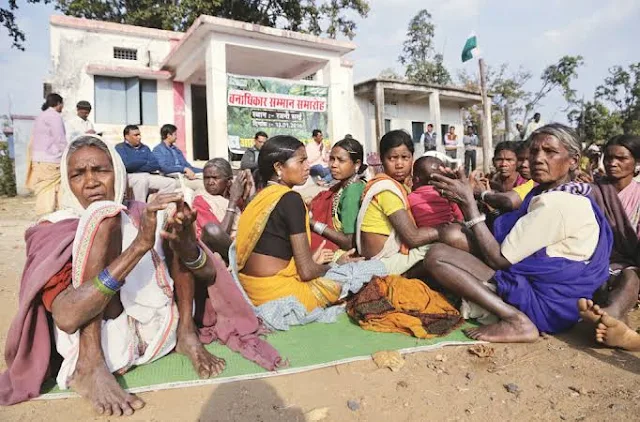 In the case of the backward class component of PM Dakshta scheme (an important scheme in the context of protecting /promoting skills and livelihoods), Rs 44 crore was allocated but amount spent was zero. In the case of backward class component of VISWAS scheme meant for economic help of deprived groups, Rs 30 crore was allocated but nothing was spent. In the PM Yasasvi meant for various scholarships to students in this category INR 1581 crore was allocated but only INR 42 crore was spent.
Backward Class schemes: only 6% of allocated funds spent
Backward classes are supposed to be increasingly a politically influential segment of Indian society. So it should come as a surprise that only 6% of allocated funds for all backward class schemes in the financial year 2022-23 were actually spent in the first nine months of this financial year i.e. up to 31 December 2022 by the Department for Social Justice and Empowerment (DJSE). Rs 1803 crore were allocated and Rs 113 crore were spent up to 31 December.This is all the more distressing as Extremely Backward Classes, nomadic and semi-nomadic communities as well as denotified tribes are also affected by the extremely low spending in in some of the schemes.

Clearly such low spending can increase the distress of many poor households for whose benefits these schemes are supposed to function.
To complete the story, moreover, it needs to be mentioned that the overall allocation has also deceased. As against the allocation of Rs 2015 crore in 2020-21 for various backward class schemes being implemented by the DJSE, the allocation in 2022-23 was 1803 crore in 2022-23 and has deceased further to Rs 1785 crore in the allocations made for the year 2023-34.
To complete the story, moreover, it needs to be mentioned that the overall allocation has also deceased. As against the allocation of Rs 2015 crore in 2020-21 for various backward class schemes being implemented by the DJSE, the allocation in 2022-23 was 1803 crore in 2022-23 and has deceased further to Rs 1785 crore in the allocations made for the year 2023-34.
Further if we look at the non-scheme expenditure, the allocation for the National Backward Classes Finance and Development Corporation (NBCFDC) has also been declining. In 2020-21 this was Rs 200 crore, next year this came down to Rs 100 crore, in 2022-23 this was further reduced to Rs 50 crore while in 2023-24 this has been drastically reduced to Rs 15 crore.
What is more, as far as the actual spending is concerned, it is really surprising that against the allocation of Rs 50 crore in 2022-23 for NBCFDC , the actual spending in the first nine months up to 31 December, 2022 was zero.
Clearly these allocations on several important aspects of development relating to Other Backward Classes should increase in the near future to make up for past lapses.
---
*Honorary convener, Campaign to Save Earth Now. His recent books include ‘India’s Quest for Sustainable Farming and Healthy Food’, ‘When the Two Streams Met’ and ‘Man over Machine -- A Path to Peace’. Data source: Report of the Demand on Grants for 2023-24 of the Parliamentary Standing Committee for Social Justice and Empowerment (2022-23), 17th Lok Sabha, 46th Report
What is more, as far as the actual spending is concerned, it is really surprising that against the allocation of Rs 50 crore in 2022-23 for NBCFDC , the actual spending in the first nine months up to 31 December, 2022 was zero.
Clearly these allocations on several important aspects of development relating to Other Backward Classes should increase in the near future to make up for past lapses.
---
*Honorary convener, Campaign to Save Earth Now. His recent books include ‘India’s Quest for Sustainable Farming and Healthy Food’, ‘When the Two Streams Met’ and ‘Man over Machine -- A Path to Peace’. Data source: Report of the Demand on Grants for 2023-24 of the Parliamentary Standing Committee for Social Justice and Empowerment (2022-23), 17th Lok Sabha, 46th Report
Comments