 By Shankar Sharma*
 Most of us, who are really concerned about the unacceptable impacts on our communities from the social and environmental aspects of the irrational and un-sustainable economic decisions on scores of infrastructure related projects, which seem to be only growing in number every year in our country, are feeling highly frustrated that the concerned authorities are not only continuing to ignore the relevant provisions of our Constitution and various Acts of the Parliament, but are also neglecting/ rejecting the continuous warnings/ opposition from civil society to such practices.
We also frequently complain that we do not have adequate opportunity to participate, even if indirectly, in the economic decision making processes on major policy initiatives, or on important and high impact projects.
Whereas, it is natural for the rationally inclined people to feel frustrated on such issues, there is another dimension to the associated societal level concerns. In a country of about 135 crore people, it is almost always a miniscule number of people, who take the trouble of registering their concerns with the concerned authorities.
Social scientists say that it requires the opinion of a critical mass of the population to bring about any societal level change; whether in policy or practice. In our country, whereas such a critical mass may be many crores, not even a few hundred can be seen as actively following such issues; let alone taking active interest and registering their concerns.
In such a scenario, the concerned authorities and political leaders cannot be expected to be sensitive to the demands of the people, even if such demands are credible and rational. Since most of our concerns/ demands are not supported by political opinion also, our frustration can only continue to grow. In such a situation, there is no alternative for us to effectively make use of any available opportunity to officially register our concerns.
The National Electricity Plan (Draft) Generation Vol- I for years 2022-27, which was released in Sept. 2022 by CEA for public comments before Dec. 2022, can be seen as one such important opportunity for civil society to address very many serious concerns to the entire society emanating from the wrong policies in the power sector.
Despite the growing concerns at the global level on the causes and impacts of climate change, for which the energy/ electricity sector is a major contributor, our authorities cannot be seen as convinced of the urgent need to be rational and diligent enough in planning how our future electricity generation scenario and the associated infrastructure should be.
Whereas, the detailed electricity generation plan for 2022-27, and the perspective plan for 2027-32, in the above mentioned draft plan, does not provide any indication that the associated concerns have been diligently considered/ deliberated on, one recent news item, Govt mulls 233 GW new transmission capacity, should be the evidence enough to indicate that our authorities are not only continuing with the BAU policy of massively expanding the conventional technology electricity generating capacity base, but also are favoring large scale renewable energy power plants, such as solar/ wind power parks.
Planning to add 233,000 MW (or 233 GW) of new transmission capacity should reveal many serious concerns for our society as a whole, and should definitely indicate that the harsh lessons in the power sector since 1947 have not been learnt.
Whereas, the societal level concerns associated with the diversion of large chunks of land required for setting up this 233, 000 MW of additional transmission capacity, which invariably involve diversion of forest and agricultural land, itself should be massive, the environmental issues and the disruption of livelihood for the project affected people, cannot be inconsiderable.
The callousness with which a number of transmission lines have been built in recent years, even through thick natural forests and wildlife sanctuaries, will have to continue in future too, and will decimate patches of thick, natural tropical forests (such as in Western Ghats, and central India) to implement this plan for additional transmission capacity.
Whereas, the diversion of forest and agricultural lands for setting up the power plants (coal, nuclear, dam based hydro) will be inevitable, if we continue with the over-reliance on conventional technology power plants, such additional transmission capacity will only exacerbate the associated concerns even from the climate change perspective.
The real implications of approving a large number of projects in forest lands, and even inside Wildlife Sanctuaries, leading to destruction of thick forest cover with enormous carbon sequestration capability, as been highlighted in a media report thus: "For the country as a whole, the loss of primary forest in a five-year period between 2014-19 was more than 120,000 ha (hectares)"; “Over 500 projects in India’s protected areas and eco-sensitive zones were cleared by the National Board of Wildlife between June 2014 and May 2018.”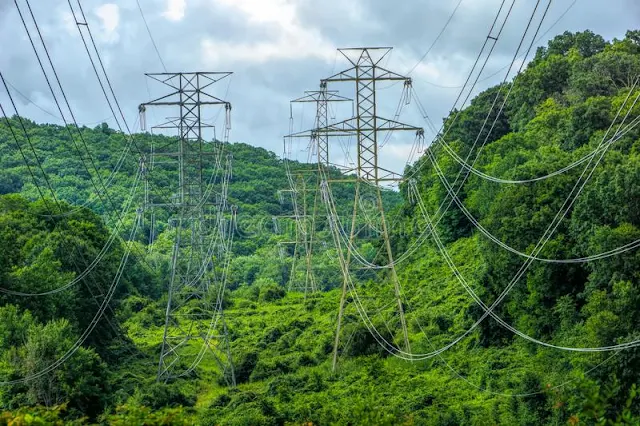 The draft plan itself has listed some “financial parameters” of costs associated with various power generation technologies in India under section 5.10. The capital cost of nuclear power is shown as the
highest among all the available technologies, whether in capital cost, or O&M cost, or construction time.
Solar and wind (onshore) are shown as having vastly better cost and benefit parameters than coal and nuclear power. Also, as per the latest report of Lazard’s Levelized Cost of Energy Analysis, the levelized cost of solar, wind PLUS energy storage facilities can be competitive or even better than new coal and nuclear.
The draft plan indicates that the total CO2 emissions projected will increase from 910 million tonnes in 2020-21 to 1,030 million tonnes in the year 2026-27, and to 1,180 million tonnes in 2031-32. The draft plan document has dedicated one entire chapter (Chapter7) to discuss the chronic issues associated with demand and supply of coal and natural gas for power generation, from which it is evident that due to multiple reasons, these two fuels, even with increased imports, cannot be good/ reliable sources to meet the growing demand for electricity generation, and hence the PLF of those power plants is likely to be abysmally low (only about 24% in case of gas based power plants, and about 60% in coal power plants in 2022) with huge economic consequences.
It should be a massive concern from the overall welfare perspective of our people, that there are no discussions or diligently prepared policy documents available to the public at the national level, including the present plan document draft, to mention as to why successive governments are continuing to invest massively on conventional technology energy sources and the associated infrastructure at humongous costs to the society, and why suitable alternatives available to our society through RE sources, and through massively reduced need for additional transmission capacity have not been implemented/ deliberated on.
It must be emphasised that there is nothing in the draft plan to support the policies/ practices to continue with the BAU scenario based on conventional technology energy sources and the associated infrastructure, or to even indicate that the energy transition based on renewable energy is not in the true interest of the country.
In the context of such blatantly irrational policies/ practices, can civil society afford to remain silent spectators of the decimation of our natural resources? Two associated news articles, Wildlife populations plunge 69% since 1970: WWF and Time to give geodiversity its due should be enough to highlight the credible risks to our communities in the near future.
If civil society forgoes this opportunity to set right policies in one of the critical sectors of our economy now, there may not be another opportunity to set right the same anytime in future. Unless civil society comes up with an adequate number of feedback/ comments to the ministry, thereby forcing the concerned authorities to undertake a rational and diligent review of this plan document, we will have to continue to be frustrated and be silent spectators of destruction of our natural resources.
My appeal to you all is to spend some time reading the draft plan document, and provide your feedback to the Ministry/ CEA before the end of Nov. 2022. If some of you are unable to find time to go through the draft plan in detail, my own feedback of 6th Oct. 2022, as in the email below may provide some indication of the draft plan. The issues of appeal to you therein can be used in your feedback. Alternatively, you may like to simply endorse my feedback.
It is also a matter of concern if the engineering educational institutions, Universities, and other institutions/ bodies focusing on energy policy may not deem it necessary to provide such feedback sought by the Ministry.
There is no reason as to why national media houses, which seem to fleetingly report on energy related issues, should not deem it as a responsibility to provide feedback to the ministry in this regard.
One may send comments to the following email ids: (1) chair@nic.in and (2) secy-power@nic.in
---
*Power & Climate Policy Analyst
Whereas, it is natural for the rationally inclined people to feel frustrated on such issues, there is another dimension to the associated societal level concerns. In a country of about 135 crore people, it is almost always a miniscule number of people, who take the trouble of registering their concerns with the concerned authorities.
Social scientists say that it requires the opinion of a critical mass of the population to bring about any societal level change; whether in policy or practice. In our country, whereas such a critical mass may be many crores, not even a few hundred can be seen as actively following such issues; let alone taking active interest and registering their concerns.
In such a scenario, the concerned authorities and political leaders cannot be expected to be sensitive to the demands of the people, even if such demands are credible and rational. Since most of our concerns/ demands are not supported by political opinion also, our frustration can only continue to grow. In such a situation, there is no alternative for us to effectively make use of any available opportunity to officially register our concerns.
The National Electricity Plan (Draft) Generation Vol- I for years 2022-27, which was released in Sept. 2022 by CEA for public comments before Dec. 2022, can be seen as one such important opportunity for civil society to address very many serious concerns to the entire society emanating from the wrong policies in the power sector.
Despite the growing concerns at the global level on the causes and impacts of climate change, for which the energy/ electricity sector is a major contributor, our authorities cannot be seen as convinced of the urgent need to be rational and diligent enough in planning how our future electricity generation scenario and the associated infrastructure should be.
Whereas, the detailed electricity generation plan for 2022-27, and the perspective plan for 2027-32, in the above mentioned draft plan, does not provide any indication that the associated concerns have been diligently considered/ deliberated on, one recent news item, Govt mulls 233 GW new transmission capacity, should be the evidence enough to indicate that our authorities are not only continuing with the BAU policy of massively expanding the conventional technology electricity generating capacity base, but also are favoring large scale renewable energy power plants, such as solar/ wind power parks.
Planning to add 233,000 MW (or 233 GW) of new transmission capacity should reveal many serious concerns for our society as a whole, and should definitely indicate that the harsh lessons in the power sector since 1947 have not been learnt.
Whereas, the societal level concerns associated with the diversion of large chunks of land required for setting up this 233, 000 MW of additional transmission capacity, which invariably involve diversion of forest and agricultural land, itself should be massive, the environmental issues and the disruption of livelihood for the project affected people, cannot be inconsiderable.
The callousness with which a number of transmission lines have been built in recent years, even through thick natural forests and wildlife sanctuaries, will have to continue in future too, and will decimate patches of thick, natural tropical forests (such as in Western Ghats, and central India) to implement this plan for additional transmission capacity.
Whereas, the diversion of forest and agricultural lands for setting up the power plants (coal, nuclear, dam based hydro) will be inevitable, if we continue with the over-reliance on conventional technology power plants, such additional transmission capacity will only exacerbate the associated concerns even from the climate change perspective.
The real implications of approving a large number of projects in forest lands, and even inside Wildlife Sanctuaries, leading to destruction of thick forest cover with enormous carbon sequestration capability, as been highlighted in a media report thus: "For the country as a whole, the loss of primary forest in a five-year period between 2014-19 was more than 120,000 ha (hectares)"; “Over 500 projects in India’s protected areas and eco-sensitive zones were cleared by the National Board of Wildlife between June 2014 and May 2018.”
The callousness with which a number of transmission lines are being built will decimate patches of thick, natural tropical forests
It is interesting to notice that the draft plan itself has recorded a lot of policy statements, global experiences and data on many associated issues, which should unambiguously indicate that the BAU scenario in the power sector with the continued reliance on conventional technology power sources cannot be the best option for our people, and that RES are the most attractive and sustainable source of electricity. For example: Section 6.0 of the draft plan says:
“To promote human welfare with social and economic development, the supply of electricity needs to be secure and have a low impact on the environment to achieve sustainable development. Renewable energy plays a key role in achieving the set objectives, especially in mitigating climate change.
Renewable energy sources are clean, inexhaustible and due to technological innovation becoming competitive with fossil fuel-based sources. Renewable energy sources are vital for combating climate change and limiting its devastating effects.”

highest among all the available technologies, whether in capital cost, or O&M cost, or construction time.
Solar and wind (onshore) are shown as having vastly better cost and benefit parameters than coal and nuclear power. Also, as per the latest report of Lazard’s Levelized Cost of Energy Analysis, the levelized cost of solar, wind PLUS energy storage facilities can be competitive or even better than new coal and nuclear.
The draft plan indicates that the total CO2 emissions projected will increase from 910 million tonnes in 2020-21 to 1,030 million tonnes in the year 2026-27, and to 1,180 million tonnes in 2031-32. The draft plan document has dedicated one entire chapter (Chapter7) to discuss the chronic issues associated with demand and supply of coal and natural gas for power generation, from which it is evident that due to multiple reasons, these two fuels, even with increased imports, cannot be good/ reliable sources to meet the growing demand for electricity generation, and hence the PLF of those power plants is likely to be abysmally low (only about 24% in case of gas based power plants, and about 60% in coal power plants in 2022) with huge economic consequences.
It should be a massive concern from the overall welfare perspective of our people, that there are no discussions or diligently prepared policy documents available to the public at the national level, including the present plan document draft, to mention as to why successive governments are continuing to invest massively on conventional technology energy sources and the associated infrastructure at humongous costs to the society, and why suitable alternatives available to our society through RE sources, and through massively reduced need for additional transmission capacity have not been implemented/ deliberated on.
It must be emphasised that there is nothing in the draft plan to support the policies/ practices to continue with the BAU scenario based on conventional technology energy sources and the associated infrastructure, or to even indicate that the energy transition based on renewable energy is not in the true interest of the country.
In the context of such blatantly irrational policies/ practices, can civil society afford to remain silent spectators of the decimation of our natural resources? Two associated news articles, Wildlife populations plunge 69% since 1970: WWF and Time to give geodiversity its due should be enough to highlight the credible risks to our communities in the near future.
If civil society forgoes this opportunity to set right policies in one of the critical sectors of our economy now, there may not be another opportunity to set right the same anytime in future. Unless civil society comes up with an adequate number of feedback/ comments to the ministry, thereby forcing the concerned authorities to undertake a rational and diligent review of this plan document, we will have to continue to be frustrated and be silent spectators of destruction of our natural resources.
My appeal to you all is to spend some time reading the draft plan document, and provide your feedback to the Ministry/ CEA before the end of Nov. 2022. If some of you are unable to find time to go through the draft plan in detail, my own feedback of 6th Oct. 2022, as in the email below may provide some indication of the draft plan. The issues of appeal to you therein can be used in your feedback. Alternatively, you may like to simply endorse my feedback.
It is also a matter of concern if the engineering educational institutions, Universities, and other institutions/ bodies focusing on energy policy may not deem it necessary to provide such feedback sought by the Ministry.
There is no reason as to why national media houses, which seem to fleetingly report on energy related issues, should not deem it as a responsibility to provide feedback to the ministry in this regard.
One may send comments to the following email ids: (1) chair@nic.in and (2) secy-power@nic.in
---
*Power & Climate Policy Analyst
Comments
Post a Comment
NOTE: Hateful, abusive comments won't be published. -- Editor