
Nature has blessed Odisha with a vibrant natural sector economy. The forestry, handicraft, handloom, fishery, agriculture, animal husbandry, tourism, pilgrim tourism and horticulture sectors etc can create huge employment and revenue in the state on a sustainable basis. The state needs to develop a sound economic vision to harness the benefits from the natural sectors.
Construction of infrastructure projects with investment though generates revenue and ticks the GDP growth; there is no guarantee that it would create inclusive employment opportunities. Today infrastructure projects are like consumer items which are being marketed by middlemen and global traders across the world.
Many countries have been ruined due to their obsession with infrastructure driven growth illusion. Recently, the Sri Lankan economy has collapsed due to this illusion. It has created a heavy loan burden on the country whose interest the country can’t repay in the next 50 years. Many infrastructure projects were abandoned and many do not generate income in Sri Lanka.
Leaders’ ability to understand what is good for people and for the economy always safeguards the economy from possible collapse. The state of Odisha should take precaution while going for the infrastructure based growth model.
Recently, the state government has prepared a plan to develop water tourism on its coastline, beaches, lakes, canals, rivers, dams and reservoirs. Plans are afoot to introduce floating restaurants, cruise boats, adventure sports facilities and build hotels in those places. It is very essential for the state government to examine the sustainability of those projects and its true potential to create inclusive employment opportunities for the local people.
As per the state’s new water tourism development plan, a water sports facility will be developed in the recently renovated Taladanda canal of Cuttack. The main drain of the city carries dirty water, industrial waste and plastic to the Taladanda canal.
Before introducing water sports facilities in the Taladanda canal, the government should close all the open drains in Cuttack city, complete the underground sewerage system, improve garbage disposal system, install garbage processing plants far away from the residential areas, and impose fine on people who use open drains as toilets. Thousands of people in the city urinate in open drains; the urine mixed with water goes to the Taladanda canal.
First the authority should keep the city green and clean; the growth of slums on government land makes the garbage disposal difficult. The residents of Cuttack city will enjoy boat rides in Taladanda canal if the authority could make the ancient city green and healthy with the plantation of native trees; open space, community playgrounds and pedestrian paths will contribute to the growth of the tourism sector.
There is plans to develop hotels, roads and restaurants around the famous Chilika lake. Floating restaurants, cruise boats and water sports facilities will be introduced in the lake. The 1,165 sq kilometer salt water lake provides livelihood to villagers living in 132 villages in and around the lake. Small islands, hills, playful dolphins and the Nalabana Bird Sanctuary with migratory birds in winter attract thousands of tourists.
First the authority should keep the city green and clean; the growth of slums on government land makes the garbage disposal difficult. The residents of Cuttack city will enjoy boat rides in Taladanda canal if the authority could make the ancient city green and healthy with the plantation of native trees; open space, community playgrounds and pedestrian paths will contribute to the growth of the tourism sector.
There is plans to develop hotels, roads and restaurants around the famous Chilika lake. Floating restaurants, cruise boats and water sports facilities will be introduced in the lake. The 1,165 sq kilometer salt water lake provides livelihood to villagers living in 132 villages in and around the lake. Small islands, hills, playful dolphins and the Nalabana Bird Sanctuary with migratory birds in winter attract thousands of tourists.
Small rare cashew nuts, fish, tiger prawns, crabs, banana, drumstick trees, mango, jack fruits, paddy and a wide range of vegetables grow in those villages. The natural sector economy here can increase the income of villagers through awareness, skill development training and through transparent marketing facilities. Instead of building concrete structures, the state should protect the ethnic culture, landscape, ancient temples and encourage local people to build classic indigenous houses with biodegradable material.
Not a single dolphin was visible after moving in the lake for four hours. Local villagers said it is due to rise in atmospheric temperature
There is no need to construct hotels, restaurants and new concrete structures in and around the lake as those structures would disturb the fragile ecosystem and distort the natural beauty of the lake. Tourists can happily stay in Puri, Khurda and Berhampur and visit Chilika in a single day. This will benefit the local people who operate boats, run restaurants and travel agencies.
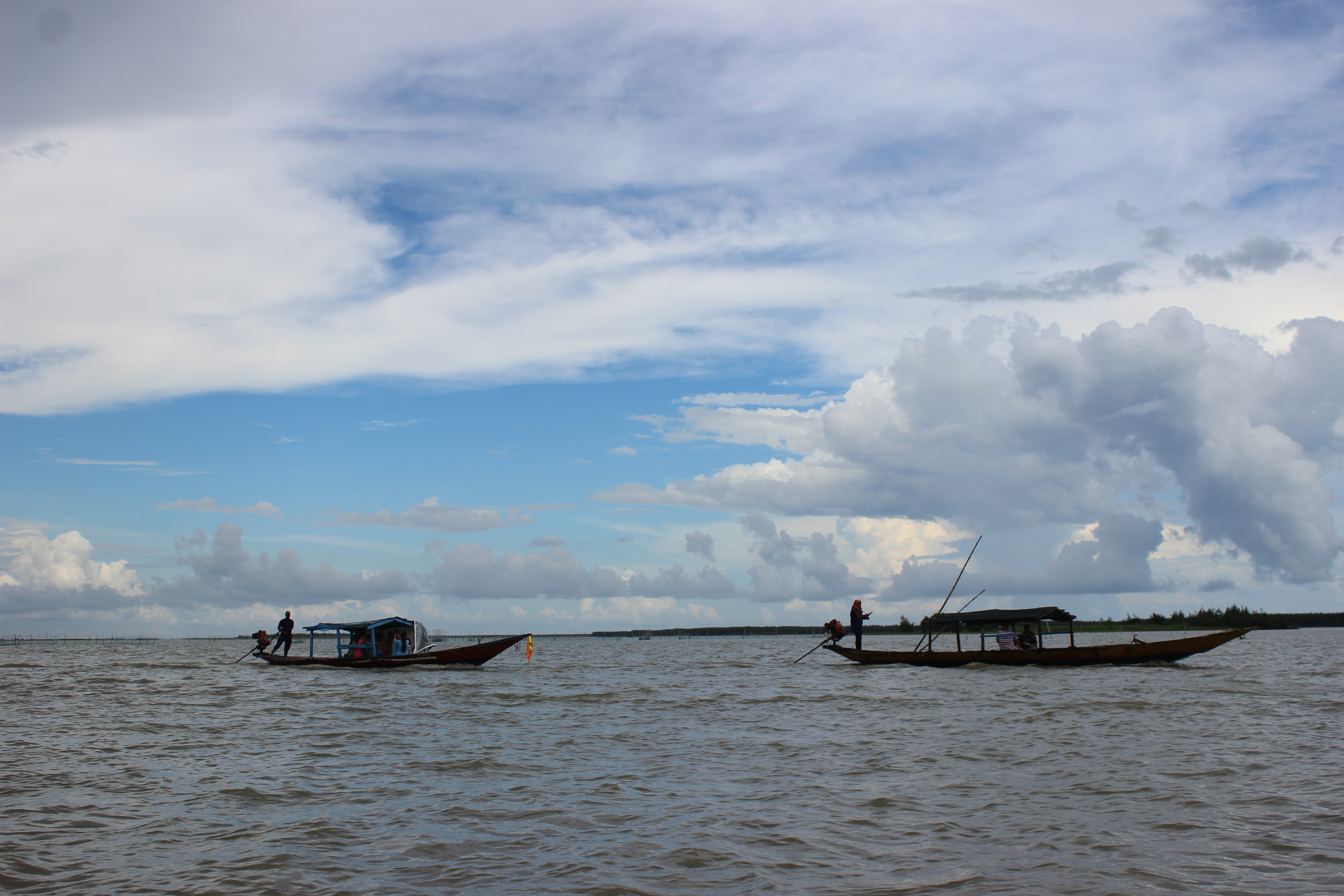
People say if there is any accident one has to call the helpline number and the rescue team will arrive. Nearly 1,500 boats operate in the Satapada region of Chilika and many boats are overloaded with tourists without safety tubes. Visitors remove the life jackets after entering the boats; nobody checks them. The authorities have to ensure the safety of the tourists.
For dolphin tour, the state government should stop prawn farming in Chilika lake, plant native trees along its coast to reduce atmospheric temperature, prevent poaching and hunting of birds, tightens patrolling, create environmental awareness among villagers and provide skill training to villagers who can run the economic activities in the natural sector. Ten years back hundreds of dolphins were seen in the entire Satapada area which connects the lake with the Bay of Bengal.
Natural beauty, myths, mysteries, interesting history, ancient temples, folklores and heritage have made the 460 kilometer coastline an interesting place to visit. The coast line no longer needs any concrete structure and it should be kept as natural as possible; tourists come to see the natural beauty only as they have seen enough of the concrete structures everywhere.
For dolphin tour, the state government should stop prawn farming in Chilika lake, plant native trees along its coast to reduce atmospheric temperature, prevent poaching and hunting of birds, tightens patrolling, create environmental awareness among villagers and provide skill training to villagers who can run the economic activities in the natural sector. Ten years back hundreds of dolphins were seen in the entire Satapada area which connects the lake with the Bay of Bengal.
Natural beauty, myths, mysteries, interesting history, ancient temples, folklores and heritage have made the 460 kilometer coastline an interesting place to visit. The coast line no longer needs any concrete structure and it should be kept as natural as possible; tourists come to see the natural beauty only as they have seen enough of the concrete structures everywhere.
Hotels and restaurants can be built with biodegradable material in nearby towns and district headquarters away from the coast line. Odisha Water Tourism Policy needs to be redrafted by genuine experts who know the people, region and the economy from the grass root level.
---
*Freelance writer
Comments
Post a Comment
NOTE: Hateful, abusive comments won't be published. -- Editor