
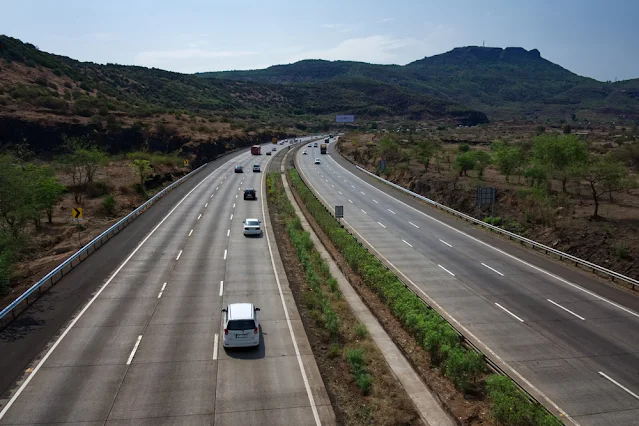
Recently a disturbing distortion in road transport sector priorities has been noted – escalation of expenditure on highways at the cost of limiting or even reducing funds for such obvious priorities as road safety, road research and rural roads. In the interests of the balanced development of the road transport sector, this distortion should be checked at an early stage, but first it is important to understand the various aspects and extent of this fast emerging imbalance.
This can be explained by looking at the data relating to the Ministry of Road Transport and Highways but in addition we must also look at the Ministry of Rural Development data as the main scheme relating to rural roads, called the Pradhan Mantri Gramin Sadak Yojana (PMGSY) is administered by this Ministry.
There is a pronounced and increasing distortion in favor of highways as compared to ordinary roads, rural roads, road safety and research. In 2020-21 the actual expenditure on National Highways Authority of India (NHAI) was Rs 46,062 crore which was less than the expenditure of other road works at Rs 53,093 crore. However the BE for this financial year 2022-23 for NHAI is more than double that of ‘road works’, conveying a big change within the sector of road transport.
The expenditure on highways in 2020-21 was about 3.5 times that for rural roads (PMGSY). In the BE for 2022-23 this is about 7 times as high.
The expenditure on research, training, studies and other road safety schemes (RTS-RSS) has been relatively very small throughout. This was a very small component of highway expenditure even in 2020-21, but in the latest budget this share has fallen further.
In 2021-22 in a situation of COVID related resource constraints, the RE of NHAI was raised by as much as about Rs. 8000 crore while the already low budget for RTS-RSS was reduced by as much as about one-third from Rs 336 crore to Rs 228 crore.
Since both these schemes are under the same Ministry it is really surprising that an extra or additional amount of Rs 8000 crore could be arranged for highways, while the allocation of just Rs 336 crore for safety and studies could not be protected and had to be cut by about one-third. This is a very clear reflection of the real priorities.
This year while preparing RE an amount of Rs. 1,000 crore was also cut from rural roads or PMGSY. When you compare these cuts with the increase in the RE for highways, it is clear that within the sector of road transport resources have been diverted to highways.
Even in 2020-21 the spending on road safety and studies was very low. In fact it was not even 1%, it was just 0.5% of highways spending, but what is worse is that in 2022-23 BE this is reduced further to about 0.2%.
The expenditure on research, training, studies and other road safety schemes (RTS-RSS) has been relatively very small throughout. This was a very small component of highway expenditure even in 2020-21, but in the latest budget this share has fallen further.
In 2021-22 in a situation of COVID related resource constraints, the RE of NHAI was raised by as much as about Rs. 8000 crore while the already low budget for RTS-RSS was reduced by as much as about one-third from Rs 336 crore to Rs 228 crore.
Since both these schemes are under the same Ministry it is really surprising that an extra or additional amount of Rs 8000 crore could be arranged for highways, while the allocation of just Rs 336 crore for safety and studies could not be protected and had to be cut by about one-third. This is a very clear reflection of the real priorities.
This year while preparing RE an amount of Rs. 1,000 crore was also cut from rural roads or PMGSY. When you compare these cuts with the increase in the RE for highways, it is clear that within the sector of road transport resources have been diverted to highways.
Even in 2020-21 the spending on road safety and studies was very low. In fact it was not even 1%, it was just 0.5% of highways spending, but what is worse is that in 2022-23 BE this is reduced further to about 0.2%.
Similarly the spending on rural roads relative to highways was very low even in 2020-21, it was just around 30%. If we consider that there are over half a million villages in India and the condition of roads in several of them is quite precarious, this would appear to be quite an unjust situation with respect to the rural areas. However if we see the BE of 2021-22, then the budget for PMGSY as a percentage of the budget for highways has declined to just 14%, compared to 30% of actual expenditure in 2020-21.
 However, there are vast unmet needs of rural roads not just in terms of main construction, but even more in terms of culverts and proper drainage provision. When this is not properly provided for, this results in obstruction of drainage and flood flows, leading to more prolonged floods and waterlogging.
The improvement of road safety should be a matter of very high priority as the number of deaths from road accidents is the highest in India in the entire world. So much needs to be done to reduce the number of deaths and injuries related to road accidents. In such a situation the extremely low allocation for safety, studies, research and training is very unfortunate.
Provision of proper rural roads is linked to the welfare of farmers, farm workers, migrant workers and artisans. This is very important for meeting emergency health needs and for timely marketing of farm produce. Similarly the provision of ordinary roads in urban and para-urban areas is important for people in cities who commute on daily basis for work.

The improvement of road safety should be a matter of very high priority as the number of deaths from road accidents is the highest in India in the entire world. So much needs to be done to reduce the number of deaths and injuries related to road accidents. In such a situation the extremely low allocation for safety, studies, research and training is very unfortunate.
Provision of proper rural roads is linked to the welfare of farmers, farm workers, migrant workers and artisans. This is very important for meeting emergency health needs and for timely marketing of farm produce. Similarly the provision of ordinary roads in urban and para-urban areas is important for people in cities who commute on daily basis for work.
Hence there should be adequate allocation for these parts of road transport sector instead of concentrating more and more resources of this sector on highways. A proper balance within the road transport sector should be maintained.
Unfortunately the recent trend has been to move away from such balanced growth in the road transport sector. One important reason for this is that highway expansion with its centralized big-budget contracts is linked more to big business interests and some of the biggest names in the construction business, consultancies and advertisement are involved in this. On the other hand the work of ordinary roads is associated more with small time businesses, although corruption is known to exist even here also. Hence the increasing distribution of budget within this sector in favor of highways and big business contracts is in keeping with the bias that can be seen in various sectors in times of the present ruling regime in favor of big business interests.
Unfortunately the recent trend has been to move away from such balanced growth in the road transport sector. One important reason for this is that highway expansion with its centralized big-budget contracts is linked more to big business interests and some of the biggest names in the construction business, consultancies and advertisement are involved in this. On the other hand the work of ordinary roads is associated more with small time businesses, although corruption is known to exist even here also. Hence the increasing distribution of budget within this sector in favor of highways and big business contracts is in keeping with the bias that can be seen in various sectors in times of the present ruling regime in favor of big business interests.
More worrying is the fact that this can turn topsy-turvy the proper development priorities of this sector which are clearly seen to be moving away from the genuine welfare interests of people. This distortion should be corrected before it proves too costly and harmful.
---
*Honorary Convener, Campaign to Protect Earth Now; his recent books include ‘Man Over Machine’ and ‘Protecting Earth for Children’
---
*Honorary Convener, Campaign to Protect Earth Now; his recent books include ‘Man Over Machine’ and ‘Protecting Earth for Children’
Comments