By Rajiv Shah
Continuing to “holiday” in US, a few weeks back, I went to live with a very fine family friend in New Jersey (NJ). My fourth visit to the US, for the first time, we went by a local train to NJ, a comfortable four-and-half hour journey amidst sub-zero temperature. During our lovely stay, which lasted for about a week, we were taken, among other places, to a spot about which I was told something bizarre by a trade union leader based in Ahmedabad, Ashim Roy. As a journalist I was interested.
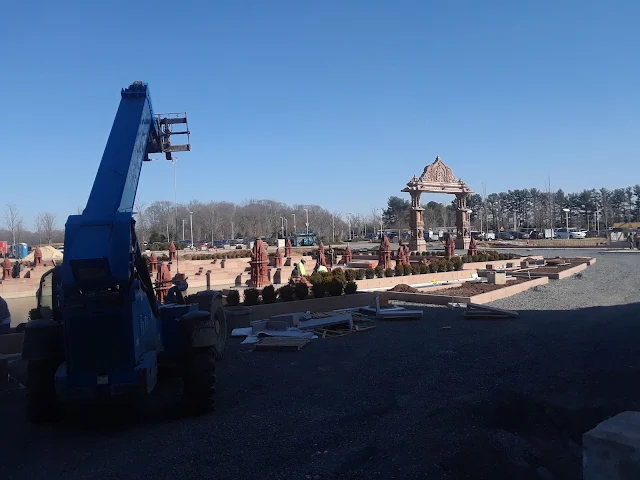
The spot was the still-under-construction Swaminarayan temple, about an hour-long drive from the spot where we lived in NJ, a US state just next to New York. After parking the car, we went by foot a little round-about way to avoid the construction area to reach of one of the two temples which had been completed. A couple of workers – we were told they were Mexican – were on the job, fixing some electricity issues. They waved at we walked in, smiling, first while we were moving in, and then again when they, apparently, had finished their work and were going away in car.
The spot was the still-under-construction Swaminarayan temple, about an hour-long drive from the spot where we lived in NJ, a US state just next to New York. After parking the car, we went by foot a little round-about way to avoid the construction area to reach of one of the two temples which had been completed. A couple of workers – we were told they were Mexican – were on the job, fixing some electricity issues. They waved at we walked in, smiling, first while we were moving in, and then again when they, apparently, had finished their work and were going away in car.
The controversy about which Roy had told me back home was reported in a New York Times (NYT) article, published in May last year. Titled “Hindu Sect Is Accused of Using Forced Labor to Build NJ Temple”. Roy claimed, he was behind the support to the workers (about which the report gives graphic details), mostly belonging to “lower castes”, who had filed a complaint of exploitation against the temple authorities.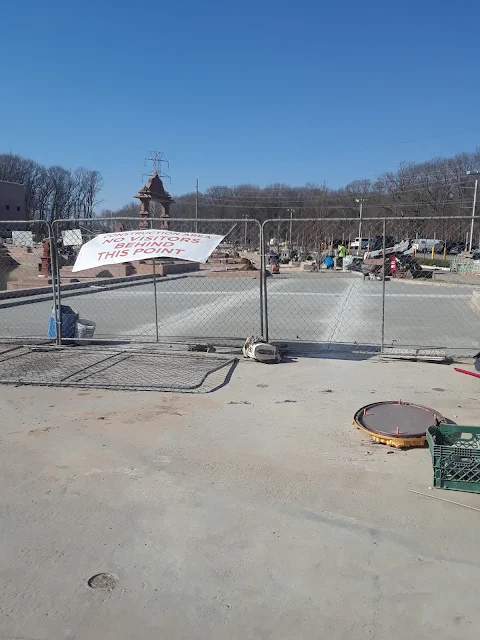 The workers, the report said, had filed a lawsuit on the ground that they were being forcibly confined in the temple grounds as if they were bonded labourers, and were being paid just about $1 an hour as against the US federal law, which permits a minimum of $7.25 per hour. Roy also forwarded a few photographs showing stone carved from Pindwara in Rajasthan, stacked for the temple building.
The NYT report, widely quoted in sections of Indian media, pointed towards how US federal law enforcement agents “descended” on the massive temple, quoting the workers’ lawyers as saying that the authorities of the Bochasanwasi Akshar Purushottam Swaminarayan Sanstha (BAPS), the “Hindu sect” were exploiting “possibly hundreds of low-caste men in the years-long construction project.”
Living in rural Robbinsville, NJ, where the temple is coming up, the report said, majority the workers were Dalit, “the lowest rung in India’s caste system”, and were “brought to the US on religious R-1 visas (issued for clergy and lay religious workers such as missionaries).” They were “presented to the US government as volunteers”, and “were asked to sign several documents, often in English, and instructed to tell US embassy staffers that they were skilled carvers or decorative painters.”
 They were being forced to do manual labour on the site, “working nearly 13 hours a day lifting large stones, operating cranes and other heavy machinery, building roads and storm sewers, digging ditches and shoveling snow, all for the equivalent of about $450 per month”, though they were paid $50 in cash, with rest of the amount being “deposited” in their Indian account.
Not just this. The report, quoting someone “familiar with the development”, further said, the workers’ passports were “confiscated, and they were confined to the fenced-in and guarded site, where they were forbidden from talking to visitors and religious volunteers. They subsisted on a bland diet of lentils and potatoes, and their pay was docked for minor violations, such as being seen without a helmet.”
Noting BAPS’ links with Prime Minister Narendra Modi and the ruling BJP, the report said, Modi called Pramukh Swami Maharaj, the spiritual head of BAPS, on the latter’s death as “his mentor”. On the other hand, BAPS “pledged the equivalent of about $290,000 to Modi’s most important election promise: building a temple in the city of Ayodhya, where a mosque had stood before Hindu devotees destroyed it in 1992”, underlining, “The destruction of the Babri Mosque set off waves of sectarian violence, and the construction of the temple in Ayodhya is a significant step in the quest by Modi and his party to shift India from its secular foundations toward a Hindu identity.”
 There is yet another side of the story, about which NYT does not talk about. The NJ temple is not just a multimillion-dollar operation, which I was told by temple officials will be spread over 220 acres of land on completion, having a recreation area and a canteen. Highlighted in a statement we carried in full Counterview by the Occupational and Environmental Health Network India (OEHNI), it said, not only were the Swaminarayan temple owners responsible for “violating” the labour law of the US by paying a meagre $1 per hour to the workers, it is should also take the responsibility for high level of silicosis, a fatal respiratorial occupational disease, among the workers involved in stone cutting in India.
Signed by Vadodara-based health rights leader Jagdish Patel, national coordinator, OEHNI, the statement, also released in May last year, said, BAPS’ workshops operated in Sirohi district in Rajasthan, where sand stone is worked upon by the local craftsmen to carve arches, designs and statues as per the drawings provided to them. It alleged, “They are exposed to dangerous levels of silica dust which is not monitored. Hundreds of stone workers have been victims of silicosis and have died prematurely.”
 “Stones so carved in Rajasthan are exported to the sites where this temple is being built. It is shocking to know that more than 200 workers taken to the NJ site were made to work for long hours, were not paid minimum wages in US, and were working in hazardous conditions. From what we understand, the silica dust levels at work were neither monitored nor maintained as per US standards”, the statement said.
I met a couple of persons associated full-time at the temple as care-takers, one of them seemed to be a public relations officer (PRO), who caught hold of any new person entering the temple to explain that it would be the “biggest Swaminarayan temple in the world” like once completed. The moment we entered in, he was there to explain all great things the temple would be: Not only that it was spread over 220 acres of land, but also that the stone which was being used in the temple came from Italy.
Introduced to him as a former Times of India political editor by the friend who took us to the temple, the PRO got terribly interested in me. He told me, the stone, bought in Italy, was shipped to India, where craftsmen in Rajasthan would cut them as per the design given to them. Tight-lipped on the Dalit workers, he said, the work at the temple had to be suspended for six months because of “certain problems”.
Now, when the workers had all left, he said, “volunteers from across the US, mostly of Indian origin, mainly professionals, including doctors and IT engineers”, reached there to do construction activities “free of cost.” He told me, rather proudly, “They are about 450 of them… You can see, they are so devoted to the cause. They are given training, remain here for a fortnight to offer their service as volunteers, work in batches. We provide them with best of food and accommodation.”
I could see large parts of the 220 acres campus lying scattered with huge boxes, which I was told contained mainly Italian stones finished in India according to the requirements of the temple. Several areas were covered with blue curtains beyond which huge cranes could be seen for temple construction. I wondered where did those associated with the huge temple lived. One of those associated with the temple took us in his car to a sprawling campus where tens of huge independent houses in three different sizes had already come up.
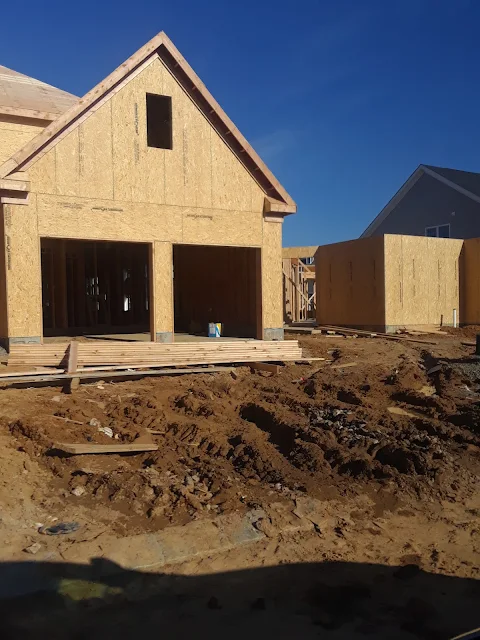
Taking me to one of the houses under construction -- “this is one ours”, I was told by this person, who happens to a US citizen of Indian origin and has retired. “I am devoting my full time to the temple”, he said. In all, I was told, there are about 120 independent houses – 90 per cent of them owned by those associated with the temple.
 On our return to the temple, a three minutes drive, the same PRO met me after we did our ‘darshan’ and snapped a few photographs at the spot especially designated for the purpose. Even as praising the world’s biggest Swaminarayan temple sky high again, what he said was news to me. Usually a spot where NJ’s Indian origin people visit here (NJ’s nearly 5 per cent population is said to be from India), at one point the temple, he said, received a “high profile American visitor.”
Without naming this visitor, the PRO said, “This gentleman told me that in the US churches are being closed down, as fewer and fewer people were visiting them, that the churches were being sold for purposes other than religion -- constructing commercial or residential premises. He asked me, given the lack of interest in religion, what was the purpose building such a huge temple; it would be deserted place after four decades. I was astonished by his observation. I replied: This temple will last for thousands of years…”
Large sections of Indian diaspora living in not just NJ but also the places where I visited on the eastern coast of US during my current stay in US know about the controversy surrounding the temple. However, I heard a strong defence of the act of bringing Indian workers to build the temple, though none of them were apparently there right now. A strong temple votary had this to say: “The workers had signed an agreement before being brought to the US, and they were being paid accordingly. They were being provided with free food and accommodation. What else did they want?”
The NYT report, widely quoted in sections of Indian media, pointed towards how US federal law enforcement agents “descended” on the massive temple, quoting the workers’ lawyers as saying that the authorities of the Bochasanwasi Akshar Purushottam Swaminarayan Sanstha (BAPS), the “Hindu sect” were exploiting “possibly hundreds of low-caste men in the years-long construction project.”
Living in rural Robbinsville, NJ, where the temple is coming up, the report said, majority the workers were Dalit, “the lowest rung in India’s caste system”, and were “brought to the US on religious R-1 visas (issued for clergy and lay religious workers such as missionaries).” They were “presented to the US government as volunteers”, and “were asked to sign several documents, often in English, and instructed to tell US embassy staffers that they were skilled carvers or decorative painters.”
Not just this. The report, quoting someone “familiar with the development”, further said, the workers’ passports were “confiscated, and they were confined to the fenced-in and guarded site, where they were forbidden from talking to visitors and religious volunteers. They subsisted on a bland diet of lentils and potatoes, and their pay was docked for minor violations, such as being seen without a helmet.”
Noting BAPS’ links with Prime Minister Narendra Modi and the ruling BJP, the report said, Modi called Pramukh Swami Maharaj, the spiritual head of BAPS, on the latter’s death as “his mentor”. On the other hand, BAPS “pledged the equivalent of about $290,000 to Modi’s most important election promise: building a temple in the city of Ayodhya, where a mosque had stood before Hindu devotees destroyed it in 1992”, underlining, “The destruction of the Babri Mosque set off waves of sectarian violence, and the construction of the temple in Ayodhya is a significant step in the quest by Modi and his party to shift India from its secular foundations toward a Hindu identity.”
Signed by Vadodara-based health rights leader Jagdish Patel, national coordinator, OEHNI, the statement, also released in May last year, said, BAPS’ workshops operated in Sirohi district in Rajasthan, where sand stone is worked upon by the local craftsmen to carve arches, designs and statues as per the drawings provided to them. It alleged, “They are exposed to dangerous levels of silica dust which is not monitored. Hundreds of stone workers have been victims of silicosis and have died prematurely.”
I met a couple of persons associated full-time at the temple as care-takers, one of them seemed to be a public relations officer (PRO), who caught hold of any new person entering the temple to explain that it would be the “biggest Swaminarayan temple in the world” like once completed. The moment we entered in, he was there to explain all great things the temple would be: Not only that it was spread over 220 acres of land, but also that the stone which was being used in the temple came from Italy.
Introduced to him as a former Times of India political editor by the friend who took us to the temple, the PRO got terribly interested in me. He told me, the stone, bought in Italy, was shipped to India, where craftsmen in Rajasthan would cut them as per the design given to them. Tight-lipped on the Dalit workers, he said, the work at the temple had to be suspended for six months because of “certain problems”.
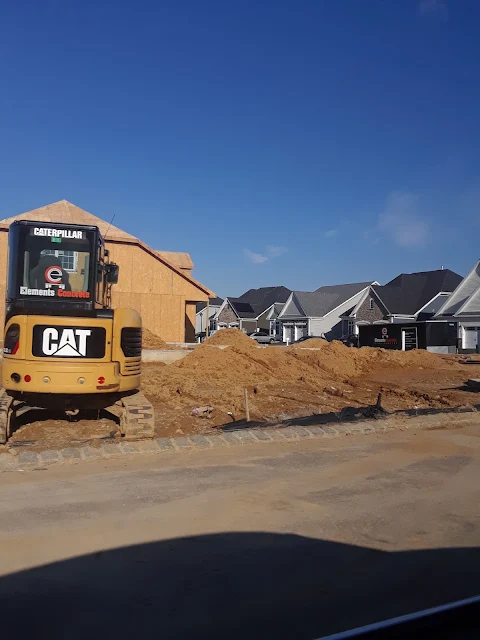 |
| Residential area of temple authorities |
I could see large parts of the 220 acres campus lying scattered with huge boxes, which I was told contained mainly Italian stones finished in India according to the requirements of the temple. Several areas were covered with blue curtains beyond which huge cranes could be seen for temple construction. I wondered where did those associated with the huge temple lived. One of those associated with the temple took us in his car to a sprawling campus where tens of huge independent houses in three different sizes had already come up.
Taking me to one of the houses under construction -- “this is one ours”, I was told by this person, who happens to a US citizen of Indian origin and has retired. “I am devoting my full time to the temple”, he said. In all, I was told, there are about 120 independent houses – 90 per cent of them owned by those associated with the temple.
Without naming this visitor, the PRO said, “This gentleman told me that in the US churches are being closed down, as fewer and fewer people were visiting them, that the churches were being sold for purposes other than religion -- constructing commercial or residential premises. He asked me, given the lack of interest in religion, what was the purpose building such a huge temple; it would be deserted place after four decades. I was astonished by his observation. I replied: This temple will last for thousands of years…”
Large sections of Indian diaspora living in not just NJ but also the places where I visited on the eastern coast of US during my current stay in US know about the controversy surrounding the temple. However, I heard a strong defence of the act of bringing Indian workers to build the temple, though none of them were apparently there right now. A strong temple votary had this to say: “The workers had signed an agreement before being brought to the US, and they were being paid accordingly. They were being provided with free food and accommodation. What else did they want?”
Comments