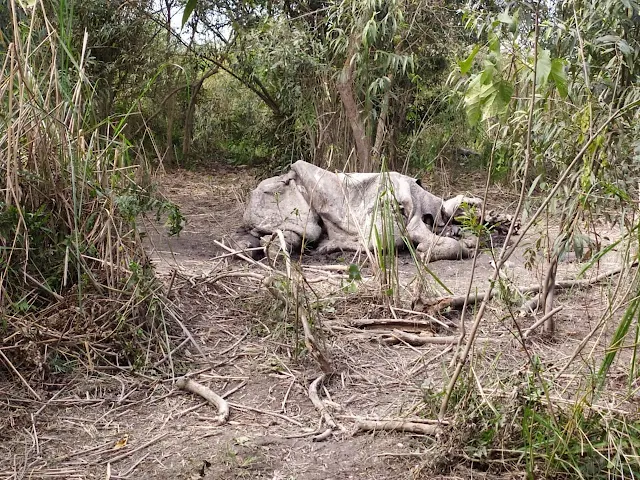
With one solitary incident of poaching of endangered one-horned rhinoceros at Kaziranga National Park and Tiger Reserve in Assam of northeast India last year, bad news broke in the first month of 2022, as the forest authority recovered the decomposed carcass of a full-grown (around 30 years old) female rhino in the world-famous forest reserve recently.
As apprehended, the precious horn was missing, for which the gigantic animal was seemingly hunted some days back. Ironically, only some hours earlier, cricket commentator and conservationist Kevin Pietersen appreciated Prime Minister Narendra Modi-led Union government in New Delhi on reduction of incidents related to rhino poaching.
“Bravo Narendra Modi and bravo to all the men and women who sacrifice their lives in protecting the animals in India too. I've met lots of them and I respect you immensely!”, Pietersen had said.
The South Africa born British celebrity responded to an input by a newsweekly on January 18, which quoted Assam’s anti-rhino poaching task force chief GP Singh, who made the claim on January 15 that only one incident of rhino poaching had taken place in April 2021 till date.
The special Assam police chief termed the containment of poaching of one-horned rhinos as a major achievement of the task force constituted by the State government appreciating the team work shown by various concerned district police forces.
Assam chief minister Himanta Biswa Sarma was quick to responded to Pietersen on a digital platform on January 19 thanking for the “acknowledgement.”
“Inspired by our PM Narendra Modi, we’ve launched aggressive programmes to curb poaching. We’re proud to have burnt & destroyed a stockpile of rhino horns, largest ever in the world, on World Rhino Day to send a stern message to poachers & syndicate,’ he tweeted.
Statistics reveal that Assam, which claims a success story for conserving two-thirds of world one-horned rhino population, has lately reduced the number of rhinos related poaching in the last few years, where it was lowest during 2021 in the last two decades.
Two previous years witnessed only five incidents of rhino-poaching in Kaziranga and other protected reserves of Assam, where two rhinos were poached in 2020 (three in 2019). It was relatively larger in number during 2018 (6 killed), followed by 2017 (7), 2016 (12), 2015 (17), 2014 (27), 2013 (27), etc.
---
*Senior journalist based in North-East
Comments
Post a Comment
NOTE: Hateful, abusive comments won't be published. -- Editor