Outside the St Michael’s Church in Mahim Mumbai is a powerful slogan, “God will always abide with me, even if I retreat!” In many ways this creative caption sums up the raging controversy on ‘Abide With Me’ that has been on prime-time news and on social media for a week now!
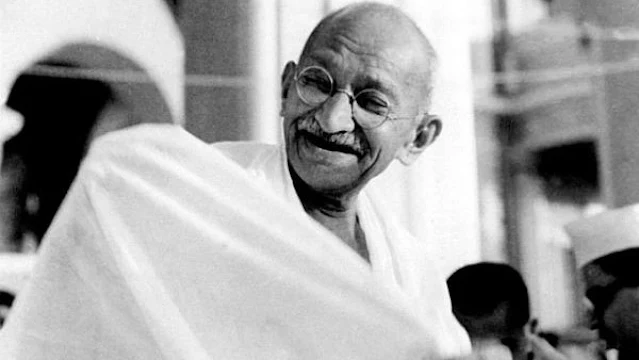
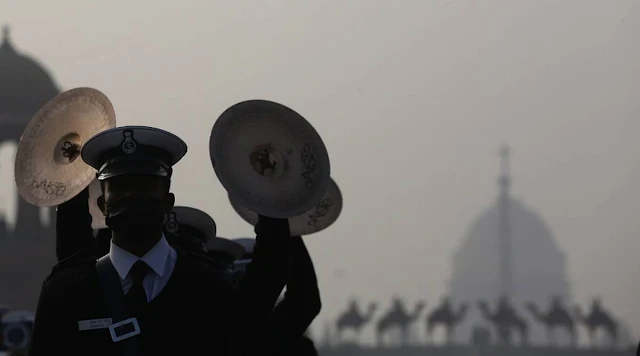
A recent Government (Defence Ministry) communique finds no mention of ‘Abide With Me’ in this year’s ‘Beating Retreat’ programme which will be held on January 29 as the culmination of the events on and around Republic Day. ‘Abide in Me’ has been one of the staple tunes at the ceremony since 1950 and was Mahatma Gandhi’s favourite!
The spokesperson of the Defence Ministry did not offer any comment as to why this immortal composition was dropped. Plenty of unofficial reasons are being flaunted for doing so. Earlier, the Government had planned to drop ‘Abide With Me’ in 2020 from the Beating Retreat ceremony but had later retained it after a huge nationwide uproar.
This time there is also a groundswell of protest. It is certain however, that the Government will be unrelenting besides over the years they have systematically destroyed the secular, impartial and objective credentials of the defence establishment!
‘Abide With Me’ was composed by a Scottish Anglican, Henry Francis Lyte. It is a prayer to God to stay with the one praying throughout life, through trials and tribulations and even in death. It was written by Lyte in 1847 as he was dying from tuberculosis. Apparently Lyte first wrote it when he visited an old friend, William Le Hunte, who was dying.
As Lyte sat with the dying man, William kept repeating the phrase "abide with me…" After leaving William's bedside, Lyte wrote the hymn and gave a copy of it to Le Hunte's family. Though there are clear Christian references: the opening line alludes to, "Abide with us: for it is toward evening, and the day is far spent", ( Lk. 24:29) and the penultimate verse draws on text from the Letter to the Corinthians "O death, where is thy sting? O grave, where is thy victory?" (1 Cor 15:55), and is often regarded as a Christian hymn, ‘Abide With Me’ actually transcends the narrow confines of any religion. Its lyrics (translated into several languages all over the world) are undying and its melody so haunting!
It doesn’t need much of a ‘rocket science’ knowledge to know why the government has decided to obliterate a song of such nostalgia, importance and meaning. Some superfluous reasons are being floated: the colonial past, indigenisation etc. They hold no water! The government will certainly not do away with the railways or many more vestiges from colonial rule. Besides, the defence establishment may even collapse were they to stop importing arms and ammunition and other military equipment like the Raffaele jets -- which are ‘phoren-made’. Will our politicians and bureaucrats and other powerful vested interests stop sending their children to study abroad or mint money in flush jobs in foreign countries?
Gandhi said hate must be countered solely with love, a very Christian ethic. Let us all make the singing of Abide With Me our reply to hate
One person who has resolutely espoused the cause of ‘Abide With Me’ is Tushar Gandhi, the great- grandson of Mahatma Gandhi. In a communication to me a few days ago Tushar writes,
“Hello Father Cedric
"This is Tushar Gandhi from Mumbai. I am sending you an appeal I am making to Christian clergy please help distribute it in your circles too. Hope you are fine it has been a long time since we communicated.
"An Appeal
"Mohandas Gandhi believed that it was the duty of every human to study and respect every religion in pursuit of this he studied the holy scriptures of every religion.
"All his life, in all his Ashrams in South Africa and in India prayers were held every morning and evening. In them prayers from all religions were included and given equal importance. The Hymn ‘Abide With Me’ was one of his favourite Hymns and would be sung many a times. After Independence after India became a Republic. Republic Day commemoration would end with the Beating The Retreat Ceremony on Raj Path on 29th January.
“Hello Father Cedric
"This is Tushar Gandhi from Mumbai. I am sending you an appeal I am making to Christian clergy please help distribute it in your circles too. Hope you are fine it has been a long time since we communicated.
"An Appeal
"Mohandas Gandhi believed that it was the duty of every human to study and respect every religion in pursuit of this he studied the holy scriptures of every religion.
"All his life, in all his Ashrams in South Africa and in India prayers were held every morning and evening. In them prayers from all religions were included and given equal importance. The Hymn ‘Abide With Me’ was one of his favourite Hymns and would be sung many a times. After Independence after India became a Republic. Republic Day commemoration would end with the Beating The Retreat Ceremony on Raj Path on 29th January.
"Marching Bands of all three Services performed several songs. ‘Abide With Me’ was always performed all these years. It symbolises the syncretic culture of our nation where all religions were included and given an equal status and respect. This year inexplicably ‘Abide with Me’ has been replaced.
"It is hurtful more so because the next day January 30th is The Day Bapu was martyred in 1948. In his memory and as a tribute to his desire for an inclusive all embracing respectful and loving nation, Citizens of India should take it upon themselves to perform, recite or play, ‘Abide with me’ as a tribute to Mohandas Gandhi.
"My Appeal to the Church is to sing ‘Abide With Me’ in as many Churches as possible all over India on 30th January this year, as a tribute to Mohandas Gandhi and as an affirmation of our Syncretic Culture and our secular belief of equal respect to all religions.
"My Appeal to the Church is to sing ‘Abide With Me’ in as many Churches as possible all over India on 30th January this year, as a tribute to Mohandas Gandhi and as an affirmation of our Syncretic Culture and our secular belief of equal respect to all religions.
"Unfortunately, today hate has taken center stage in our nation, changing the narrative of so many decades and corrupting the ideal on which our nation was founded. Gandhi said that hate must be countered solely with love, a very Christian ethic. Let us all make the singing, reciting or playing of ‘Abide With Me’ our reply to hate. Let love prevail.
"Sincerely,
"Tushar Gandhi (98213366 tushar@mahatma.org.in gandhitushar.a@gmail.com)."
I promised Tushar that I would do the needful (read his appeal, now going viral, above carefully and do your best to act accordingly) that is why I am writing this article with a few more suggestions:
“I fear no foe, with Thee at hand to bless
Ills have no weight, and tears no bitterness
Where is death's sting?
Where, grave, thy victory?
I triumph still, if Thou abide with me”
Yes, to fear no one, because God is with us and we will triumph! ‘Abide With Me’ will stay forever!
---
*Human rights, reconciliation and peace activist/writer
"Sincerely,
"Tushar Gandhi (98213366 tushar@mahatma.org.in gandhitushar.a@gmail.com)."
I promised Tushar that I would do the needful (read his appeal, now going viral, above carefully and do your best to act accordingly) that is why I am writing this article with a few more suggestions:
- On both days 29 January (Beating Retreat) and 30 January (the anniversary of Mahatma Gandhi’s assassination) sing/ play ‘Abide With Me’ as often as possible
- If there are Church Services (January 30 being a Sunday) or any other assembly play/sing ‘Abide With Me’
- There are several renditions of the song, particularly on YouTube, share them on social media (Facebook, Twitter, Instagram, WhatsApp etc)
- Get a choir/ensemble together to sing the song
- Don’t stop with these two days continue as long as possible
“I fear no foe, with Thee at hand to bless
Ills have no weight, and tears no bitterness
Where is death's sting?
Where, grave, thy victory?
I triumph still, if Thou abide with me”
Yes, to fear no one, because God is with us and we will triumph! ‘Abide With Me’ will stay forever!
---
*Human rights, reconciliation and peace activist/writer
Comments
Post a Comment
NOTE: Hateful, abusive comments won't be published. -- Editor