By Venkatesh Nayak*
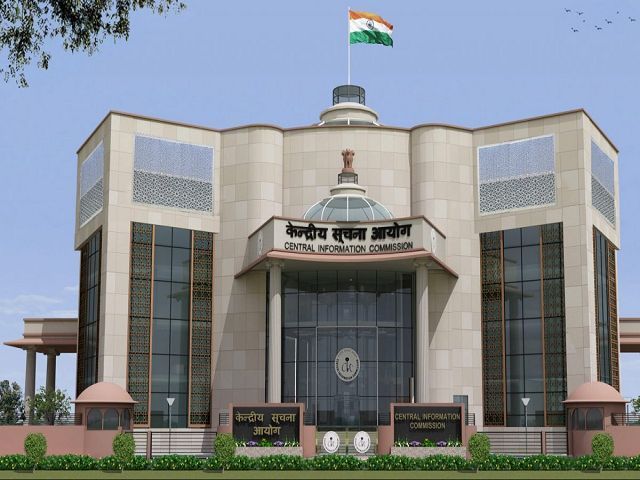
The Annual Report of the Central Information Commission (CIC) for the year 2019-2020 is out in the public domain. Readers will recall, presenting such a report to Parliament about the action taken by public authorities every year, to implement this transparency law, is a mandate under Section 25 of The Right to Information Act, 2005 (RTI Act). As always, the CIC has kept the public disclosure of its latest Annual Report, a quiet affair.
We have undertaken a preliminary review of this Annual Report. A set of our preliminary findings is given below. Many of these findings are not immediately apparent to the reader of the narrative portion of the Annual Report which the CIC has kept very brief. These findings are based on a quick analysis of the detailed dataset contained in the Annexures to the Report and comparable data collated from previous Annual Reports of the CIC. This preliminary review covers the following areas:
- Trends relating to RTI requests in 2019-20, dealt with by the Central Government, specific Ministries, and key public authorities that are likely to be of interest to the reader;
- Trends with regard to the backlog of RTI applications at the beginning of the reporting year;
- Trends relating to the transfer of RTI applications from one Ministry to another;
- Trends with regard to the rejection of RTI requests on grounds which are permissible under the law and on “Other” grounds;
- Trends relating to the receipt and disposal of first appeals by ministries, departments and key public authorities under review; and
- What the CIC could consider including in Annual Reports about its own work and the necessity of conducting data verification exercises.
Caveat and Assumption
As the CIC’s Annual Report covers more than 2,000 public authorities across the Government of India (GoI), not to mention scores of others under the Union Territory administrations in Chandigarh, Delhi and Puducherry, this preliminary review looks only at the macro-level figures reported by Ministries, a couple of standalone departments, a handful of key constitutional authorities and select public authorities (total under review = 65). So Ministry and Department-level data cover not just their own figures but also those of hundreds of public authorities that fall under their jurisdiction. A more detailed analysis of RTI data reported by other Departments and public authorities not specified in this preliminary review will be taken up later on.The findings given below are correct to the extent of the accuracy of the data reported by the public authorities. However, it will also be shown below that some of the figures reported are not questionable.
Click here for the data table collated for the purpose of this preliminary review.
(Conversion rate: 1 lakh = 100,000; 10 lakhs = 1 million)
RTI applications in 2019-20: Overall GoI and Ministry-specific trends
- Missing public authorities: In its Annual Report of 2019-20, the CIC acknowledges the existence of 2,193 public authorities [which answer to the definition of that term given under Section 2(h) of the RTI Act]. This is an all-time high. However, only 2,131 of them submitted RTI statistics to the CIC. Reporting compliance is 97.17% in 2019-2020 as compared to 100% in the previous year when all 2,145 registered public authorities submitted data to the CIC. Nevertheless, according to the RTI Online Facility established by GoI for citizens to submit RTI applications electronically, there are 2,389 public authorities registered as on date. This indicates, at least 196 public authorities which accept RTIs submitted through the RTI Online Facility have not yet registered themselves with the CIC for the purpose of annual reporting of RTI statistics;
- Fresh receipts rise overall: Despite fewer public authorities submitting their data, fresh RTI receipts across GoI increased by 0.3% to 13.74 lakhs in 2019-20 as compared to 13.70 lakh fresh receipts reported in 2018-19;
- If the RTI figures reported by the administration of the Union Territories are deducted from the total, ministries, departments and other public authorities under GoI clocked only 12.39 lakh RTI applications in 2019-20. This is 2.21% more than the 12.12 lakh RTIs submitted to GoI (minus those submitted to the UTs) in 2018-19;
- Volume of RTIs in top 20 and top 10 Ministries: Table 2.6 on page 19 of the Annual Report provides the list of top 20 Ministries that received the largest number of RTI applications. The Ministries of Finance, Railways, Communications, Human Resource Development, Corporate Affairs, Labour and…
Click here to read further.
Backlog of RTI applications in 2019-20: Overall GoI and Ministry-specific trends
Backlog of RTI applications in 2019-20: Overall GoI and Ministry-specific trends
- Increase in backlog from 2018-29: Every public authority reports the number of RTIs that remained pending from the previous year which got carried over to the current reporting year for disposal. Overall, there was an increase of more than 19% in the backlog of pending RTI applications across public authorities in GoI (including UTs) in 2019-20 (3,10,110) as compared with the previous year (2,59,919). Nothing in the Annual Report indicates that the CIC has probed the reasons behind the rise in the backlog of RTI applications;
- Interestingly, the Ministry of Defence reported the highest backlog at 1.15 lakhs of which the Indian Army contributed more than 93%;
Transfer of RTI applications in 2019-20: Overall GoI and Ministry-specific trends
- Reduction in transfer of RTIs: Fewer RTI applications were transferred across public authorities under Section 6(3) of the RTI Act, in 2019-20. Only 10.86% (1.82 lakhs) of them were transferred in 2019-20 as compared to 11.41% (1.86 lakhs) during the previous year. It is laudable that these figures have come down from the all time high of 14.46% reported in 2014-15;
- Largest number of transfers: The Ministry of Railways topped the list transferring more than 25,000 RTI applications in 2019-20 followed by the…
Click here to read further.
Rejection of RTI applications in 2019-20: Overall GoI and Ministry-specific trends
- What the Annual Report says: At paragraph 2.4.1 of its report (page 14), the Annual Reports states, the percentage of rejection of RTI requests by public authorities is the lowest since the inception of the CIC. However a deeper probing of the Ministry-wise data tables presented in Annexure 1 presents a more worrisome picture and also two major questions about the claims made in the report;
- Macro versus micro figures- problems with data quality: First, the Ministry of Home Affairs (MHA) which reported a rejection of 20% of the RTI applications in 2019-20 (across the 29 reporting public authorities under its jurisdiction) – much higher than the average figure for GoI, simply does not gel with the absolute numbers mentioned in the data tables given at Annexure 1. If the number of RTIs rejected under Sections, 8, 9, 11, 24 and the category…
Frequency of invoking permissible exemption clauses in 2019-20: Overall GoI and Ministry-specific trends
- Permissible grounds for rejection under the RTI Act: The RTI Act permits a public authority to reject access to information under any of the 10 clauses listed under Section 8 of the RTI Act, Section 9 which protects private copyright, Section 11 which exempts third party information relating to commercial and trade secrets and Section 24 under which security and intelligence. Till date, GoI has notified 26 intelligence and security agencies such as the IB, NTRO, R&AW, CBI, NIA, Enforcement Directorate, Assam Rifles, ITBP, CRPF, CISF under Section 24(1) of the RTI Act; organisations are partially excluded from the ordinary obligations of transparency. However, they are required to disclose information pertaining to allegations of corruption. They are also required to disclose information relating to allegations of human rights violation within 45 days with the approval of the CIC;
- Section 8(1)(j): As has been the case every year, Section 8(1)(j) of the RTI Act is the most frequently invoked of permissible exemptions across GoI in…
Rejection of RTI applications under “Others” Category
- As explained above, according to Section 7(1) of the RTI Act, a public information officer may reject an RTI application only for reasons specified under Section 8 and 9. To this list of 11 clauses may be added Sections 11 and 24 which also create valid grounds for refusing access to information under specific circumstances. No other reason or excuse is permissible for rejecting under the RTI Act. However, ever since the enforcement of the RTI Act public authorities under various ministries and departments have been collecting data about rejections under the dubious category- “Others.” The CIC includes this data in its Annual Report without questioning its validity except once. Taking note of this phenomenon in its Annual Report in 2010-11 the CIC held as follows: “The usage of reasons, termed as ‘others’, in such increasing proportion is inter alia also indicative of the fact that perhaps the requested information is not available in any material form as per definition of “Information” in the Act. This call for scrutiny and closer introspection by public authorities to “ascertain and identify” the provisions other than those in sections 8(1), 9, 11 and 24 being used for rejecting the requested information; since there are no other exemption clauses stipulated in the Act for rejecting a request for information.”
- However the CIC has not commented much on this issue subsequently. This silence continues in the Annual Report of 2019-20 as well…
First appeals in 2019-20: Overall GoI and Ministry-specific trends
- What the Annual Report says: At paragraphs 2.6 and 2.7 (pages 21-22), the Annual Report briefly discusses data about the submission of 1st appeals under Section 19(1) of the RTI Act. Table 2.8 provides a list of top-20 Ministries and public authorities in which the maximum number of RTIs resulted in first appeals being filed by aggrieved citizens. The Ministry of Defence tops the list with 20.26% of the RTIs being escalated to the stage of 1st appeals followed by the Ministries of Housing and Urban Affairs (19.77%), Human Resource Development (19.09%), Home Affairs (16.49%) and Coal (15.27%). Table 2.8 also provides the number of cases which escalated to the CIC as second appeals, but there is no detailed discussion in the Annual Report. There is no discussion about the proportion of 1st appeals disposed by these Ministries and public authorities;
- High proportion of 1st appeal escalation: In fact, a closer examination of the data relating to RTI applications escalating to 1st appeals presented in the data tables at Annexure 1 shows a more worrisome picture. For example, the highest rate of escalation of RTI applications to the first appeal stage among the 65 ministries, departments and key public authorities which we have reviewed is recorded by the Indian Army at 50.48%. In other words every…
Disposals by the CIC in 2019-20: What is missing from the Annual Report
- What the Annual Report says: At paragraph 3.2.2 of the Annual Report (page 28), the CIC gives summary figures regarding the receipt, disposal and pendency of 2nd appeals and complaints during 2019-20. The CIC received 22,243 appeals and complaints during this period. It was able to dispose of 75.16% of these cases (16,720 cases) by the end of the reporting year with a backlog of 5,523 cases carried over to 2020-21. As on 23/03/2021 this pendency had risen to 38,492 cases (32,943 appeals and 5,549 complaints);
- Penalties- imposition and recovery: The CIC also states that it had imposed Rs. 10,62,000 in penalties of which Rs. 6,40,500 (i.e., 60.31%) is said to have been recovered from the errant CPIOs;
- What is missing from the Annual Report: However several crucial aspects pertaining to the details of working of the CIC are not found in the Annual Report. Some of them are listed below: a) Ministry and department-wise 2nd appeals and complaints received and disposed…
Concluding Remarks
Apart from filling up information gaps regarding its own performance, the reliability of the data contained in the Annual Report requires deep examination by the CIC. Two problematic areas in the dataset relating to rejections have been discussed above. Another area of concern is what appears to be absence of cross-checking of the data submitted by the public authorities. For example, the data table shows “0” as the figure in the rows relating to the number…Click here to read further.
(I would like to thank Ms. Adya Bajpai of West Bengal National University of Juridical Sciences and Mr. Arnav Mittal of Symbiosis Law School, Pune who interned with CHRI during the COVID-19 lockdown period in 2020 for assisting with the data collation and cross checking exercises pertaining to the CIC’s previous Annual Reports.)
—
*Programme Head, Access to Information Programme, Commonwealth Human Rights Initiative, New Delhi
Comments
Post a Comment
NOTE: Hateful, abusive comments won't be published. -- Editor