By Venkatesh Nayak*
Readers may remember the bold declaration that the Union Minister of State for Personnel, Public Grievances and Pensions made about the NDA-III Government’s commitment to transparency while replying to the debate on the Bill to amend The Right to Information Act, 2005 (RTI Act) in the Lok Sabha. On 22/07/2019 the Minister said:
“Now, coming straight to RTI, as far as RTI is concerned, let me first make it clear this Government has been absolutely committed, as in other wings of governance, to ensure full transparency and full accountability” (click here for the full text of the uncorrected debate of the day and scroll down to page 369 of the text/or page 128 of the pdf file for this part of the Minister’s statement).
Sadly, this governance philosophy does not seem to have percolated downwards beyond the corridors of the Prime Minister’s Office (PMO) with which the Union Minister is associated.
In June, 2019 I had sought detailed information about Electronic Voting Machines (EVMs), Voter Verified Paper Trail (VVPAT) Units and Symbol Loading Units (SLUs), from Bharat Electronics Ltd (BEL) and Electronics Corporation of India Ltd. (ECIL) by filing identical requests under the RTI Act.
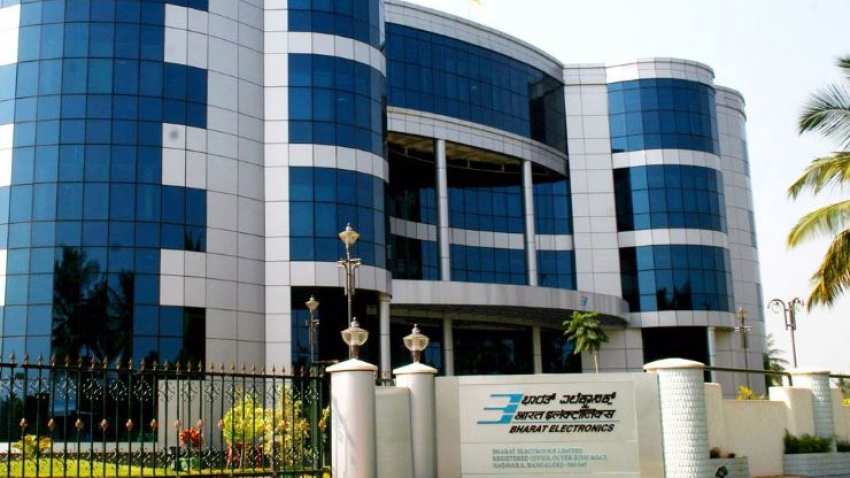
BEL, a Navaratna Public Sector Enterprise (PSE) under the Union Ministry of Defence, initially agreed to supply some information and demanded Rs. 1,434/- as additional fees. However, a month later, BEL revised its earlier reply and claimed that it did not hold most of the information and rejected one of the queries stating that disclosure would endanger the life of its Engineers and returned the Bank Draft that I sent them as fee payment.
Earlier, ECIL uploaded some of this information on the RTI Online Facility but rejected access to some crucial bits of information sought in my RTI application. I have not received a formal reply from the ECIL’s under its Central Public Information Officer’s signature, via email or in hard copy till date.
These RTI replies when compared with the ECI’s claims about the maximum capacity of VVPAT Units to print votes cast through EVMs and contrasted against the Polling Station Level voter turnout data as compared with the number of voters registered on the Electoral Rolls (all of these are public documents), throws open more disturbing questions about the entire electoral process.
The Background
The April-May 2019 General Elections returned the National Democratic Alliance Government to power with a thumping majority. Dissatisfied with the scanty information about the manner in which polls were conducted across the country, several private citizens and mediapersons have used the RTI Act to seek information about voter turnout data mismatch, complaints about EVMs malfunctioning, complaints about mismatch of EVMs and VVPAT printouts, movement of EVMs and VVPATs to the electoral constituencies from the manufacturing companies and details of action taken on complaints received against high profile politicians for violating the Model Code of Conduct. Many of these requests have been turned down by the relevant public authorities.The RTI Intervention
After closely scrutinising some of the information and statistics published by the ECI, on 17th June, 2019, I decided to file two identical RTI applications seeking the following information from BEL and ECIL. Neither these companies nor the ECI have placed this information in the public domain:BEL’s RTI Replies
The CPIO of BEL sent a fee intimation letter for INR 1,434/- for a total of 717 pages after almost a month had passed since the submission of my RTI application. He agreed to supply most of the information but denied access to the VVPAT patent application filed with the Office of the Controller General of Patents by citing Section 8(1)(d) of the RTI Act. Then I waited for more than a month for this information thinking that the delay might be because of the time taken to copy 700+ pages of records. After 40 days had lapsed, on 28/08/2019 I filed a first appeal under Section 19(1) of the RTI Act challenging the non-supply of information.Believe it or not, the CPIO who was silent until then, sent a reply returning the Bank Draft and claimed that BEL did not have most of the information sought which he had agreed to supply in his first reply.
ECIL’s RTI Reply
Although ECIL’s CPIO had disposed of my RTI application earlier, in August, 2019, I decided to wait for the BEL CPIO’s reply before going public with these RTI interventions. ECIL’s CPIO merely uploaded some text on the RTI Online Facility without any signature (I am still waiting for a hard copy of this reply or a scanned copy by email) which states as follows:What is problematic with these RTI replies?
BEL’s CPIO had initially agreed to supply information about the number of EVMs (Control and Ballot Units) and VVPATs manufactured by the company, and the thermal paper rolls used in the VVPATs all of which were sent to the districts for use during the 2019 Lok Sabha elections. He had also agreed to supply the list of Engineers who took part in and coordinated and supervised the preparation of these machines for the elections. He had physically counted the number of pages relatable to each RTI query and demanded fees accordingly.
In his revised reply, however, he states that BEL does not hold most of the requested information. So which papers did he count before sending the first reply? Only one of these replies, not both, can be true. Perhaps the latest reply is an afterthought arising out of pressure exerted- probably by an external agency against making this information public. I hope the identity of this external agency is revealed during the appeal proceedings in the coming months.
What do these replies reveal when compared with ECI’s Manuals?
The total number of votes cast in an Assembly or Parliamentary constituency is recorded on Form 20 (called Final Result Sheet) by its Presiding Officer and submitted to the ECI. This Form 20 information for every constituency is uploaded on ECI’s website for the Lok Sabha elections and State Assembly Elections up to 2018. However, similar data is not available for the 2019 Lok Sabha Elections on the ECI’s website. Any interested person is now compelled to visit the websites of the Chief Electoral Officers (CEOs) of every State/UT, separately, to access this information.
Even here, there is no uniformity. While many CEOs have uploaded Part 1 of Form 20 which contains Polling Station-wise data of the number of votes cast (for example see Delhi CEO’s website), a few have published only Part 2 of Form 20 which contains aggregate data for each Assembly segment of the Parliamentary Constituency (for example see Bihar CEO’s website). It is Polling-Station-wise data that throws up some crucial questions when compared with the ECI’s claims and the RTI replies of BEL and ECIL.
Can randomisation of EVM/VVPATs be a credible a basis for the non-tamperability claim?
Two-stage randomisation of EVMs and VVPATs, once before their allotment to each constituency and next before sending them to each Polling Station, is one of the two pillars on which the ECI, the manufacturing companies and technical experts rest their arguments for the non-tamperability of these machines. If the capacities of the VVPATs produced by BEL and ECIL vary, can there ever be a true randomisation, given the lack of uniformity in the number of voters registered for each Polling Station? This is a seminal question that the ECI as the owner of the EVMs and VVPATs must answer urgently.
Conclusion
I would like to end this piece with a caveat. I am not alleging any wrongdoing by any authority through this research and analysis. All that I am pointing out is that the ECI and the manufacturing companies are reluctant to place detailed information about the working of EVMs and VVPATs beyond what they decide that the citizenry must know. This is just not acceptable.Click HERE for more details.
—
*Programme Head, Access to Information Programme, Commonwealth Human Rights Initiative, New Delhi
Comments
Post a Comment
NOTE: Hateful, abusive comments won't be published. -- Editor