By Moin Qazi*
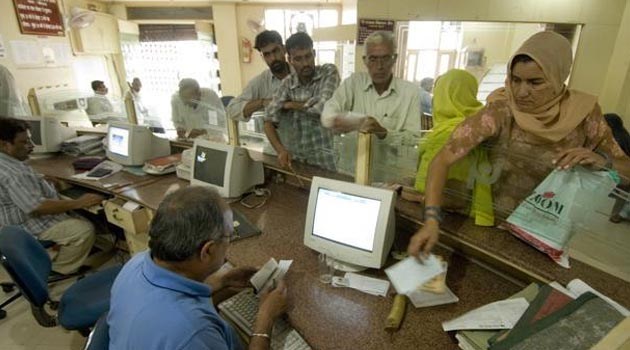
Rural banking has come a long way from the days when bankers had their first brush with rural culture. Bankers are now financial anthropologists, and many of them are playing a missionary role in transforming rural societies. However, challenges continue to persist. When rural banking took its baby steps, villagers were shy of loans because they were afraid they would not be able to repay. The situation today is quite the opposite. People have a savage appetite for loans but, unlike their forebears, they have lost that pristine morality which equated default of loans with the guilt of shame. Banks are piling up mountains of sour loans and governments are brushing them off with buckets of precious public money.
Rural banking has been a great hurdle race ever since the government nationalised major commercial banks and mandated them to focus their thrust on villages. India Gandhi nationalised private banks with a deposit base above Rs 50 crore in 1969 “in order to ensure funding for the poor”. The official commandment to public banks was not just about barefoot banking but was a directive to run into unfamiliar terrains to punch their flag posts. The expectations were that this would bring about both an economic and social revolution by shovelling cheap money into farms. The players were untrained and unwilling participants in the marathon. Their captains were equally unprepared.
But the umpire, the Reserve Bank of India, was stubborn and unrelenting. He brought more players into the race and changed the rules of the game many times. At some stages, it appeared as if he himself had lost interest in the race. But the race continues, proceeding in different directions. The roadmap of financial sector reforms bypassed rural banking time and again despite repeated concerns from developments pundits. Meanwhile, the reconciled barefoot bankers continued to walk amidst the debris of the populist programmes. The official emphasis on financial inclusion keeps re-emerging in policy documents but little earnestness is shown by bankers in pursuing it on account of a plethora of constraints.
Apart from inexhaustible energy, rural bankers needed craft, diplomacy, persuasion and only occasionally the sternness of rules and laws. it also called for something greater that all these–what can only call an earnest, transparent sincerity, born not out of years of the ideals that one brings from one’s formative years—the atmosphere in which one grew in one’s family, and the conditioning that was an almost unconscious part of one’s time in school and college.
The eighties of the last century saw an unplanned and indiscriminate expansion of bank branches most of which later became an economic deadweight. Between 1977 and 1990, the Reserve Bank of India mandated that a commercial bank could open a new branch in a location that already had bank branches, only if it opened four in locations with no branches. This regulation was part of a social banking program that tried to expand access to financial services in rural areas.
The additional burden arising out of the mass opening of rural bank branches adversely affected the resilience and viability of banks. The extension of commercial bank branches was inspired by the need to fill credit gaps in the rural economy which the uneven and inadequate development of the cooperative movement had left. The politicians believe banks can bring economic revolution through rural credit, which is just like expecting a midwife to deliver a baby. In a developing country, it is not enough just to provide credit for production. Production itself must be increased with the adoption of improved technology.
The branches mushroomed and there was an exponential increase of rural branches of banks. Villages began to be courted by bankers. These phenomena gave rise to a popular adage: “A village could be known as uninhabitable only if it did not have a branch of a bank.” Such was the explosion of rural banking. The depth and outreach of the banking network in the late seventies grew at a sizzling pace on account of tough government mandates. This was at a time when the transport and communication infrastructure in the country was abysmally weak, unlike today when mobile phones, email, SMS and Skype enable us to communicate anywhere anytime.
Financial market imperfections that limit access to finance are key in most development programmes. Lack of access to finance is often the critical mechanism behind both persistent income inequality and slow economic growth. Hence financial sector reforms that promote broader access to financial services should be at the core of the development agenda.
Providing better financial access to the non-poor micro and small entrepreneurs can have a strongly favourable indirect effect on the poor. Spillover effects of financial developments are likely to be significant. Hence, to promote pro-poor growth, it is essential to broaden the focus of attention of finance for improving access for all who are excluded.
While the positive social and economic impacts of nationalisation were quite evident, the experiment was also an eye-opening lesson in the disaster that mindless bureaucratic programmes can become. .Rural banking in India has suffered severely on account of populist measures of the State. What the populist leaders wanted was that the cash spigots be turned on permanently. .The most fundamental canons and nostrums of banking were thrown to the wind by the vote hungry politicians .banks were saddled with mountains of sour loans whose stink leached the entire rural credit system which bled inexorably.
Bleeding the banks to aggrandize the rich farmers had become a favourite sport of the politicians, who had been using banks as cash spigots for populist programmes. Most rural branches were hobbled by a legacy of political interference. The greater part of the last decade of the twentieth century was spent by banks in cleaning their branches of the avalanche of bad loans in which they had been buried. The years of sloppy lending had left a vast hole in the balance sheets of rural banks.
Most development programmes are a grim reminder of how mechanically trying to meet targets can completely undermine the integrity of a veritable economic and social revolution to such an extent that a counter-revolution can be set into motion. But we refuse to learn lessons, particularly because populist politicians consider it a sure way to burnish their electoral fortunes.
This is however not to obscure the cutting edge role the public banks have played n financial inclusion. These banks have been the backbone of socioeconomic agenda for the government .In any particular rural area, the role of a public is not confined to banking but encompasses a more holistic developmental agenda. They are the one-stop shop for all financial needs of the local rural populace including insurance, financial literacy, remittance amongst others.
It was this emphasis on those excluded from the formal financial stream that led to a slew of measures in the field of finance and drove so many bankers into the arena of the battle against poverty. When I started my banking career, many of the developing-country practitioners with whom we worked at the time put their finger on the key questions arising out of the conflict between those advocating market-led solutions for fighting poverty and those who believed that sustained grants and aids from the State were absolutely essential for combating poverty.
The latter school believed in the perennial extension of social safety nets. There was a plethora of baffling questions that confronted planners, a section of which felt that subsidies were distorting the economic climate and retarding the efforts of the poor for fighting poverty. Some of the pertinent questions were directed mostly at the relevance of the State’s continued aid to poverty alleviation programmes. When and where is intervention at the bottom end of the financial market justified? Of what kind: direct intervention, subsidy, regulation or something else?
The literature of that time, which consisted more of polemic and counter-polemic than of empirical investigation, did not answer all these questions. All we could do was to get a flavour of the aggressive debate in the hope that it might stimulate us to forge solutions that might at least have validity within our own local working environment.
As in other areas of development, the use of public funds is easy to justify in the interest of improving access and thereby promoting pro-poor growth. Such subsidies, of course, need to be evaluated against the many alternative uses of the donor or scarce public funds involved, not least of which are alternative subsidies to meet education, health, and other priority needs for the poor themselves. In practice, such a cost-benefit calculation is rarely made. Indeed, the scale of subsidy is often unmeasured.
But an even more serious problem is the possible chilling effect of subsidies on the commercial provision of competing and potentially better services to the poor. Subsidizing finance has severely undermined the motivation and incentive for market-driven financial firms to innovate and deliver.
The assumptions and suppositions on which nationalization of banks was premised didn’t hold water. Delivering development is essentially a government’s job. Bankers were just expected to be financial midwives but were finally entrusted with the task of birthing development. Instead of writing off loans, the government should funnel that money into infrastructural development and allow banks to do their job with professionalism. The new paradigm must recognize the boundaries that separate banking and government.
Similarly, we have to have a rural-centric bank model. The present urban-centric model has shown that it is a recipe for disaster when used in villages. Rural areas have special characteristics, local nature and local needs. We need to hire local people, need to understand local needs. The whole model has to be driven by high-grade technology and a few number of simple products that can be tailored to local needs. Let us hope that the wisdom gleaned from our learning is harnessed towards the right destination.
—
*Development expert
Comments