By Sanjeev Kumar*
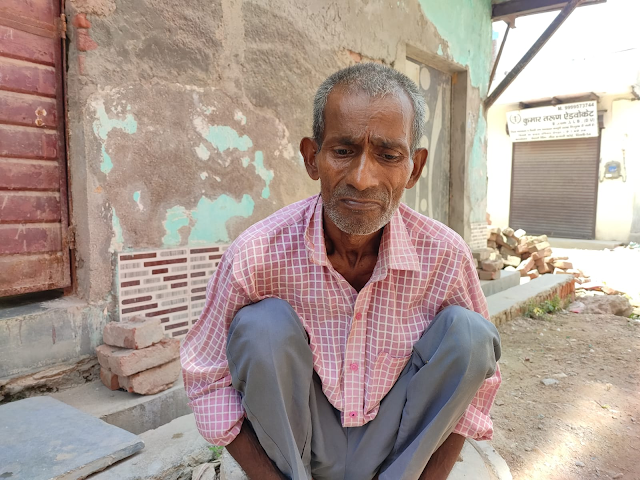
We extend our condolences to the family of Sher Singh who passed away on June 8 after battling for life for the last 5 years. In May 2019, Sher Singh was exposed to poisonous gases while cleaning a septic tank in Bhagya Vihar, Delhi. Two workers died on the spot while cleaning the septic tank and Sher Singh had been in a critical condition ever since.
Sher Singh was a migrant worker, coming from Tundla (UP) and belonged to the Dalit community. After being unconscious in the septic tank for hours, he was exposed to poisonous toxic gases and his health has been deteriorating since then.
After this incident, he was diagnosed with tuberculosis, hepatitis B, and many other life threatening ailments. At 1:30 am, Sher Singh passed away after a 5 year long battle.
His wife and four children have been facing the brunt of the tragic incident. Sher Singh was the sole earning member of the family and after his illness, his wife and eldest son have been working odd jobs to pay for medical bills.
Last year, their eldest son, aged 15, had to discontinue his education to take up informal work to contribute to the family’s income. Everyone in the family also faced severe health consequences and his eldest son was also diagnosed with Tuberculosis. The effects of the incident are irreversible and have altered the life of all the family members.
Manual scavenging is an illegal practice under the Prohibition of Employment as Manual Scavengers and their Rehabilitation Act, 2013 (MS Act) which bans the use of an individual to manually clean, carry, or handle human excreta in any manner.
It is also an infringement of our constitutional right to a life with dignity. Despite this, the practice of manual scavenging is rampant not just in rural India but also in our urban centers. Sher Singh’s death came after an extended battle with the diseases that he acquired after he was made to manually clean a septic tank.
Despite it being promised that the treatment of victims of manual scavenging would be free of cost, Sher Singh’s family had to bear the cost of his treatment and the government even failed to give him appropriate compensation. This even forced his son into discontinuing his education. Many people came forward to help his family by providing monetary support for his medical expenses in the last five years.
While we are grieving Sher Singh’s death, we must also remember how the state failed him and continues to fail many victims of manual scavenging like him.
While remembering Sher Singh, we must stand in solidarity against the increasing practice of manual scavenging and the alarming number of deaths due to it in the recent past. These sanitation warriors will only be given justice once the state is held accountable.
---
*Secretary, Dalit Adivasi Shakti Adhikar Manch (DASAM); Convener, National Alliance of People’s Movements (NAPM)
We extend our condolences to the family of Sher Singh who passed away on June 8 after battling for life for the last 5 years. In May 2019, Sher Singh was exposed to poisonous gases while cleaning a septic tank in Bhagya Vihar, Delhi. Two workers died on the spot while cleaning the septic tank and Sher Singh had been in a critical condition ever since.
Sher Singh was a migrant worker, coming from Tundla (UP) and belonged to the Dalit community. After being unconscious in the septic tank for hours, he was exposed to poisonous toxic gases and his health has been deteriorating since then.
After this incident, he was diagnosed with tuberculosis, hepatitis B, and many other life threatening ailments. At 1:30 am, Sher Singh passed away after a 5 year long battle.
His wife and four children have been facing the brunt of the tragic incident. Sher Singh was the sole earning member of the family and after his illness, his wife and eldest son have been working odd jobs to pay for medical bills.
Last year, their eldest son, aged 15, had to discontinue his education to take up informal work to contribute to the family’s income. Everyone in the family also faced severe health consequences and his eldest son was also diagnosed with Tuberculosis. The effects of the incident are irreversible and have altered the life of all the family members.
Manual scavenging is an illegal practice under the Prohibition of Employment as Manual Scavengers and their Rehabilitation Act, 2013 (MS Act) which bans the use of an individual to manually clean, carry, or handle human excreta in any manner.
It is also an infringement of our constitutional right to a life with dignity. Despite this, the practice of manual scavenging is rampant not just in rural India but also in our urban centers. Sher Singh’s death came after an extended battle with the diseases that he acquired after he was made to manually clean a septic tank.
Despite it being promised that the treatment of victims of manual scavenging would be free of cost, Sher Singh’s family had to bear the cost of his treatment and the government even failed to give him appropriate compensation. This even forced his son into discontinuing his education. Many people came forward to help his family by providing monetary support for his medical expenses in the last five years.
While we are grieving Sher Singh’s death, we must also remember how the state failed him and continues to fail many victims of manual scavenging like him.
While remembering Sher Singh, we must stand in solidarity against the increasing practice of manual scavenging and the alarming number of deaths due to it in the recent past. These sanitation warriors will only be given justice once the state is held accountable.
---
*Secretary, Dalit Adivasi Shakti Adhikar Manch (DASAM); Convener, National Alliance of People’s Movements (NAPM)
Comments
Post a Comment
NOTE: Hateful, abusive comments won't be published. -- Editor