.jpeg)
The Indian Coordination Committee of Farmers Movements (ICCFM), a top network of farmers’ organizations in India, in a letter to Piyush Goyal, Minister of Commerce and Industry, has asked him to “safeguard food security and sovereignty, even as ensuring peasants' rights" at the 13th Ministerial Conference of the World Trade Organization (WTO MC 13), to take place from 26 to 29 February 2024 in Abu Dhabi.
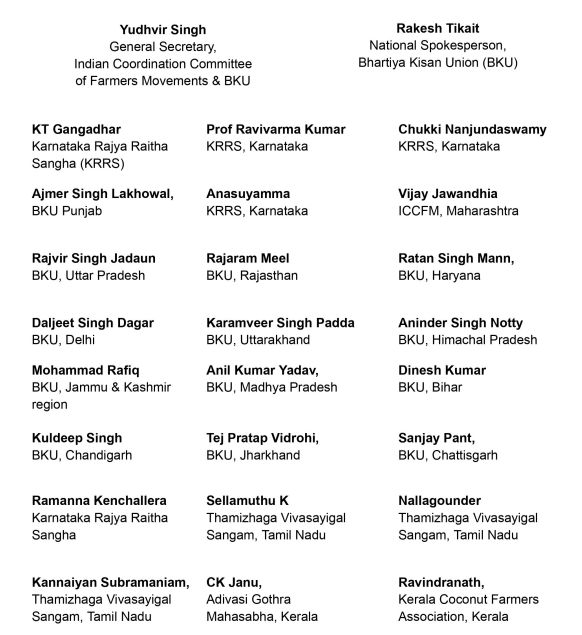
Signed by Yudhvir Singh, general secretary, Bharatiya Kisan Union (BKU) and ICCFM and Rakesh Tikait, national spokesperson, BKU, and State farmers’ leaders, the letter said, “We strongly oppose any attempts to curtail the government's ability to provide essential domestic subsidies to farmers”.
Calling subsidies crucial, it added, the Minimum Support Prices (MSPs) and Fair and Remunerative Prices (FRP) alone can “ensure our survival and ability to invest in seeds, fertilizers, and other inputs. Without them, many farmers will be pushed into further poverty and despair.”
As the 13th Ministerial Conference of the World Trade Organization (WTO MC 13) approaches in Abu Dhabi, we, the farmers movements of India, write to you today with a fervent plea to safeguard Indian agriculture and the vital issues of domestic subsidies and Public Stock Holding (PSH).
We are deeply concerned about the potential outcomes at MC 13 that could impact our livelihoods and the future of Indian agriculture. We urge you to safeguard our interests and ensure that the decisions made in Abu Dhabi protect our farmers, our¹ food security, and our sustainable agricultural practices.
For nearly 30 years now, the WTO has always challenged the efforts to provide remunerative prices to farmers. Due to the highly unfair trade rules established by this institution, Indian small-scale farmers have never received a fair price for their produce. Consequently, rural India is now grappling with a debt crisis that has claimed the lives of more than 350,000 farmers in 30 years. The new-age trade agreements being pushed bilaterally between India and other countries appear to replicate the highly problematic policies of the WTO, such as low tariffs/tariff elimination resulting in increasing import dependency, incentivizing large-scale monoculture farms, increasing mechanization and digitalization, and promoting the use of chemical inputs. Some of these agreements, whether bilateral or multilateral, are also paving the way for deregulation of some of India’s policies related to GMOs, farmers’ seeds, and more. Despite India’s agriculture being predominantly small-scale, most policies are designed to facilitate the corporatization of the agricultural sector.
We applaud the Indian government's unwavering stance at the WTO in prioritizing food security for its citizens. Notably, at the last conference, India stood firm against US pressure, protecting the interests of its farmers and citizens. We commend both the government and you for your leadership in this crucial matter and offer our unwavering support for any pro-farmer and pro-poor initiatives you pursue within the WTO.
We echo your call for a permanent solution on public stockholding as a crucial element of food security. We appreciate your unwavering defense of Indian interests against external pressure, particularly from the US, and your commitment to protecting the livelihoods of our farmers. Recognizing the vital link between farmers’ wellbeing and national food security is a commendable first step towards securing justice for small farmers within the WTO framework.
While the 2013 Bali Ministerial decision offered a temporary "peace clause" allowing developing countries to exceed WTO-prescribed agriculture subsidy limits, India’s use of this peace clause has faced harsh questioning at the WTO. We seek a permanent solution within the Agreement on Agriculture to address its onerous conditions and limited scope. The current peace clause imposes burdensome notification requirements and restricts applicability to programs existing before 2013 and only for traditional staples. This significantly limits India's policy options for farmer protection and leaves it vulnerable to disputes. Similar concerns exist for other developing countries.
Attempts by agricultural export powerhouses to first allow only an onerous peace clause and then challenge the application of the peace clause highlight the need for a permanent solution. Amending the Agreement on Agriculture (allowing subsidies for food security under the Green Box without any limit) would provide greater legal certainty and address the limitations of the current clause.
Text:
The Indian Coordination Committee of Farmers Movements (ICCFM) is a network of farmers’ organizations in India, comprising farmers movements from Uttar Pradesh, Haryana, Punjab, Himachal Pradesh, Madhya Pradesh, Jharkand, Chattisgarh, Bihar, Karnataka, Tamil Nadu, Kerala, and Maharashtra.As the 13th Ministerial Conference of the World Trade Organization (WTO MC 13) approaches in Abu Dhabi, we, the farmers movements of India, write to you today with a fervent plea to safeguard Indian agriculture and the vital issues of domestic subsidies and Public Stock Holding (PSH).
We are deeply concerned about the potential outcomes at MC 13 that could impact our livelihoods and the future of Indian agriculture. We urge you to safeguard our interests and ensure that the decisions made in Abu Dhabi protect our farmers, our¹ food security, and our sustainable agricultural practices.
For nearly 30 years now, the WTO has always challenged the efforts to provide remunerative prices to farmers. Due to the highly unfair trade rules established by this institution, Indian small-scale farmers have never received a fair price for their produce. Consequently, rural India is now grappling with a debt crisis that has claimed the lives of more than 350,000 farmers in 30 years. The new-age trade agreements being pushed bilaterally between India and other countries appear to replicate the highly problematic policies of the WTO, such as low tariffs/tariff elimination resulting in increasing import dependency, incentivizing large-scale monoculture farms, increasing mechanization and digitalization, and promoting the use of chemical inputs. Some of these agreements, whether bilateral or multilateral, are also paving the way for deregulation of some of India’s policies related to GMOs, farmers’ seeds, and more. Despite India’s agriculture being predominantly small-scale, most policies are designed to facilitate the corporatization of the agricultural sector.
We applaud the Indian government's unwavering stance at the WTO in prioritizing food security for its citizens. Notably, at the last conference, India stood firm against US pressure, protecting the interests of its farmers and citizens. We commend both the government and you for your leadership in this crucial matter and offer our unwavering support for any pro-farmer and pro-poor initiatives you pursue within the WTO.
We echo your call for a permanent solution on public stockholding as a crucial element of food security. We appreciate your unwavering defense of Indian interests against external pressure, particularly from the US, and your commitment to protecting the livelihoods of our farmers. Recognizing the vital link between farmers’ wellbeing and national food security is a commendable first step towards securing justice for small farmers within the WTO framework.
Our key concerns are as follows:
Public Stock Holding (PSH): We strongly advocate for a permanent solution on PSH for food security. This allows the government to procure staples from their producers at the minimum support price (MSP) to maintain essential food grain buffer stocks, ensuring food availability and price stability for our vast population. We urge you to resist any pressure to weaken the PSH mechanism and fight for a permanent solution that considers the needs of developing countries like India to ensure food security for millions of its needy people.While the 2013 Bali Ministerial decision offered a temporary "peace clause" allowing developing countries to exceed WTO-prescribed agriculture subsidy limits, India’s use of this peace clause has faced harsh questioning at the WTO. We seek a permanent solution within the Agreement on Agriculture to address its onerous conditions and limited scope. The current peace clause imposes burdensome notification requirements and restricts applicability to programs existing before 2013 and only for traditional staples. This significantly limits India's policy options for farmer protection and leaves it vulnerable to disputes. Similar concerns exist for other developing countries.
Attempts by agricultural export powerhouses to first allow only an onerous peace clause and then challenge the application of the peace clause highlight the need for a permanent solution. Amending the Agreement on Agriculture (allowing subsidies for food security under the Green Box without any limit) would provide greater legal certainty and address the limitations of the current clause.
.jpeg)
We acknowledge concerns about a level playing field and recognize the need for fair trade practices. However, the current WTO system is perpetuating unfair trade rules. It disadvantages developing countries like India with its 10% subsidy limit compared to developed nations' higher AMS entitlements and flexibility. We urge for a more equitable system that considers the specific needs of developing countries and addresses the historical imbalances in subsidy entitlements. We request India to put in all efforts to get the extra AMS entitlements of developed countries removed while protecting its de minimis and development subsidies.
Market Access and Unfair Trade Practices: We are deeply concerned about the potential for developed nations to use the WTO platform to impose unfair trade practices that could disadvantage Indian agriculture. We urge you to remain vigilant and strongly oppose any attempts to open our markets, by forcing us to remove WTO bound import duties, to be flooded by subsidized agricultural products from developed nations, which would cripple our domestic producers.
Sustainability and Livelihoods: We believe that the discussions at MC 13 must also focus on promoting ecological agricultural practices and ensuring the livelihoods of small and marginal farmers which go hand in hand. Indian farmers produce sustainably, and we do not need to be told by developed countries how to pursue sustainable agriculture. We believe they are bringing in sustainability related language in the WTO in order to protect their commercial interests by imposing harsh standards on us. This will threaten our livelihoods and domestic agricultural development by restricting export of our agroecological produce. We urge you to advocate for policies that uphold our food sovereignty and support agroecology, crop diversification, and fair and guaranteed price for our produce.
We, the farmers of India, stand united in demanding a fair and just trade regime at the WTO that upholds peasants rights, safeguards our food security, and strengthens India's agricultural sovereignty. This will pave the way for a sustainable and prosperous future for Indian agriculture. We urge you to be our voice at MC 13 and fight for a trade regime aligned with these principles. Without such progress, our concerns that the WTO and the Agreement on Agriculture are acutely damaging for small farmers in developing countries will be proved correct.
Given the WTO's current state on agricultural issues, our position since the Uruguay Round has always been that agriculture and agriculture related issues must be out of WTO. Indian farmers have championed this fight globally, and if progress isn't made, "WTO out of agriculture" will become the only solution.
---
Click here for signatories
Market Access and Unfair Trade Practices: We are deeply concerned about the potential for developed nations to use the WTO platform to impose unfair trade practices that could disadvantage Indian agriculture. We urge you to remain vigilant and strongly oppose any attempts to open our markets, by forcing us to remove WTO bound import duties, to be flooded by subsidized agricultural products from developed nations, which would cripple our domestic producers.
Sustainability and Livelihoods: We believe that the discussions at MC 13 must also focus on promoting ecological agricultural practices and ensuring the livelihoods of small and marginal farmers which go hand in hand. Indian farmers produce sustainably, and we do not need to be told by developed countries how to pursue sustainable agriculture. We believe they are bringing in sustainability related language in the WTO in order to protect their commercial interests by imposing harsh standards on us. This will threaten our livelihoods and domestic agricultural development by restricting export of our agroecological produce. We urge you to advocate for policies that uphold our food sovereignty and support agroecology, crop diversification, and fair and guaranteed price for our produce.
We, the farmers of India, stand united in demanding a fair and just trade regime at the WTO that upholds peasants rights, safeguards our food security, and strengthens India's agricultural sovereignty. This will pave the way for a sustainable and prosperous future for Indian agriculture. We urge you to be our voice at MC 13 and fight for a trade regime aligned with these principles. Without such progress, our concerns that the WTO and the Agreement on Agriculture are acutely damaging for small farmers in developing countries will be proved correct.
Given the WTO's current state on agricultural issues, our position since the Uruguay Round has always been that agriculture and agriculture related issues must be out of WTO. Indian farmers have championed this fight globally, and if progress isn't made, "WTO out of agriculture" will become the only solution.
---
Click here for signatories
Comments