By Arjun Kumar*
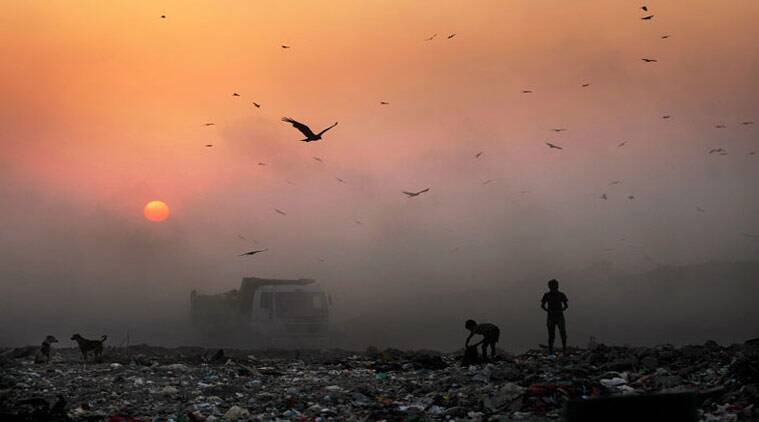
India has not been able to fare well in the field of sanitation, leading to a colossal creation of abundant waste. Fifty to sixty percent of the waste generated is still dumped into landfill sites. The level of lithium that is created due to this dumping is very great. There is also the contradiction that gets prudent between the center and periphery because, normally, waste plants are located in the peripheral regions.
The alarming issue is that out of 62 million tons of waste generated every year only 15 million get processed. The harsh reality of most projects for waste management is the goal of transforming waste into energy plants. The truth is that in India the number of waste to energy plants are almost nil, the reason is that 50% of the waste generated is organic and the calorific value is too low there for the justification for a waste to energy plant is weak. In the larger discourse of sanitation, 31% of the urban households do not have access to pipe water and 67.3% of the Indians 67.3% are not connected to a discharge system.
To discuss this issue further, IMPRI Centre for Habitat, Urban and Regional Studies at Impact and Policy Research Institute hosted #WebPolicyTalk– #LocalGovernance on the topic “Safe Sanitation For All”, inviting Prof Manvita Baradi, Director, Urban Management Centre (UMC), Ahmedabad as the speaker. The discussion was moderated by Mr. Tikender Singh Panwar, Former Deputy Mayor, Shimla; Visiting Senior Fellow, IMPRI, New Delhi.
It was opened by Mr. Tikender, where he set the tone for the discussion and provided his views on the issue and the challenges faced by the waste management and sanitation industries in the country. Later Prof. Manvita Baradi was invited to give her insights on the topic at hand.
Prof. Manvita Baradi started by appreciating the platform as it is good to reach a wider audience, including elected representatives and members of local government. The rise in consumerism and capitalism along with massive urbanization has disrupted the traditional lifestyle followed for ages in a country like India, where waste management was dealt with a domestic solution: creating a system wherein waste was being handled within the house. As Prof. Manvita mentioned “nations such as us which are in the process of developing I would say we have still sustainable practices traditionally.” However, massive urbanization has caused the disorganized management of waste.
The Challenge of the Cities
Among the three tiers of the government: center, state and city, the state and center can only create a system and guide the city administrations for better implementation of a waste management system. Prof. Manvita said, “Real action is on the city governments.” However, most of the city governments are not equipped with enough people or resources. Even with the announcement of the Swachh Bharat Abhiyan and further improvements in funding and technology is not enough. The greater effort is to go to the cities and mentor them to build their capacities where they have been struggling.Certain cities in India are able to maintain a gold standard such as Indore, which has been awarded for its effort. However, Prof. Manvita was concerned and commented “what about smaller cities? What about cities where the challenge of people is there? How many people are employed and how do you really build their capacities?” The city administration employs many staff, temporary and permanent, but there are more of them who are employed in the informal sector. They are not recognized if they manage solid or liquid waste. An act has assured that manual scavenging will not happen, however, cities face tremendous issues managing their liquid waste if you don’t have a centralized solute system.
STP and FSTP
Prof. Manvita and Mr. Tikender Singh Panwar further engaged in a discussion about Sewage Treatment Plants and Faecal Sludge Management Plants in cities. Each state government has a different stance on the establishment of STPs and FSTPS. The Gujarat Government believes in a centralized system, therefore, it has more number of established STPs, and states such as Telangana, Andhra Pradesh, and Maharashtra have more FSTPs. On further discussion, Prof. Manvita commented “even the cost of its treatment would be so huge that no political wing would allow that.”Segregation
The ideal way is to propagate source segregation in different bins and create wet waste management, which would be composting or it could be anyways of composing. Anything could be done at the board level without creating heaps of garbage and this is possible and some of the cities have demonstrated it. The second way for the dry waste is to be separately channelized and can be addressed.The medical waste has to be treated separately and it has to be taken for incineration or other smaller plants to do it. It cannot be mixed with other types of waste and then sent to a larger plant. Prof. Manvita commented, “I think individually a lot of us city officials understand, but collectively somehow it is just not working.”
The Workers
People who are working in the sanitation sector have to be taken care of and we have to work with them. Here, the convergence between the livelihoods of the people who are involved in sanitation work and sanitation itself is at stake. As a country, India has created infrastructure in the last five to seven years but hasn’t really thought of who is going to maintain this infrastructure.So, one large onus is on city governments who are the people behind operations and maintenance of sanitation work and sanitation infrastructure. Those people should have a choice either to continue to be in the sector or can move away from it. The nature of work must not be hierarchical and cost-driven which may not be appropriate for a country like India.
Conclusion
In conclusion, Prof. Manvita stated, “if you’re talking of a centralized system, it will take ages to clean up your cities”. She also further emphasized the need to empower the Self Help Groups movement and in her words “getting women coming together, forming their groups, being empowered”.
Mr. Tikender Singh Panwar remarked over the points raised by Prof. Manvita. He agreed on the fact that decentralization is the way ahead and the system of FSTPs or STPS must also be determined by the geographical features of the city. The role of private players must be supervised with even more care as private STPs used to be inefficiently run and according to Mr. Tikender Singh Panwar “there was this excess and corruption”.
On further deliberation, he mentioned how it is necessary to make convergence and dignity to be mainstream. The integral step to be taken is to take care of the sanitation workers who must be provided with valuable benefits. The model created by the Leh municipal authorities must be propagated regarding how to treat sanitation workers. Prof Manvita also raised a point about providing the sanitation workers with PPE kits that could ensure their respective safety.
Also, the common point that was raised was the issue regarding the recruitment of the staff. The city municipalities limit their responsibilities towards these sanitation workers, however, for a much more efficient system it must not stop there and a systematic framework must be created to protect the interests of the sanitation workers.
—
*Inputs: Simi Mehta, Anshula Mehta, Ritika Gupta, Sunidhi Agarwal, Sakshi Sharda, Swati Solanki, Mahima Kapoor.Acknowledgment: Arjun Sujit Varma, Research Intern at IMPRI
Mr. Tikender Singh Panwar remarked over the points raised by Prof. Manvita. He agreed on the fact that decentralization is the way ahead and the system of FSTPs or STPS must also be determined by the geographical features of the city. The role of private players must be supervised with even more care as private STPs used to be inefficiently run and according to Mr. Tikender Singh Panwar “there was this excess and corruption”.
On further deliberation, he mentioned how it is necessary to make convergence and dignity to be mainstream. The integral step to be taken is to take care of the sanitation workers who must be provided with valuable benefits. The model created by the Leh municipal authorities must be propagated regarding how to treat sanitation workers. Prof Manvita also raised a point about providing the sanitation workers with PPE kits that could ensure their respective safety.
Also, the common point that was raised was the issue regarding the recruitment of the staff. The city municipalities limit their responsibilities towards these sanitation workers, however, for a much more efficient system it must not stop there and a systematic framework must be created to protect the interests of the sanitation workers.
—
*Inputs: Simi Mehta, Anshula Mehta, Ritika Gupta, Sunidhi Agarwal, Sakshi Sharda, Swati Solanki, Mahima Kapoor.Acknowledgment: Arjun Sujit Varma, Research Intern at IMPRI
Comments