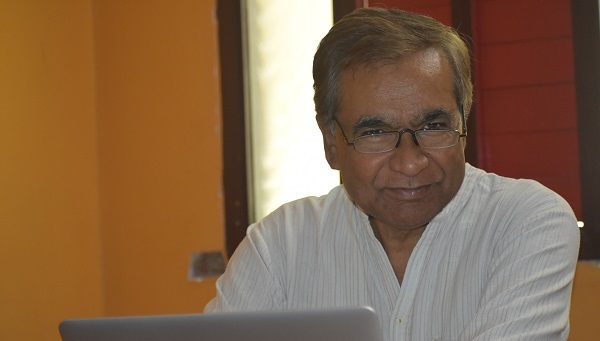
The recent unfortunate, highly deplorable, brutal and heinous incident of rape, body mutilation, murder and burning of a young Dalit girl in Hathras, Uttar Pradesh reveals the sickening neglect of the political community as well as of the society to reinforce caste, gender and power dynamics in the country. In light of this, the Gender Impact Studies Center (GISC) at Impact and Policy Research Institute (IMPRI), Counterview, GenDev Centre for Research and Innovation, City Makers Mission International and Delhi Post News organized a Special Talk with Mr Martin Macwan, an eminent Dalit Rights Activist as part of its #WebPolicyTalk – The State of Gender Equality: #GenderGaps on October 21, 2020, titled “The Heinousness of many Hathras amid the Pandemic – Voluntarism, the Way Ahead for Combating Caste and Gender-based Violence”. An IMPRI note:
***
Mr Macwan raised pertinent points that the victim of sexual violence was deprived of her right to be respectfully cremated. Her body was instead forcefully burnt by the power wielders knowing fully well how to destroy crucial evidence that would reveal the crimes. Incidentally, the right of respectful burial was awarded to dreaded terrorists and the convicts of the heinous crimes as that of Nirbhaya. He highlighted that the victim was educated only till class five in schooling which also highlights the condition of low human development among dalit women.Very unfortunately, the Head of the State- being a Dalit himself hasn’t spoken a word condemning the incident. Tragically, today India is witnessing the contradiction of the Caste at play when both the first and the last person, the victim of the Hathras, are Dalits. There are 680 elected representatives at state and national levels who are Dalits, and their eerie silence to speak against the brutal incidents of caste violence including Hathras is very disturbing. Therefore, political reservation is futile, as it has become more of personal benefits and has not generated any equality in society or impacted the lives of the Dalits. Mr Macwan suggested that the political reservation must be suspended and see what changes has it brought about.
Mr Martin sadly remarked that the hope for justice dwindles when the minds of people in power are prejudicial. It further becomes extremely difficult to advocate faith in the judiciary with its perception of being judicious and neutral is dented. Every single crime that is committed finds no place in formal records. The police try their best to convince the people to not file a complaint. It thus becomes clear that because the crimes against women are not recorded, these are not recognized as crimes. In the Hathras incident, the only ray of hope in the case is the suo moto intervention of the Allahabad High Court, but the outcome remains to be seen.
According to him, an understanding on the problem of caste having an express experience of the discrimination is very revealing and often permanent. For instance, the Dalit Shakti Kendra Vocational School in Gujarat set up to provide alternate to manual scavenging and other caste based occupations, it has been learnt that almost 75-80% women candidates spoke about the experience of sexual violence or harassment in their villages, especially during open defecation. During a session he had raised a question to the youth whether anyone of them had thought of ever committing a suicide. To his utter surprise almost 90% of youth had raised their hands, which speaks volumes about the trauma that youth go through. This should have been addressed while they were in school but our education system fails to do it. Academic research needs to capture the impact of caste and gender prejudices in the minds of young people, and need to investigate for social reasons why the suicide rates has doubled in the last decade, he said.
According to Prof. Govind Kelkar, candid, passionate and dispassionate analysis is essential for gender-based violence. Brahminical patriarchy has perpetuated in the Indian society that treats women as shudras. Even after thousands of years, there has hardly been a change in such prejudices against women. This has rather increased in the intensity of violence of women, for example gangrapes, body mutilation, etc.
We are also witnessing a new development. Earlier the crimes were restricted to dark hours, but as Hathras has demonstrated, the crimes are taking place in broad daylight, often in the presence of the police, without any fear of the law. While the SC and ST (Prevention of Atrocities) Act, 1989 aimed to prevent the crimes, and less on offering the remedies to the crimes. But simply putting a law in place will not eliminate the crime.
The government must stop being threatened by protests and not criminalize them, as grassroots activism are important to bring out the deeply-rooted problems in the society. Otherwise, as a state we will continue to fail to bring social reforms. There is an urgent need to inculcate sensitivity and rationality from young age and all forms of school and college education must cater to this need. Educational and financial independence of women is critical to instil equality in the society. As the way forward, it is prudent to focus on prevention of such incidents like Hathras. Voluntarism with proper pedagogy remains the sole strategy to stir up a social movement against caste and gender atrocities in the country.
Comments
Post a Comment
NOTE: Hateful, abusive comments won't be published. -- Editor