
By Mike Ghouse*
Whether you are an atheist, Baha’i, Buddhist, Christian, Hindu, Jain, Jewish, Native American, Pagan, Shinto, Sikh, Wicca, and Zoroastrian or from any other tradition, you may feel a sense of connection with the spirit of Ramadan. The best way to build cohesive societies is for its members to understand each other’s sorrows and joys, and festivities and commemorations.
Wouldn’t it be nice if you know a little bit about your neighbour’s festival and perhaps invite them to your celebrations? When we live in a community, we might as well learn about each other.
Almost all people celebrate something or the other in their way, each one is different, but the essence is the same, that is celebrations and commemorations. Festivities bring people together. Here we explore Ramadan, one of the major festivals of Muslims.
You can wish your Muslim friends “Eid Mubarak” Happy Eid, Ramadan Mubarak, Eid-al-Fitr Mubarak… or just Happy Ramadan will do.
Rituals signify the milestones in our daily lives. Every significant moment of the day is a ritual. Every faith is composed of a set of unique rituals to bring discipline and peace to human life. Fasting is one of the five essential rituals that Muslims around the world observe.
Ramadan is the ninth month of the Islamic lunar calendar and is generally observed with a ritual precision; it is an annual training or a refresher. It requires one to abstain from food, drink, intimacy, ill-will, ill-talk, ill-actions and other temptations from dawn to dusk, every day for the whole month. One has to rise above his or her baser desires. Islam gifts this month to its followers to teach discipline to bring moderation to their daily lives.
Although Ramadan is popularly known in the West for its culinary delicacies and fancy iftars, the spirit and intent of Ramadan lie in a human transformation in a month-long inner spiritual journey of finding oneself in tune with spirituality.
Hindus can see that transformation in nine days of fasting during Navaratri, the Jains in 8-10 days of fasting during Paryushan, Christians during 40 days of lent, Jews for seven days around Yom Kippur, and likewise you find fasting is a way of life in most traditions.
God has no need for the hunger or thirst of someone who hurts others, violates their dignity, or usurps their rights. The consciousness of behavior and vigilance over action are the most profound dimensions of fasting: the fasting of the heart focuses on the attachment to the divine. That is when Ramadan becomes a source of peace and solace, just as Christmas or Dussehra goes beyond the rituals to bring forth kindness, charity, and caring.
True fasting is self-purification, and from this comes an abundant inner life that brings about values such as justice, generosity, patience, kindness, forgiveness, mercy, and empathy — values that are indispensable for the success of the community.
For fasting to be truly universal, its benefits must extend beyond the fraternal ties of Muslims and must continue to forging a common humanity with others. Fasting is meant to impart a sense of what it means to be truly human, and its observance reflects its universality in Baha’i, Buddhist, Christian, Hindu, Jain, Jewish, Sikh, Zoroastrian and other faiths.

The day of Eid
The number of days one fast corresponds with the Moon cycle, which varies from 29 to 30 days in a given month. At the end of the fasting period, it is time to celebrate! It is thanking the creator, observing a disciplined life, and rewarding yourselves.
To make your celebration wholesome and guilt-free, you thank the Lord for your blessings and share a portion of your income with the underprivileged, so they can also celebrate along with you. When you uplift others, your spirit is lifted as well. The idea is to fill the environment with positive energy. Paying zakat is one of the most important duties of a Muslim. Zakat is like income tax, and it is roughly 2.5% of your earnings. However, it’s voluntary and an honor system.
Chand Raat – When you see the pencil-thin moon on the horizon, it signals the end of fasting and the start of celebrations. The evening is shopping spree and gifts are bought for the loved ones.
Eid – festivity. The whole community gathers up in the morning around 9.00 AM, wearing new clothes, new perfume and thanking Allah for completing the blessed month of Ramadan.
Practices differ in each town. In Dallas, Texas, they rent the Auto Exhibit hall in Fair Park or the Convention hall that seats about 25,000 people, together they pray and celebrate the festivity. They do the same in Louisville, Ky. In Yelahanka, my hometown, a suburb of Bangalore where I was born and raised, the entire town gathered at the Masjid and walked about a Mile to the Eidgah – a place for large congregations.
Back in the late 70s Bollywood film actor Mehmood lived near my town, and he invited his friends for Eid celebrations at his home. Amitabh Bachchan, Rajesh Khanna, and other actors joined in the Eid prayers with Mehmood.
Eid is also a day to pray for the deceased; almost all Muslims visit the cemeteries and pray for their loved ones. It is one of the most beautiful prayers that seek forgiveness for all humanity, for the living, and the deceased. The Navkar Mantra of Jains is very close to this Muslim prayer.
Most Muslims visit the cemetery on the day of the Eid. You can visit any cemetery to pray for the loved one buried anywhere. And pray for the entire humanity by using the words for the deceased and the alive.
Typically, it is a day to clean your slate, seek forgiveness from the ones you have hurt or forgive those who have hurt you. When you see Muslims hugging each other, it is washing off ill-will from their hearts for each other.
The foods
The most popular dessert of Ramadan in South Asia is “Dum ke Saviyan” (Sauteed vermecellis), and “Sheer Qurma” – that is vermicelli’s cooked with milk, cashew, raisins, and other dry fruits.Biryani is the most popular food in South Asia, and it is the dish prepared to honor your guest. There are varieties of Biryanis like Kashmiri, Lahori, Multani, Bengali, Punjabi, Kabul, Rangoon, Colombo (Sri Lanka), Bombay, Delhi, Lucknow, Bangalore, Kerala, Goa, and Hyderabad.
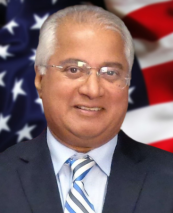 |
| Mike Ghouse |
The best of all the biryanis is the Dum ki Biryani from Hyderabad, it is the way it is cooked, the spices are evenly distributed, the moisture remains consistent and the rice is usually fluffy and the meat melts in your mouth. If you have not eaten Hyderabadi Biryani, you have not eaten good food. Goat Biryani is the most common item in South Asia, and I am sure each one of the countries in the world has their own. My native American Muslim friends make things out of corn.
When there are Bhuna Gosht – Grilled Mutton – my favorite, my late wife Najma used to mix rice with the nearly burnt sauce at the bottom and hand feed me… I can never forget those romantic moments; Cooked Keema – delicious with the Paratha; Anday ka Salan – Egg curry; Mirchi ka salan, Baghare-Baigan (eggplant); Dum ke Saviyan – Sauteed Vermicellis; Dum ke Saviyan – Sauteed Vermicellis with fruits; and Sheer Qurma – I make it more liquidy and drink it as a beverage in a cup.
—
*Author of the book, “American Muslim Agenda”, founder- president of the Center for Pluralism, Washington DC, public speaker, interfaith wedding officiant
—
*Author of the book, “American Muslim Agenda”, founder- president of the Center for Pluralism, Washington DC, public speaker, interfaith wedding officiant
Comments
Post a Comment
NOTE: Hateful, abusive comments won't be published. -- Editor