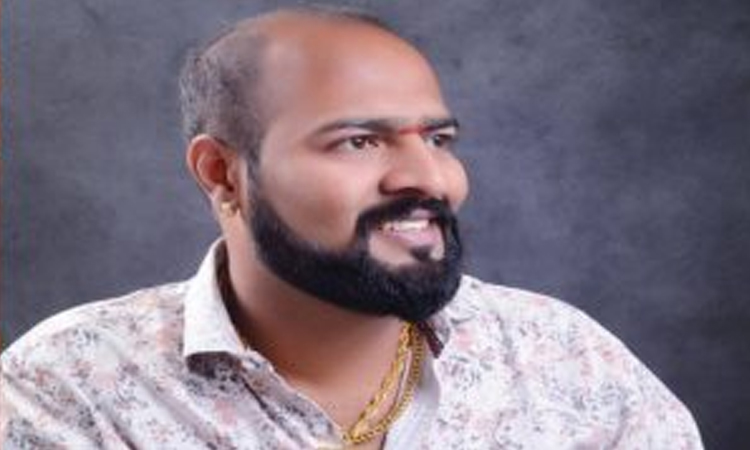
RTI activist’s murder: M’shtra govt must make public, publicise info sought by Junawane


On November 1, 2018, yet another RTI user was killed in Maharashtra for seeking information to expose corruption and wrongdoing. According to media reports, Rohit Ashok Junawane was brutally attacked by nine armed assailants near his residence in Aundh, Pune and died of the injuries.
The National Campaign for Peoples’ Right to Information (NCPRI) has written to the Chief Minister of Maharashtra, demanding immediate action in the matter. The letter calls upon the government to ensure that all the information sought by Junawane is put in the public domain and widely publicized, which would act as a deterrent against such attacks in the future. The letter is also copied to the State Chief Information Commissioner of Maharashtra for necessary action.
Junawane’s killing marks the 78th murder of an RTI user who has been silenced for seeking to show truth to power. The government has failed to implement the Whistle Blowers Protection Act passed by Parliament in 2014 despite the increasing number of attacks and murders of RTI users. Maharashtra has seen the highest number of murders of RTI users.
Text of the letter signed by Anjali Bhardwaj, Nikhil Dey, Pankti Jog, Pradip Pradhan, Rakesh Dubbudu, Shaikh Ghulam Rasool and Venkatesh Nayak:
***
The National Campaign for Peoples’ Right to Information (NCPRI) is gravely concerned about the murder of RTI user, Rohit Ashok Junawane. According to media reports, he was brutally attacked by nine armed assailants near his residence in Aundh, Pune and died of the injuries sustained while undergoing treatment on November 1, 2018.
As per media reports, Rohit Ashok Junawane had filed an RTI application at the Pune Municipal Corporation’s Aundh ward seeking information regarding the illegal construction of the house of the main accused in the murder case and his involvement with the Mathadi Labourer’s Union, five days prior to his murder.
Media reports further stated that Mr. Junawane had also been intimated and threatened at the time of filing the RTI application. (“Milk Supplier hacked to death in Aundh by gang of nine men”, November 2nd 2018, Times of India, “Pune man sickled to death by 9 for seeking details of a construction project under RTI”, November 3rd 2018, Times Now, “Milkman killed in Pune for seeking information under RTI”, November 2nd, 2018).
The NCPRI strongly condemns the murder of Mr. Junawane. We urge the Maharashtra government to ensure a thorough investigation into the murder. The state government must ensure that all the information sought by Mr. Junawane is put in the public domain and widely publicized, which would act as a deterrent against such attacks in the future.
Considering the alarming increase in the number of attacks on RTI users in the country, it is imperative that the Whistleblowers’ Protection Act, 2011 (No. 17 of 2014), which is critical to protect people who expose corruption and wrongdoing, be effectively implemented. We hope your government will take steps to urge the central government to implement the law, and in the meantime set up necessary mechanisms to protect whistleblowers.

Comments

TRENDING

Grueling summer ahead: Cuttack’s alarming health trends and what they mean for Odisha

By Sudhansu R Das  The preparation to face the summer should begin early in Odisha. People in the state endure long, grueling summer months starting from mid-February and extending until the end of October. This prolonged heat adversely affects productivity, causes deaths and diseases, and impacts agriculture, tourism and the unorganized sector. The social, economic and cultural life of the state remains severely disrupted during the peak heat months.

Stronger India–Russia partnership highlights a missed energy breakthrough

By N.S. Venkataraman*  The recent visit of Russian President Vladimir Putin to India was widely publicized across several countries and has attracted significant global attention. The warmth with which Mr. Putin was received by Prime Minister Narendra Modi was particularly noted, prompting policy planners worldwide to examine the implications of this cordial relationship for the global economy and political climate. India–Russia relations have stood on a strong foundation for decades and have consistently withstood geopolitical shifts. This is in marked contrast to India’s ties with the United States, which have experienced fluctuations under different U.S. administrations.

Concerns raised over move to rename MGNREGA, critics call it politically motivated

By A Representative   Concerns have been raised over the Union government’s reported move to rename the Mahatma Gandhi National Rural Employment Guarantee Act (MGNREGA), with critics describing it as a politically motivated step rather than an administrative reform. They argue that the proposed change undermines the legacy of Mahatma Gandhi and seeks to appropriate credit for a programme whose relevance has been repeatedly demonstrated, particularly during times of crisis.

A comrade in culture and controversy: Yao Wenyuan’s revolutionary legacy

By Harsh Thakor*  This year marks two important anniversaries in Chinese revolutionary history—the 20th death anniversary of Yao Wenyuan, and the 50th anniversary of his seminal essay "On the Social Basis of the Lin Biao Anti-Party Clique". These milestones invite reflection on the man whose pen ignited the first sparks of the Great Proletarian Cultural Revolution and whose sharp ideological interventions left an indelible imprint on the political and cultural landscape of socialist China.

From natural farming to fair prices: Young entrepreneurs show a new path

By Bharat Dogra   There have been frequent debates on agro-business companies not showing adequate concern for the livelihoods of small farmers. Farmers’ unions have often protested—generally with good reason—that while they do not receive fair returns despite high risks and hard work, corporate interests that merely process the crops produced by farmers earn disproportionately high profits. Hence, there is a growing demand for alternative models of agro-business development that demonstrate genuine commitment to protecting farmer livelihoods.

Swami Vivekananda's views on caste and sexuality were 'painfully' regressive

By Bhaskar Sur* Swami Vivekananda now belongs more to the modern Hindu mythology than reality. It makes a daunting job to discover the real human being who knew unemployment, humiliation of losing a teaching job for 'incompetence', longed in vain for the bliss of a happy conjugal life only to suffer the consequent frustration.

Why India must urgently strengthen its policies for an ageing population

By Bharat Dogra   A quiet but far-reaching demographic transformation is reshaping much of the world. As life expectancy rises and birth rates fall, societies are witnessing a rapid increase in the proportion of older people. This shift has profound implications for public policy, and the need to strengthen frameworks for healthy and secure ageing has never been more urgent. India is among the countries where these pressures will intensify most sharply in the coming decades.

Thota Sitaramaiah: An internal pillar of an underground organisation

By Harsh Thakor*  Thota Sitaramaiah was regarded within his circles as an example of the many individuals whose work in various underground movements remained largely unknown to the wider public. While some leaders become visible through organisational roles or media attention, many others contribute quietly, without public recognition. Sitaramaiah was considered one such figure. He passed away on December 8, 2025, at the age of 65.

School job scam and the future of university degree holders in West Bengal

By Harasankar Adhikari  The school recruitment controversy in West Bengal has emerged as one of the most serious governance challenges in recent years, raising concerns about transparency, institutional accountability, and the broader impact on society. Allegations that school jobs were obtained through irregular means have led to prolonged legal scrutiny, involving both the Calcutta High Court and the Supreme Court of India. In one instance, a panel for high school teacher recruitment was ultimately cancelled after several years of service, following extended judicial proceedings and debate.