By Venkatesh Nayak*
Readers will remember the incident of extra-judicial killing of 3 persons in Machil in the State of Jammu and Kashmir on 30 April, 2010 by army personnel. The Indian Army instituted a court of inquiry in June 2010. Based on the findings of this process, the Indian Army constituted a General Court Martial in 2013 to try the accused. Later, the Court Martial handed life imprisonment to the six accused one of whom was of Colonel rank. The Central Information Commission (CIC) has directed that all records relating to these proceedings be disclosed.
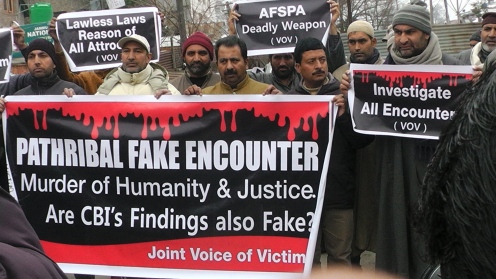
In another alleged incident of extra-judicial killing that occurred in 2000 five persons are reported to have been killed in Pathribal, also in Jammu and Kashmir. Media reports indicated that the Court of Inquiry instituted by the Army did not find any evidence against its personnel to proceed further. The Indian Army argued before the CIC that a Court of Inquiry was never held regarding this incident.
In January 2015, I filed a request for information under The Right to Information Act, 2005 (RTI Act) with the Indian Army seeking the following information:
“1) A clear photocopy of the entire text of the findings of the Court Martial in relation to the conviction of five Army Personnel for the killings committed at Macchil, Jammu and Kashmir in the year 2010 as reported in the attached news clipping;
2) A clear photocopy of the chargesheet filed before the said Court Martial in relation to the case mentioned above at para #1 along with Annexures, if any;
3) A clear photocopy of the sentence awarded to the convicted Army Personnel by the said Court Martial;
4) A clear photocopy of the communication along with Annexures, if any, sent to the concerned confirming officer/confirming authority in relation to the said case as per the relevant Rules under the Indian Army Rules, 1954;
5) A clear photocopy of all proceedings of the Court of Inquiry which enquired into the matter pertaining to the killing of five persons in Pathribal, Anantnag district, Jammu and Kashmir in the year 2000.”
The Central Public Information Officer (CPIO) of the Indian Army invoked Section 8(1)(h) of the RTI Act to deny access to the Court Martial and Court of Inquiry records. Under Section 8(1)(h), a public authority may deny access to information if disclosure will impede the process of investigation or the arrest or the prosecution of persons accused of committing crimes. Later on, the First Appellate Authority upheld the decision of the CPIO.
In my second appeal filed before the CIC, I argued that Section 8(1)(h) was simply not applicable to the information that I sought. I cited case law from the Delhi High Court about how the exemptions must not be applied in a mechanical manner. Subsequently, the CIC has ordered the disclosure of all information sought in my RTI application relating to the Court Martial in the Machil case. This may be a rare instance where a direction has been issued to disclose Court Martial related records. I have not seen other CIC decisions on similar matters issued till date. I request readers to share with me any earlier decision of the CIC directing the disclosure of similar information under the RTI Act.
However what is perplexing in this case is that the Indian Army representative admitted at the CIC hearing that a Court of Inquiry was never held in the Pathribal incident. The CIC has recorded this admission in its decision. The national and J&K media have reported more than once about the existence of a Court of Inquiry in the Pathribal case. I request informed readers to educate me about the nature of inquiry that the Indian Army conducted in relation to the Pathribal incident as the matter had reached the Supreme Court of India.
Will the Indian Army disclose the Court Martial records or challenge the CIC’s order in some High Court remains to be seen.
—
*Programme Coordinator, Access to Information Programme, Commonwealth Human Rights Initiative, New Delhi
Readers will remember the incident of extra-judicial killing of 3 persons in Machil in the State of Jammu and Kashmir on 30 April, 2010 by army personnel. The Indian Army instituted a court of inquiry in June 2010. Based on the findings of this process, the Indian Army constituted a General Court Martial in 2013 to try the accused. Later, the Court Martial handed life imprisonment to the six accused one of whom was of Colonel rank. The Central Information Commission (CIC) has directed that all records relating to these proceedings be disclosed.
In another alleged incident of extra-judicial killing that occurred in 2000 five persons are reported to have been killed in Pathribal, also in Jammu and Kashmir. Media reports indicated that the Court of Inquiry instituted by the Army did not find any evidence against its personnel to proceed further. The Indian Army argued before the CIC that a Court of Inquiry was never held regarding this incident.
In January 2015, I filed a request for information under The Right to Information Act, 2005 (RTI Act) with the Indian Army seeking the following information:
“1) A clear photocopy of the entire text of the findings of the Court Martial in relation to the conviction of five Army Personnel for the killings committed at Macchil, Jammu and Kashmir in the year 2010 as reported in the attached news clipping;
2) A clear photocopy of the chargesheet filed before the said Court Martial in relation to the case mentioned above at para #1 along with Annexures, if any;
3) A clear photocopy of the sentence awarded to the convicted Army Personnel by the said Court Martial;
4) A clear photocopy of the communication along with Annexures, if any, sent to the concerned confirming officer/confirming authority in relation to the said case as per the relevant Rules under the Indian Army Rules, 1954;
5) A clear photocopy of all proceedings of the Court of Inquiry which enquired into the matter pertaining to the killing of five persons in Pathribal, Anantnag district, Jammu and Kashmir in the year 2000.”
The Central Public Information Officer (CPIO) of the Indian Army invoked Section 8(1)(h) of the RTI Act to deny access to the Court Martial and Court of Inquiry records. Under Section 8(1)(h), a public authority may deny access to information if disclosure will impede the process of investigation or the arrest or the prosecution of persons accused of committing crimes. Later on, the First Appellate Authority upheld the decision of the CPIO.
In my second appeal filed before the CIC, I argued that Section 8(1)(h) was simply not applicable to the information that I sought. I cited case law from the Delhi High Court about how the exemptions must not be applied in a mechanical manner. Subsequently, the CIC has ordered the disclosure of all information sought in my RTI application relating to the Court Martial in the Machil case. This may be a rare instance where a direction has been issued to disclose Court Martial related records. I have not seen other CIC decisions on similar matters issued till date. I request readers to share with me any earlier decision of the CIC directing the disclosure of similar information under the RTI Act.
However what is perplexing in this case is that the Indian Army representative admitted at the CIC hearing that a Court of Inquiry was never held in the Pathribal incident. The CIC has recorded this admission in its decision. The national and J&K media have reported more than once about the existence of a Court of Inquiry in the Pathribal case. I request informed readers to educate me about the nature of inquiry that the Indian Army conducted in relation to the Pathribal incident as the matter had reached the Supreme Court of India.
Will the Indian Army disclose the Court Martial records or challenge the CIC’s order in some High Court remains to be seen.
—
*Programme Coordinator, Access to Information Programme, Commonwealth Human Rights Initiative, New Delhi
Comments
Post a Comment
NOTE: Hateful, abusive comments won't be published. -- Editor