 |
By Fr Cedric Prakash sj*
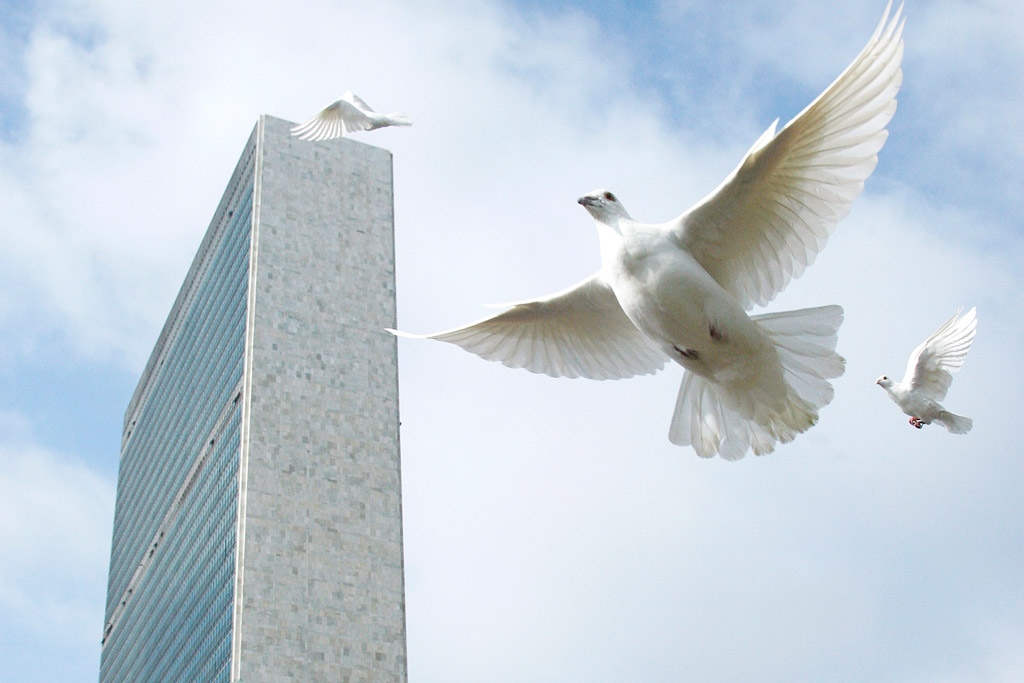
It’s September 21 once again, a day which is observed the world over as the International Day of Peace. Since September 1982, on this day, the United Nations has been calling upon world leaders to remember that the UN as an organisation was created in 1945, with a primary aim: to end all wars and to ensure enduring peace.
The day once again will be full of activities and programmes perhaps high profile commemorations. These activities are perhaps needed. We need, however, to go beyond tokenism and cosmeticization. The grim and painful reality however remains: several parts of the world are still caught up in war and hostilities; in hate and violence; in division and discrimination. Everything in fact, which is the antithesis of peace! So much so, the UN Secretary General Ban-ki Moon, in a message for the day, makes a passionate plea, “I call upon all warring parties to lay down their weapons and observe a global ceasefire. To them I say: Stop the killings and the destruction, and create space for lasting peace.”
It is unlikely that the warmongers of this world will actually pay heed to his word. The forces of ISIS are still on their inhuman and brutal rampage in Syria and other parts of the Middle East forcing millions of innocent people to flee to other countries at great risk; Burkina Faso which is one of the poorest countries of West Africa has been subject to much violence after an attempted military coup; in South America and in several parts of Asia, the average citizen continues to be insecure and peace is still elusive for many.
It is, therefore, symbolic that the theme of this year’s International Day of Peace is ‘Partnerships for Peace – Dignity for All’ which aims to highlight the importance of all segments of society to work together for peace. It is amply evident that beginning with the UN, the world leaders need to get their act together to help realise the ‘never again’ of post-World War II. The UN needs to have more powers to deal with member states who have scant regard for the minimum requisites of peace.
Governments and national leaders need to demonstrate the political will to contain every kind of violence in their countries. Civil society organisations and, in fact, every citizen needs to forge partnerships which are inclusive, respecting diversity, promoting the dignity of every citizen which in the long run will contribute to making the world a more peaceful place for all. There has to be a concerted effort to negate the role of the arms and ammunition industry; the powerful mining lobby; the big corporations who destroy our natural resources for profiteering and also other vested interests who leave no stone unturned to keep the ordinary person in a stage of siege, conflict and violence.
It is also significant that Pope Francis has just begun his nine-day trip to Cuba and the United States, during which he will not only address the UN but also a joint sitting of the US Congress. He is certainly expected to make a strong case for peace, as he takes on the powerful and the rich of this world. His appeal to world leaders will surely be, ‘Stop war! Give Peace a chance!’
—
*Director, Prashant, Ahmedabad-based Jesuit Centre for Human Rights, Justice and Peace
It’s September 21 once again, a day which is observed the world over as the International Day of Peace. Since September 1982, on this day, the United Nations has been calling upon world leaders to remember that the UN as an organisation was created in 1945, with a primary aim: to end all wars and to ensure enduring peace.
The day once again will be full of activities and programmes perhaps high profile commemorations. These activities are perhaps needed. We need, however, to go beyond tokenism and cosmeticization. The grim and painful reality however remains: several parts of the world are still caught up in war and hostilities; in hate and violence; in division and discrimination. Everything in fact, which is the antithesis of peace! So much so, the UN Secretary General Ban-ki Moon, in a message for the day, makes a passionate plea, “I call upon all warring parties to lay down their weapons and observe a global ceasefire. To them I say: Stop the killings and the destruction, and create space for lasting peace.”
It is unlikely that the warmongers of this world will actually pay heed to his word. The forces of ISIS are still on their inhuman and brutal rampage in Syria and other parts of the Middle East forcing millions of innocent people to flee to other countries at great risk; Burkina Faso which is one of the poorest countries of West Africa has been subject to much violence after an attempted military coup; in South America and in several parts of Asia, the average citizen continues to be insecure and peace is still elusive for many.
It is, therefore, symbolic that the theme of this year’s International Day of Peace is ‘Partnerships for Peace – Dignity for All’ which aims to highlight the importance of all segments of society to work together for peace. It is amply evident that beginning with the UN, the world leaders need to get their act together to help realise the ‘never again’ of post-World War II. The UN needs to have more powers to deal with member states who have scant regard for the minimum requisites of peace.
Governments and national leaders need to demonstrate the political will to contain every kind of violence in their countries. Civil society organisations and, in fact, every citizen needs to forge partnerships which are inclusive, respecting diversity, promoting the dignity of every citizen which in the long run will contribute to making the world a more peaceful place for all. There has to be a concerted effort to negate the role of the arms and ammunition industry; the powerful mining lobby; the big corporations who destroy our natural resources for profiteering and also other vested interests who leave no stone unturned to keep the ordinary person in a stage of siege, conflict and violence.
It is also significant that Pope Francis has just begun his nine-day trip to Cuba and the United States, during which he will not only address the UN but also a joint sitting of the US Congress. He is certainly expected to make a strong case for peace, as he takes on the powerful and the rich of this world. His appeal to world leaders will surely be, ‘Stop war! Give Peace a chance!’
—
*Director, Prashant, Ahmedabad-based Jesuit Centre for Human Rights, Justice and Peace
Comments
Post a Comment
NOTE: Hateful, abusive comments won't be published. -- Editor