
New York journalists' body seeks immediate release of Chhattisgarh reporter, criticizes attack on free speech
By A Representative
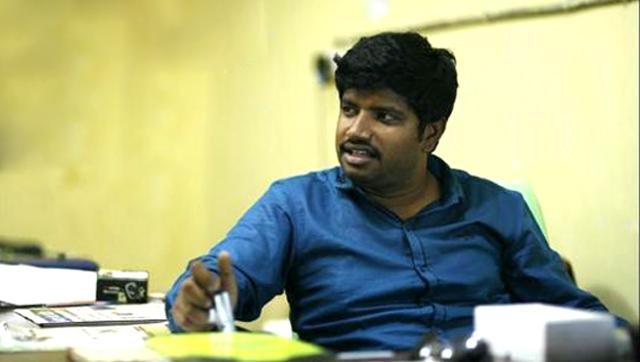
The Influential New York-based Committee to Protect Journalists (CPJ), an independent, nonprofit organization that promotes press freedom worldwide, has “immediately release” of Prabhat Singh, a reporter for the Hindi daily Patrika, who was arrested in the south Bastar region of Chhattisgarh on Monday.
Seeking investigation into the claim that he was mistreated in custody, a CPJ statement said, “Singh's arrest comes as two journalists were forced to flee the region, and two others have been jailed for months”, adding the arrest is “another sign of deteriorating climate for press in Chhattisgarh”.
Arrested under Section 67 of India's Information Technology (IT) Act in response to a complaint that he circulated "confrontational material" on the messaging service, WhatsApp, a local court has ordered Singh to be held in custody until March 30.
“Singh also faces charges from several cases police have filed against him in recent months, accusing him of forgery and cheating”, CPJ said quoting news reports in India, adding, “Singh has denied the previous allegations and said the cases were in reprisal for his critical reporting.” Chhattisgarh is ruled by BJP chief minister Raman Singh.
CPJ's Asia program senior research associate, Sumit Galhotra said, "The arrests and hounding of journalists and their defenders has given way to a climate of fear that risks turning parts of Chhattisgarh into a media black hole."
“Singh, who has worked for Patrika for more than three years, reports on sensitive stories, including an attack last month on human rights activist Soni Sori and alleged extrajudicial killings in the state, news reports said. He also raised critical questions of high-ranking police officers in news conferences”, CPJ said, referring to a Hindustan Times report.
“Vishnu Singh, the journalist's brother, told CPJ that Singh told him he had been beaten in police custody. He said that when he saw his brother today, the journalist had bruises on his hands and chest area. Vishnu Singh added that his brother told him he had been deprived of food in custody”, CPJ said, but regretted, “Several phone numbers listed in the police directory to seek police comment but no one answered.”
Quoting Singh's colleagues, CPJ said, “Men in plainclothes, whom they recognized as police, took the journalist from the paper's office in Dantewada district Monday evening. Colleagues searched for him, but Singh's whereabouts were not known until his court appearance”, which happened on March 22.
Earlier this month, CJP said, “Singh filed a complaint with Dantewada police against Samajik Ekta Manch, a group of activists that has previously harassed journalists, for labeling him an ‘anti-national’ on WhatsApp, according to reports.”
“Journalists and lawyers told CPJ during a visit to Chhattisgarh this month that there is a sustained campaign to silence critical reporting in parts of the state. The region has been the scene of a decades-long conflict between the security forces and Maoists”, the CPJ said, adding, “CPJ documented how BBC Hindi Service reporter Alok Prakash Putul and freelancer Malini Subramaniam were forced to flee Bastar last month over concern for their safety.”
“Subramaniam had been harassed by members of Samajik Ekta Manch”, CPJ said, adding,
“The lawyers of a legal aid clinic representing imprisoned journalists Somaru Nag and Santosh Yadav, whom Chhattisgarh police arrested in 2015 on unsubstantiated allegations that they were aligned with Maoists, were also forced to leave the area. Both Nag and Yadav remain behind bars.”

Comments

TRENDING

Grueling summer ahead: Cuttack’s alarming health trends and what they mean for Odisha

By Sudhansu R Das  The preparation to face the summer should begin early in Odisha. People in the state endure long, grueling summer months starting from mid-February and extending until the end of October. This prolonged heat adversely affects productivity, causes deaths and diseases, and impacts agriculture, tourism and the unorganized sector. The social, economic and cultural life of the state remains severely disrupted during the peak heat months.

Stronger India–Russia partnership highlights a missed energy breakthrough

By N.S. Venkataraman*  The recent visit of Russian President Vladimir Putin to India was widely publicized across several countries and has attracted significant global attention. The warmth with which Mr. Putin was received by Prime Minister Narendra Modi was particularly noted, prompting policy planners worldwide to examine the implications of this cordial relationship for the global economy and political climate. India–Russia relations have stood on a strong foundation for decades and have consistently withstood geopolitical shifts. This is in marked contrast to India’s ties with the United States, which have experienced fluctuations under different U.S. administrations.

From natural farming to fair prices: Young entrepreneurs show a new path

By Bharat Dogra   There have been frequent debates on agro-business companies not showing adequate concern for the livelihoods of small farmers. Farmers’ unions have often protested—generally with good reason—that while they do not receive fair returns despite high risks and hard work, corporate interests that merely process the crops produced by farmers earn disproportionately high profits. Hence, there is a growing demand for alternative models of agro-business development that demonstrate genuine commitment to protecting farmer livelihoods.

The Vande Mataram debate and the politics of manufactured controversy

By Vidya Bhushan Rawat*  The recent Vande Mataram debate in Parliament was never meant to foster genuine dialogue. Each political party spoke past the other, addressing its own constituency, ensuring that clips went viral rather than contributing to meaningful deliberation. The objective was clear: to construct a Hindutva narrative ahead of the Bengal elections. Predictably, the Lok Sabha will likely expunge the opposition’s “controversial” remarks while retaining blatant inaccuracies voiced by ministers and ruling-party members. The BJP has mastered the art of inserting distortions into parliamentary records to provide them with a veneer of historical legitimacy.

A comrade in culture and controversy: Yao Wenyuan’s revolutionary legacy

By Harsh Thakor*  This year marks two important anniversaries in Chinese revolutionary history—the 20th death anniversary of Yao Wenyuan, and the 50th anniversary of his seminal essay "On the Social Basis of the Lin Biao Anti-Party Clique". These milestones invite reflection on the man whose pen ignited the first sparks of the Great Proletarian Cultural Revolution and whose sharp ideological interventions left an indelible imprint on the political and cultural landscape of socialist China.

The cost of being Indian: How inequality and market logic redefine rights

By Vikas Gupta   We, the people of India, are engaged in a daily tryst—read: struggle—for basic human rights. For the seemingly well-to-do, the wish list includes constant water supply, clean air, safe roads, punctual public transportation, and crime-free neighbourhoods. For those further down the ladder, the struggle is starker: food that fills the stomach, water that doesn’t sicken, medicines that don’t kill, houses that don’t flood, habitats at safe distances from polluted streams or garbage piles, and exploitation-free environments in the public institutions they are compelled to navigate.

Why India must urgently strengthen its policies for an ageing population

By Bharat Dogra   A quiet but far-reaching demographic transformation is reshaping much of the world. As life expectancy rises and birth rates fall, societies are witnessing a rapid increase in the proportion of older people. This shift has profound implications for public policy, and the need to strengthen frameworks for healthy and secure ageing has never been more urgent. India is among the countries where these pressures will intensify most sharply in the coming decades.

Thota Sitaramaiah: An internal pillar of an underground organisation

By Harsh Thakor*  Thota Sitaramaiah was regarded within his circles as an example of the many individuals whose work in various underground movements remained largely unknown to the wider public. While some leaders become visible through organisational roles or media attention, many others contribute quietly, without public recognition. Sitaramaiah was considered one such figure. He passed away on December 8, 2025, at the age of 65.

Proposals for Babri Masjid, Ram Temple spark fears of polarisation before West Bengal polls

By A Representative   A political debate has emerged in West Bengal following recent announcements about plans for new religious structures in Murshidabad district, including a proposed mosque to be named Babri Masjid and a separate announcement by a BJP leader regarding the construction of a Ram temple in another location within Behrampur.