
A recent statement attributed to R K Singh, Union Minister for Power and NRE -- that renewable energy sources can meet 65% of world's power supply, 90% by 2050 -- can be said to have not only surprised many in India, but also has thrown up many questions from the true welfare perspective of our country.
Whereas, it is somewhat comforting to know that the Union government seem to have finally appreciated the humongous potential in REs to possibly address the calamitous threats of Climate Change, it is also a totally unanswered but a credible question to energy sector observers in India, why the country is still obsessed with throwing a lot of our financial and natural resources on conventional technology power sources such as coal, gas, nuclear and dam based hydel power.
There is probably not a single credible report to indicate that the levelized cost of electricity (LCOE)which is a measure of the average net present cost of electricity generation for a generator over its lifetime, from any of the conventional technology power sources in India is even comparable to that from REs; especially if all the direct and indirect costs, including the social and environmental costs, are objectively considered. And the ever increasing threats from Climate Change, to which the conventional technology power sources are recognised as the predominant causes, have always been a global challenge.
The World Energy Outlook 2023 by IEA indicates that "The energy world remains fragile but has effective ways to improve energy security and tackle emissions". What is also unfortunate fact about almost all of such outlooks/ surveys/ projections into future is the abject failure to provide adequate focus to the much needed Demand Side Management (DSM).
All these reports can be said to be guilty of focusing only on the supply side of the energy quagmire, whereas the effective energy demand at the national or global level is only increasing despite many tall claims about efficiency improvement of appliances. Without optimally managing the effective energy demand, it will be impossible to consider a sustainable energy demand/ supply model for our country.
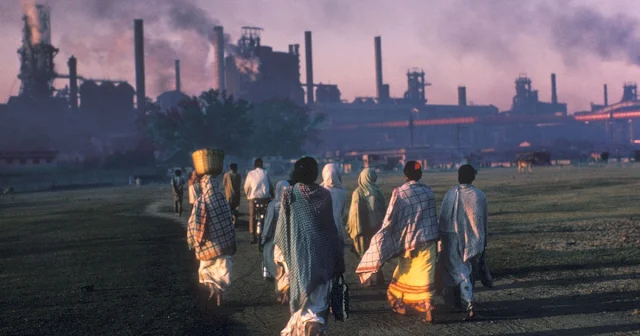
Our country has been experiencing and witnessing multiple consequences of not making adequate efforts to move away early from the ongoing over-reliance on the conventional technology power sources; largely whether its is coal power or dam based hydro power.
Whereas REs have the potential to meet 90% of world's supply by 2050, that potential can be stated as much higher in the case of India, when we also objectively consider our traditional life style which demands much less per capita energy, as compared to the global average. But deplorably, there has not been honest efforts in our country to optimally harness all possible technological advancements in REs, especially the roof top SPVs and battery energy storages systems.
At this low per unit rate of supplying round-the-clock electricity, these tenders prices seem to be less than the average cost of per unit electricity being charged by most DISCOMs. If that is so, the most troubling question should be as to why there is still a preference for conventional technology power projects, such as coal, hydro and nuclear power projects, which will most probably have much higher per unit electricity cost.
A diligently prepared National Energy Policy should be able to deliberate on a number of such issues, including the much needed Demand Side Management (DSM). But sadly, there seems no focus on such a holistic and strategic policy initiatives in the country, as against the ongoing preference for empty rhetoric and ad-hoc measures without much considerations of long term consequences.
Can we hope there will be a paradigm shift soon in the Union govt. policy to move away early from the ongoing over-reliance on the conventional technology power sources?
---
*Power & Climate Policy Analyst. This article is based on the author's representation to RK Singh, Union Minister for Power and NRE
Whereas REs have the potential to meet 90% of world's supply by 2050, that potential can be stated as much higher in the case of India, when we also objectively consider our traditional life style which demands much less per capita energy, as compared to the global average. But deplorably, there has not been honest efforts in our country to optimally harness all possible technological advancements in REs, especially the roof top SPVs and battery energy storages systems.

A number of recent Round-The-Clock Renewable Power tenders should indicate an unambiguous shift needed in our country's policy to adopt more of energy storage battery projects so as to make optimal usage of the humongous potential for RE in the country, and to take a resolute policy initiative to move way from conventional technology power sources much earlier than the stated target year of 2070, or even before 2050, which will only be in the true interest of our people.
What should be of huge interest in some of these related tenders is a news report which states that: "Anaya Renewables secured rights to develop 500 megawatts and 300 megawatts capacity at a tariff rate of Rs 4.10 per kilowatt-hour. Spring Energy won 100 megawatts at Rs 3.99 per kilowatt-hour, while O2 Power secured 60 megawatts at Rs 4.27 per kilowatt-hour." At this low per unit rate of supplying round-the-clock electricity, these tenders prices seem to be less than the average cost of per unit electricity being charged by most DISCOMs. If that is so, the most troubling question should be as to why there is still a preference for conventional technology power projects, such as coal, hydro and nuclear power projects, which will most probably have much higher per unit electricity cost.
A diligently prepared National Energy Policy should be able to deliberate on a number of such issues, including the much needed Demand Side Management (DSM). But sadly, there seems no focus on such a holistic and strategic policy initiatives in the country, as against the ongoing preference for empty rhetoric and ad-hoc measures without much considerations of long term consequences.
Can we hope there will be a paradigm shift soon in the Union govt. policy to move away early from the ongoing over-reliance on the conventional technology power sources?
---
*Power & Climate Policy Analyst. This article is based on the author's representation to RK Singh, Union Minister for Power and NRE
Comments
Post a Comment
NOTE: Hateful, abusive comments won't be published. -- Editor