
Communal division? Bengali Muslim waste pickers kept away from Swacch Bharat meet

By Sanjeev Danda* 

"Had I not been poor, I would not be collecting waste. If I could find work at home, I would not be in Delhi struggling to earn money", said Manju, a waste picker from Bhuapur, Ghaziabad in the Press Conference organised by Dalit Adivasi Shakti Adhikar Manch (DASAM) on the exclusion of waste pickers from the Waste Management System held at the Press Club of India, New Delhi.
Working for the issues of informal waste pickers in Delhi NCR, activists from DASAM, which has been working for the implementation of government policies on ground level for the benefit of the poor community, noted at the media meet that the exploitation of waste pickers are not limited to their occupation, but is also rooted in issues of caste, gender and religion.
Typically, Bengali Muslim waste pickers of Bhalswa were kept away from the Bhalswa landfill during the Government of India-sponsored Swachh Bharat Abhiyan celebrations on 2nd October.
The activists, backed by waste pickers, proposed that if the informal waste pickers are given space in the waste management system, the waste management process would become more efficient and environment-friendly.
Approximately, 50% waste is organic which can be converted to manure using natural methods and 30% waste is recyclable waste which can be brought to use without any treatment, they said. Around 80% of the waste can be managed by waste pickers without the need of incineration or waste to energy plants. This would relieve the economic burden from the government and lead to an ecologically sound waste management.
Dr Aparna Agarwal, Assistant Professor, OP Jindal Global University, who did her doctorate from Oxford university on the waste economy of Delhi, pointed out that waste pickers constitute approximately 1% of India’s workforce, and the 3- 4 lakh waste pickers in Delhi are informally working for the recycling of 15-20% of Delhi’s waste.
In a scenario where most of the waste in Delhi is not recycled but sent for incineration, waste pickers are the only ones handling waste in an environment-friendly manner, she asserted. However, they are not only excluded from the waste management system, but the Delhi government is increasing the informal workforce in the name of formalization through outsourcing the work to private companies.
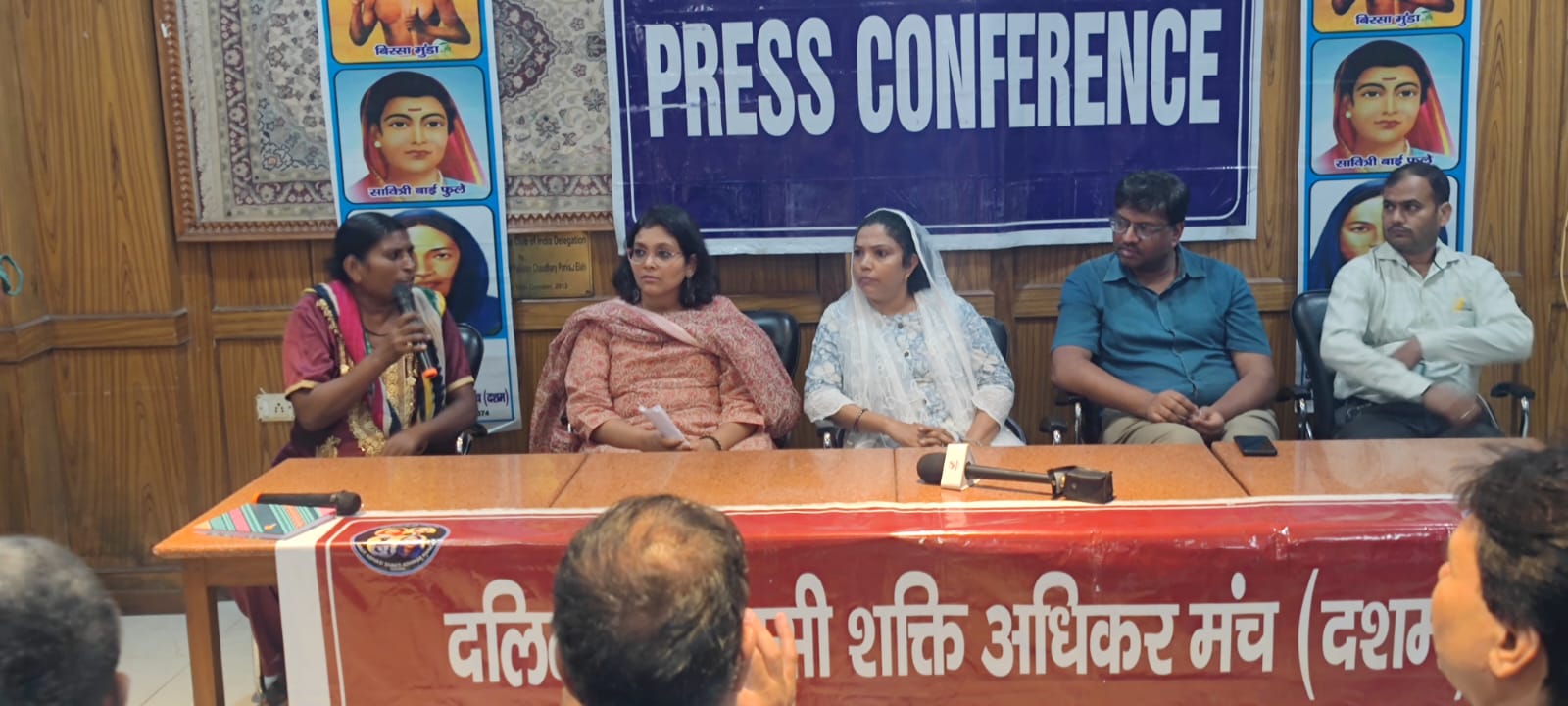
Ayesha, a waste picker and community leader from Rithala, Rohini, appealed that the money spent by the government on private contracts should be invested for the welfare of waste pickers by providing them with ID cards, medical facilities, social security, etc.
Talking about privatization, Shashi B Pandit, Joint Secretary, DASAM, pointed out that the control over waste is now given to people who have no experience of dealing with waste, and people who have years of experience are excluded from the management system.
Shravan Kumar, an informal waste picker in the NDMC area, talked about the dual profit companies earn by taking money through contracts and also from the informal waste pickers who collect waste from sites. The waste pickers who are helping the companies through their informal work have to pay them money and face additional harassment from the authorities.
Ayodhya Prasad, an informal waste picker working in Ghaziabad, added that they are also not allowed to throw waste on the dumping sites by the authorities after segregation.
Recognizing the exploitation by the private companies, an employee of one such company working for waste management in Ghazipur, Delhi admitted before the media that the only goal of privatization is earning money and said that waste must not be used for generating money, but it should be used for public utility.
---
*Dalit rights activist

Comments

TRENDING

When democracy becomes a performance: The Tibetan exile experience

By Tseten Lhundup*  I was born in Bylakuppe, one of the largest Tibetan settlements in southern India. From childhood, I grew up in simple barracks, along muddy roads, and in fields with limited resources. Over the years, I have watched our democratic system slowly erode. Observing the recent budget session of the 17th Tibetan Parliament-in-Exile, these “democratic procedures” appear grand and orderly on the surface, yet in reality they amount to little more than empty formalities. The parliamentarians seem largely disconnected from the everyday struggles faced by ordinary exiled Tibetans like us.

Study links sanctions to 500,000 deaths annually leading to rise in global backlash

By Bharat Dogra  International opinion is increasingly turning against the expanding burden of sanctions imposed on a growing number of countries. These measures are contributing to humanitarian crises, intensifying domestic discord, and heightening international tensions, thereby increasing the risks of conflicts and wars. 

Dhurandhar: The Revenge — Blurring the line between fiction and political narrative

By Mohd. Ziyaullah Khan*  "Dhurandhar: The Revenge" does not wait to be remembered; it arrives almost on the heels of its predecessor, released on March 19, 2026, just months after the first film’s December 2025 debut. The speed of its arrival feels less like creative urgency and more like calculated timing—cinema responding not to storytelling rhythm but to the emotional climate of its audience. Director Aditya Dhar, along with actor Yami Gautam, appears acutely aware of this moment and how to harness it.

BJP accounts for 99% of political donations in Gujarat: Corporate giants dominate

By Jag Jivan   An analysis of the official data on donations received by national parties from Gujarat during the Financial Year 2024-25 reveals a staggering concentration of funding, with the Bharatiya Janata Party (BJP) accounting for nearly the entirety of the contributions. The data, compiled in a document titled "National Parties donations received from Gujarat during FY-2024-25," lists thousands of transactions, painting a detailed picture of the financial backing for political parties from one of India’s most industrially significant states.

Alarming decline in India's repair culture threatens circular economy goals: Study

By Jag Jivan  A comprehensive new study by environmental research and advocacy organisation Toxics Link has painted a worrying picture of India's fading repair culture, warning that the trend towards replacement over repair is accelerating the country's already critical e-waste crisis.

Beyond the island: Top mythologist reorients the geography of the Ramayana

By Jag Jivan   In a compelling new analysis that challenges conventional geographical assumptions about the ancient epic, writer and mythologist Devdutt Pattanaik has traced the roots of the Ramayana to the forests and river systems of Central and Eastern India, rather than the peninsular south or the modern island nation of Sri Lanka.

Captains extraordinaire: Ranking cricket’s most influential skippers

By Harsh Thakor*  Ranking the greatest cricket captains is a subjective exercise, often sparking passionate debate among fans. The following list is not merely a tally of wins and losses; it is an assessment of leadership’s deeper impact. My criteria fuse a captain’s playing record with their tactical skill, placing the highest consideration on their ability to reshape a team’s fortunes and inspire those around them. A captain who inherited a dominant empire is judged differently from one who resurrected a nation’s cricket from the doldrums. With that in mind, here is my perspective on the finest leaders the game has ever seen.

Swami Vivekananda's views on caste and sexuality were 'painfully' regressive

By Bhaskar Sur* Swami Vivekananda now belongs more to the modern Hindu mythology than reality. It makes a daunting job to discover the real human being who knew unemployment, humiliation of losing a teaching job for 'incompetence', longed in vain for the bliss of a happy conjugal life only to suffer the consequent frustration.

‘No merit’ in Chakraborty’s claims: Personal ethics talk sans details raises questions

By Jag Jivan  A recent opinion piece published in The Quint by Subhash Chandra Garg has raised questions over the circumstances surrounding the resignation of Atanu Chakraborty from HDFC Bank , with Garg stating that the exit “raises doubts about his own ‘ethics’.” Garg, currently Chief Policy Advisor at Subhanjali and former Secretary of the Department of Economic Affairs, Government of India, writes that the Reserve Bank of India ( RBI ) appears to find no substance in Chakraborty’s claims, noting, “It is clear the RBI sees no merit in Atanu Chakraborty’s wild and vague assertions.”