
Sengol drama 'upper caste' move with eye on 2024 polls. Target: South Indian states


By Vidya Bhushan Rawat*
The new parliament building opened on February 28. However, it looked as if it is not Parliament but part of Pratinidhisabhas started by erstwhile princely states in India. The BJP for long has been acting as if India is a kingdom and Narendra Modi the new king of India. Even at the coronations of kings, you find a large number of people and dignitaries, but look at the opening ceremony -- we had only one face as if he built everything.
Modi and BJP have always loved #dynasts provided they are Brahminical in nature. All the heroes of the Sangh Parivar and Hindutva are actually dynasts and not really those who emerged from democratic struggle. They hate Jawaharlal Nehru only because he converted India to a secular democracy where people alone matter. Nehru would have turned a dictator and anointed himself as the king of India, if he had desired, but he opted for political democracy.
Many blame Nehru for being arrogant and Brahminical in his views, but there is a huge difference between Nehru, his thoughts and actions, and those of the Sangh Parivar. Those who think that Nehru and RSS are the same are actually helping the cause of Hindutva in disguise. You cannot defend the indefensible. Nehru accepted Ashok Chakra as the symbol of our republic.
Indeed, if Nehru had agreed to all that is being termed about Sengol then people like Rajagopalachari would have been happier, but he never opted for the symbol of kingdom for our new republic. The real issue is, Modi and BJP don't have much respect for history of modern India, as their organisation and leaders were on the wrong side during the struggle for freedom. They cannot erase this fact.
Hence, they go about reinventing and redirecting historical facts. And for this, they go about highlighting how great was 'Hindu' -- actually Brahminical or upper caste -- kingdom. It is a fact that Sengol has nothing to do with Cholas and more with a Mutth in Tamil Nadu. Tody this Mutth is dominated by the powerful Vellalar community.
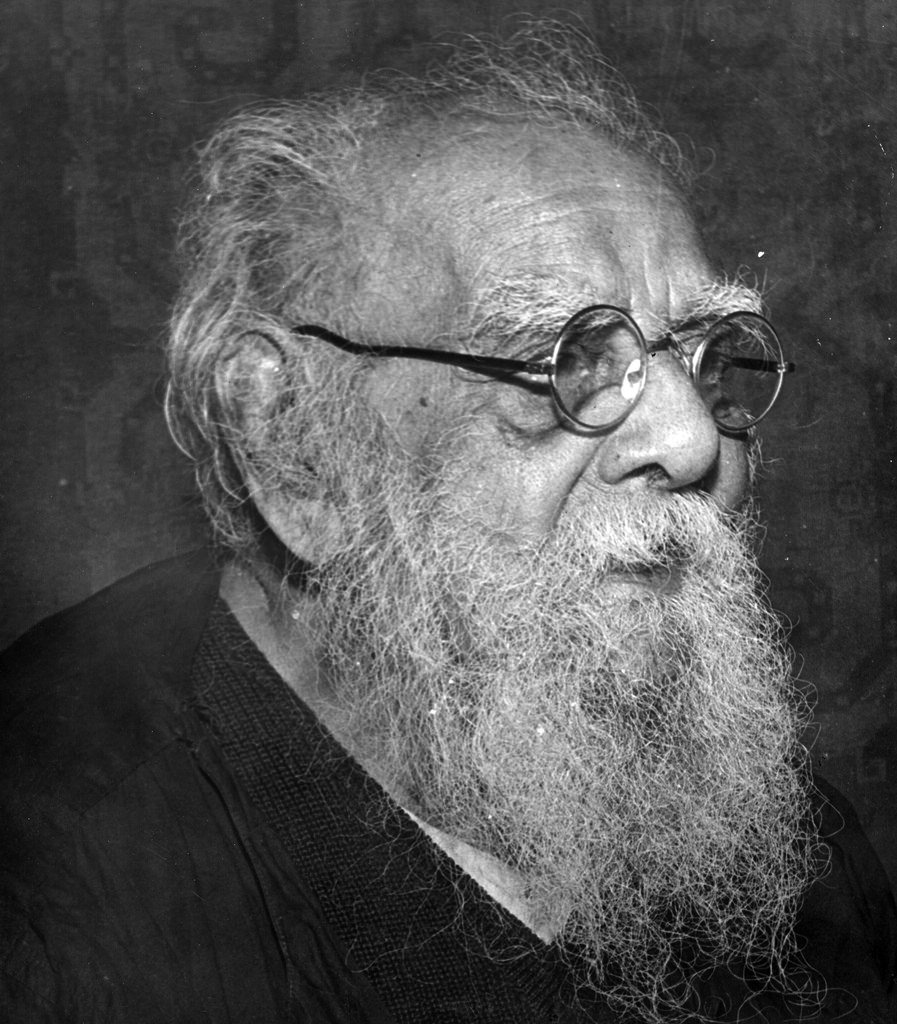
Periyar
One should observe the the context: Karnataka has rejected BJP and RSS, who have been working overtime to use the Mutths and temples for their Hindutva project. Tamil Nadu, despite Periyar's movement, has still the largest number of temples as well as caste violence against Dalits, yet the Sangh Parivar has no place in the State. Kerala, thanks to various communist and secular governments, is still a highly religious society. Hence, BJPs' target right now is South India.
The reason is simple. Its political success has reached at a saturation point in North India, where already there are contours of resurgence of Mandal forces. South has remained out of bounds for BJP. However, the party bosses think they have not lost everything. It is banking on the savarna hegemony, visible in all walks of life.
In the post-Mandal era, already, Dalits and OBCs have developed an all-India agenda. BJP, on the other hand, believes, today, savarnas, especially Brahmins, have got an all India liking for the party, known for being an expert in exploiting the insecurities of the upper castes. The whole Sengol thing is not merely meant for the new Parliament. BJP will forget it after it is used during the 2024 polls in order to blame Nehru for everything. DMK should remember: BJP will take up the challenge in Tamil Nadu and use it to denigrate the Dravidian movement.
Already, seers from Tamil Nadu, Kerala, Karnataka etc. are being used to propagate the Hindutva ideology. It is time for political parties to be careful and reach out to the people. They shouldn't allow themselves to be trapped in the Sangh Parivar propaganda to polarise people. Periyar's agenda is powerful enough. However, the Dravidian parties and those associate with it support caste violence and don't allow Dalits to live their life with dignity and self respect. They are falling in the BJP trap.
The whole drama is for the 2024 Lok Sabha polls. Opposition parts should fight the cause of India with inclusive politics. They must fight hatred and replace it with love and inclusive ideals. They must fight for the idea of India as espoused by our constitutional forefathers. They must let the secular socialist democratic republic of India live long and provide space and equal opportunities for all.
---
*Human rights defender

Comments

Shyam said…
Another brahmin hating journalist.Disgusting article!!!
Note: I hate Modi too.
Kiran said…
Adheenams sanyasis are non brahmins only,,
Anonymous said…
Here the word is Brahminacal, not Brahmin. The writer is criticising the Brahminical nature of the event -- an effort to appease the upper political caste in view of the ensuing polls, a requirement after Karnataka debacle

TRENDING

When democracy becomes a performance: The Tibetan exile experience

By Tseten Lhundup*  I was born in Bylakuppe, one of the largest Tibetan settlements in southern India. From childhood, I grew up in simple barracks, along muddy roads, and in fields with limited resources. Over the years, I have watched our democratic system slowly erode. Observing the recent budget session of the 17th Tibetan Parliament-in-Exile, these “democratic procedures” appear grand and orderly on the surface, yet in reality they amount to little more than empty formalities. The parliamentarians seem largely disconnected from the everyday struggles faced by ordinary exiled Tibetans like us.

Study links sanctions to 500,000 deaths annually leading to rise in global backlash

By Bharat Dogra  International opinion is increasingly turning against the expanding burden of sanctions imposed on a growing number of countries. These measures are contributing to humanitarian crises, intensifying domestic discord, and heightening international tensions, thereby increasing the risks of conflicts and wars. 

Dhurandhar: The Revenge — Blurring the line between fiction and political narrative

By Mohd. Ziyaullah Khan*  "Dhurandhar: The Revenge" does not wait to be remembered; it arrives almost on the heels of its predecessor, released on March 19, 2026, just months after the first film’s December 2025 debut. The speed of its arrival feels less like creative urgency and more like calculated timing—cinema responding not to storytelling rhythm but to the emotional climate of its audience. Director Aditya Dhar, along with actor Yami Gautam, appears acutely aware of this moment and how to harness it.

BJP accounts for 99% of political donations in Gujarat: Corporate giants dominate

By Jag Jivan   An analysis of the official data on donations received by national parties from Gujarat during the Financial Year 2024-25 reveals a staggering concentration of funding, with the Bharatiya Janata Party (BJP) accounting for nearly the entirety of the contributions. The data, compiled in a document titled "National Parties donations received from Gujarat during FY-2024-25," lists thousands of transactions, painting a detailed picture of the financial backing for political parties from one of India’s most industrially significant states.

Alarming decline in India's repair culture threatens circular economy goals: Study

By Jag Jivan  A comprehensive new study by environmental research and advocacy organisation Toxics Link has painted a worrying picture of India's fading repair culture, warning that the trend towards replacement over repair is accelerating the country's already critical e-waste crisis.

Beyond the island: Top mythologist reorients the geography of the Ramayana

By Jag Jivan   In a compelling new analysis that challenges conventional geographical assumptions about the ancient epic, writer and mythologist Devdutt Pattanaik has traced the roots of the Ramayana to the forests and river systems of Central and Eastern India, rather than the peninsular south or the modern island nation of Sri Lanka.

Captains extraordinaire: Ranking cricket’s most influential skippers

By Harsh Thakor*  Ranking the greatest cricket captains is a subjective exercise, often sparking passionate debate among fans. The following list is not merely a tally of wins and losses; it is an assessment of leadership’s deeper impact. My criteria fuse a captain’s playing record with their tactical skill, placing the highest consideration on their ability to reshape a team’s fortunes and inspire those around them. A captain who inherited a dominant empire is judged differently from one who resurrected a nation’s cricket from the doldrums. With that in mind, here is my perspective on the finest leaders the game has ever seen.

Swami Vivekananda's views on caste and sexuality were 'painfully' regressive

By Bhaskar Sur* Swami Vivekananda now belongs more to the modern Hindu mythology than reality. It makes a daunting job to discover the real human being who knew unemployment, humiliation of losing a teaching job for 'incompetence', longed in vain for the bliss of a happy conjugal life only to suffer the consequent frustration.

‘No merit’ in Chakraborty’s claims: Personal ethics talk sans details raises questions

By Jag Jivan  A recent opinion piece published in The Quint by Subhash Chandra Garg has raised questions over the circumstances surrounding the resignation of Atanu Chakraborty from HDFC Bank , with Garg stating that the exit “raises doubts about his own ‘ethics’.” Garg, currently Chief Policy Advisor at Subhanjali and former Secretary of the Department of Economic Affairs, Government of India, writes that the Reserve Bank of India ( RBI ) appears to find no substance in Chakraborty’s claims, noting, “It is clear the RBI sees no merit in Atanu Chakraborty’s wild and vague assertions.”