
Azamgarh is a lively district of eastern Uttar Pradesh. Because of the entrepreneurial nature of people here Azamgarh is described as Kerala of U.P. People from here not only go to different parts of the country but also to abroad. Descendent of an indentured labourer family from here who migrated to Trinidad and Tobago, Basudeo Pandey, became the Prime Minister of this group of islands country in the Caribbean. Most of the people who migrated from Azamgarh in the past did not use an airport.
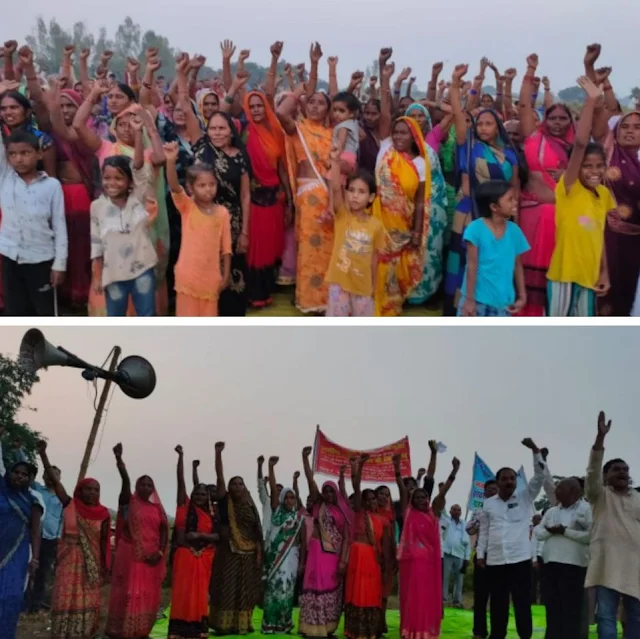
Now there is a proposal to expand the Azamgarh airstrip to an international airport. This will displace about ten thousand people over 670 acres land covering eight villages – Hasanpur, Kadipur Harikesh, Jamua Hariram, Jamua Jolha, Gadanpur Chindan Patti, Manduri, Jigina Karampur and Jehra Pipri. This land is very fertile.
Firstly, people are asking when there are international airports in Varanasi, Kushinagar, Gorakhpur, Ayodhya and now even Lucknow, distance to which has been reduced to 2.5 hours by newly constructed Purvanchal Expressway, in the vicinity of Azamgarh then what is the need of an airport here and secondly, even if an airport was to be built why such fertile land was chosen instead of some barren one?
People are also asking that when the government is handing over airports at other places to Adani why is it interested in constructing one in Azamgarh? Or, will this one be handed over to Adani too? If this is the case then Adani should himself build the airport by buying land from farmers. Why should the government acquire land and then offer it over to a capitalist at concessional rates?
When the district administration tried to get a survey done surreptitiously on the night of 12-13 October, the people opposed it and asked when they did not want to give up the land where was the need to do a survey? The police accompanying the revenue officials misbehaved with women.
When the district administration tried to get a survey done surreptitiously on the night of 12-13 October, the people opposed it and asked when they did not want to give up the land where was the need to do a survey? The police accompanying the revenue officials misbehaved with women.
Then the government tried to terrorise the people by putting pressure on Gram Pradhans. The Gram Pradhan of Jamua Hariran was threatened with false cases and was made to sit at police station while the survey was attempted in the villages, but he refused to budge.
On one occasion when police wanted to carry him away in their jeep, the woman encircled the vehicle and wouldn’t allow it to leave the village. The police then had to let him go. He told the police as a matter of fact that when his village will vanish then which village will he be the Gram Pradhan of? He said he could not go against the wishes of people. When Hasanpur Gram Pradhan was summoned to the police station he refused to go there in the night.
When the government proposes to build this airport in the name of development why is it compelled to use coercive measures? What kind of development is it which has to be thrust upon the people against their wishes?
Local newspapers have reported that the district administration had conducted a survey and submitted its report to the government. Villagers are asking that when they have not allowed any survey to take place then what report has been submitted by the district officials to the government in Lucknow?
 If we give it a thought only well off people will use air travel. People who can afford it can very well catch their flights from the Varanasi airport, a two hours journey away, or the Lucknow airport, a two and a half hours journey away. Most people travelling out of Azamgarh use railways. Hence from common people’s point of view what is required is more trains and more coaches in which people can travel comfortably.
Local newspapers have reported that the district administration had conducted a survey and submitted its report to the government. Villagers are asking that when they have not allowed any survey to take place then what report has been submitted by the district officials to the government in Lucknow?

Presently people have to travel long distances in general or sleeper coaches in inhuman conditions. Post Covid the general class has been removed from most trains restricting the space for common people’s train travel. So, ironically, the cheapest means of travel is being eliminated and a much costlier means in sought to be introduced. Can this be called ‘development’ especially of the ‘Sabka Saath, Sabka Vikas’ kind which is loudly claimed by the Bhartiya Janata Party government?
If we take a look at the newly built Yamuna Expressway between Lucknow and eastern U.P. we’ll hardly find any vehicles plying on this. This implies that common people are not using the high speed travel or find it unaffordable to use it. For the people who can afford, more options are being created. This is a classic example of capitalist development.
Higher the speed of travel more will be the pollution. For the same distance air travel will be more polluting than by train or bus. European teenager activist Greta Thunberg who is leading a global campaign against climate change has taken a personal decision not to travel by air. She has convinced her mother also to do likewise. Inspired by her number of people in Europe have switched to rail travel from airplanes. When Greta had to travel to United Nations to address a session she chose to travel by ship like is olden days. Europe has decided to be carbon neutral by 2050. India has set a deadline of 2070.
Promoting high speed travel and building plethora of airports like railway stations and bus stands in the name of development is essentially a capitalist ploy to make as much profit in the shortest possible time on the petroleum reserves of earth before the carbon emission restrictions are strictly enforced, of which the common people are unwittingly becoming a part.
We have to understand how the world is changing in response to the existential threat of climate change. A section of the developed world is more conscious about their lifestyles and trying to reduce their carbon footprints whereas India and China pursue the same path of development which is responsible for dangerous carbon emissions.
Promoting high speed travel and building plethora of airports like railway stations and bus stands in the name of development is essentially a capitalist ploy to make as much profit in the shortest possible time on the petroleum reserves of earth before the carbon emission restrictions are strictly enforced, of which the common people are unwittingly becoming a part.
We have to understand how the world is changing in response to the existential threat of climate change. A section of the developed world is more conscious about their lifestyles and trying to reduce their carbon footprints whereas India and China pursue the same path of development which is responsible for dangerous carbon emissions.
In a way we are hurting ourselves by making life more difficult for future generations. The cost of our misdeed will have to be borne by our descendent.
---
*Rajeev Yadav is social-political activist based in Azamgarh; Arundhati Dhuru is associated with National Alliance of People’s Movements; Sandeep Pandey, Magsaysay award winning social activist, is General Secretary, Socialist Party (India)
---
*Rajeev Yadav is social-political activist based in Azamgarh; Arundhati Dhuru is associated with National Alliance of People’s Movements; Sandeep Pandey, Magsaysay award winning social activist, is General Secretary, Socialist Party (India)
Comments