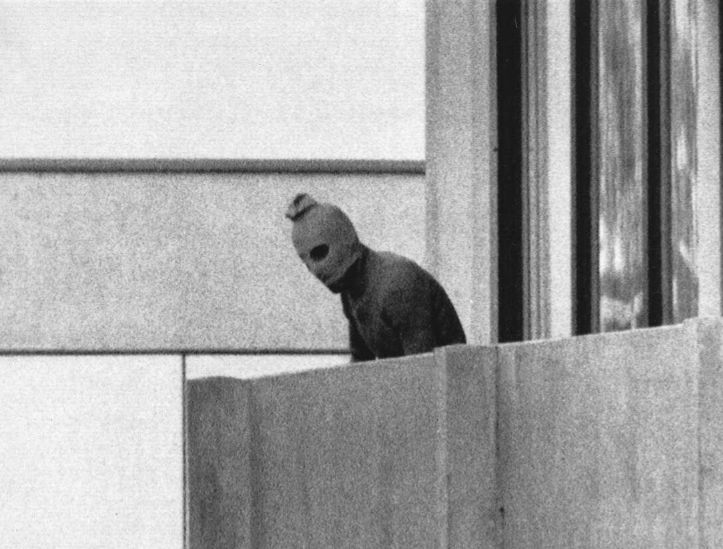

On September 5-6th we commemorated the 50th anniversary of the killing of Israeli hostages in the 1972 Olympic Games. 50 years ago in September 5th-6th in 1972 a tiny unit of Palestinian fighters sensationally took 11 Israeli athletes hostage just ahead of the Olympic Games in Munich, West Germany. All the hostages were executed during a botched rescue attempt by the police. In the aftermath, the press described the Palestinians much as merciless, bloodthirsty assassins. Few of them wanted to talk seriously about why Palestinians resorted to terror to pave the path to win freedom, making many a person oblivious of the real scenario or background.
We must shed tears and all dip our blood in their memory of the Israeli athletes and unequivocally condemn terrorism, but remember the root cause that precipitated this tragedy. It was repercussion of the complete subjugation of the Palestinians to the mercy of the fascist hungry state of Israel, who violated all democratic norms by imprisoning Palestinian Liberation activists. The very creation of the Israeli state was a prop of imperialism.By solely condemning Black September we are highlighting the mosquitoes but forgetting the pit that was responsible for breeding it. Today the media is shedding crocodile tears by only projecting the terrorism of the Black September Group and literally throwing no light on injustice to the Palestinian community.
Individual Terrorism may be the wrong means of waging resistance to confront oppression, but it is farcical to ignore the fascist designs of Israel patronised by conspiracy of Western imperialism. We must grasp what in essence Black September symbolised, even if their means were wrong.
Today the Fascist state of Israel is blowing its wind at highest intensity, reducing Palestinians to grovel and manifestation of what imperialism stands for. At that time itself the world bourgeoisie place single handed blame on the Black September Group., placing the hounding of Palestinians into oblivion. Since 1948 the United Nations has virtually paid lip service towards the welfare of Israel. Most brutally the Mosaad team undertook revenge on the activists, executing even innocent persons. The film ‘Munich’ literally glorifies them and projects Black September group as a bunch of criminals.
I am extremely grateful to research from ‘Socialist Worker’ in an article published in August 2018, who in a most grounded manner portrayed the background of the event and the sheer hypocrisy of the media. Today the Olympic games in many ways represents the monopoly of imperialism and promotes nation chauvinism,. On 5th September the German government is pleaded “forgiveness" from families of victims in the 1972 Munich Olympics attack, admitting responsibility for a litany of failings that led to the deaths of 11 Israelis. The apology by President Frank-Walter Steinmeier on behalf of Germany 50 years on came after a prolonged struggle by bereaved relatives for appropriate compensation and for Berlin to admit its colossal mistakes that led to the massacre. No space is allocated for the merciless injustice meted out to the Palestinians and how 5 decades ago Western powers virtually endorsed the hegemony of Israel.
Since 50 years the very tone of Western media is to justify the bloodthirsty expansionism of Israel and target Palestinian activists as criminals.
The name of the organisation that unleashed the attack—Black September—illustrates the history that lay beneath it. Exactly two years earlier, in September 1970, thousands of Palestinians living in Jordan were murdered in an intensive military combing operation by the Jordanian government. It was one of the several massacres that have been unleashed on the Palestinians over more than a century.
The target of the assault was the Palestine Liberation Organisation (PLO)—a coalition of Palestinian factions committed to armed guerrilla struggle against Israel.
Israel robbed the Palestinians of their land when it was created in 1948 and when it invaded the West Bank, East Jerusalem and the Gaza Strip in 1967.Millions of Palestinians now lived in poverty and refugee camps in the surrounding states, including some two million in Jordan. The PLO fought for the right of Palestinians to return to all of Palestine, to live in single, secular state. The regular Arab armies of Syria, Jordan and Egypt had been defeated by Israel in the 1967 Six Day War. However the spark ignited by the PLO guerrillas became a flame of resistance for Palestinians, and an inspiration to ordinary people across the Middle East.
In March 1968—less than a year after the Six Day War—Israel attacked the Jordanian town of Karameh, where the PLO had a base.
The Jordanian government wanted the PLO to withdraw before the attack. The PLO refused. Instead a few hundred guerrillas heroically stayed and relentlessly fought, drawing the Jordanian army into the battle and making it imperative for Israel to retreat.
Israel had hoped to smash the PLO—but the battle had turned the PLO into heroes.
The PLO continued to simmer its spark with the uneasy support of the Jordanian government and other Arab leaders But as the organisation—and support for the Palestinian cause—grew, it posed a threat to Jordanian King Hussein in his very backyard.
Armed and supported by Israel and the US, Hussein launched a civil war against the PLO. Thousands of Palestinians were killed and the PLO was driven out of Jordan, relocating to Lebanon. The defeat delivered mortal blow to the aspirations that guerrilla struggle had seemed to offer.
Leaders of the PLO’s main faction Fatah became more concerned not to upset other Arab governments.
They didn’t relinquish the struggle straight away. But they did start seeking for ways to be accepted as legitimate negotiating partners among the rulers of Western states that had supported Israel against them. It led to them abandoning the goal of reclaiming all of the lost Palestinian land.
They were tempted with the prospect of a “mini state”—something rejected by the poorest Palestinians in the refugee camps, and which they have never been granted.
Other Palestinians turned to desperate and daring acts of “terror”—hijackings, bombings and hostage takings—in small clandestine groups.
Through sustained mass revolts and armed struggles, Palestinians relentlessly fought the confronted first the British Empire, then Israel and the US imperialism that propelled it. Each time they had been brutally repressed.
Munich was the turn to seek vengeance for only a fraction of the violence that had been meted out to them for decades.
Palestinian fighters from the PLO formed a new group in 1970. They called it Black September, after the defeat in Jordan. At first their aim was to avenge oppression faced from Hussein and the Jordanian monarchy. However they diverted it to the struggle against Israel.
It is a strange phenomenon that PLO leaders denied they had anything to do with the Black September group. But some Black September members claimed they were overseen by the PLO.
At the very least there was an ambiguous relationship between the two. PLO members that wanted to fight could join Black September while Fatah leaders kept a respectable distance. It reflected the disarray inside the Palestinian resistance after the defeat in Jordan.
. For all the tremors created in the enemy camp Black September’s actions brought, they couldn’t overpower US imperialism which strangled the Middle East and underpinned their oppression It was only when First Intifada —a mass uprising—sprouted in Palestine in 1987 that possibility of liberation once again began to flash.
Just three days after the Munich attack, Israel bombed refugee camps and villages in Lebanon and Syria as punishment, killing 70.None of the newspapers condemned this tragic massacre. It was a perfect illustration of double standards of the press.
The media’s description of the attack in Munich only centred on the ruthlessness of the Black September “terrorists”.
Black September were called “Jew killers”—as if their goal was to kill the Israeli athletes only on grounds of being Jewish.
Actually the athletes were taken hostage by Black September. The idea was exchange them or the release of hundreds of Palestinians languishing in Israeli prisons. Black September demanded a plane to take them and the hostages to Egypt. They were allowed to travel with the hostages to a nearby airbase by helicopter. West German police replaced the crew of the waiting plane with their own officers.But when the Palestinians arrived, the police aboard the plane decided they were outnumbered and backed out of their planned ambush. When police snipers fired on the Palestinians it launched a gun battle in which all the hostages were killed.
Yet at first the papers reported a lie that all the hostages had all escaped safely. West German police flashed that news for more than two hours even after the fighting had finished.It was better than the embarrassing truth that their botched operation had led to the deaths of the hostages. It’s a point that’s missing from most versions of the story in the aftermath.
In the wake of the 1967 Six Day War, hundreds of thousands of Palestinians
had fled to Jordan, where they lived in ramshackle refugee camps. On September 16, 1970, alarmed at the growing power of Palestinian revolutionaries, King Hussein declared martial law, and the Jordanian armed forces attacked suspected militant strongholds: according to most sources, between four and ten thousand Palestinians, including many non-combatants, were slaughtered. This is the source of the group’s name.
The comrades from Black September, faced merciless extinction n 1970 when the Jordanian army massacred 20,000 Palestinians,1 went back to the place that is the origin of this massacre:West Germany—formerly Nazi Germany—now at the hotbed of imperialism. Munich was the site of the power that forced the Jews of both West
and East Europe to emigrate to Israel. Which paved way to profit from the theft of Palestinian land which undertook preparation payments for Israel and, until 1965, officially, supplied its weapons. Back to Munich, West Germany was where no stone was unturned in —using development aid, oil deals, investments, weapons, and diplomatic relationships—to incite conflicts between various Arab regimes to turn all of them against the Palestinian liberation movement. It was imperialism launching its bombers when other means of repressing the Arab liberation movement failed, The supplier who provided Hussein’s army with panzers, assault rifles, machine-pistols, and munitions.
Quoting the Organisation RAF “The Black September action in Munich has simultaneously clarified both the nature of the imperialist ruling class and of the anti-imperialist struggle, in a way that no revolutionary action in West Germany or West Berlin has. It was simultaneously anti-imperialist, antifascist, and internationalist. It indicated an understanding of historical and political connections, that are always the province of the people—that is to say, those from whom profit is sucked, those who are free from complicity with the system, those who have no reason to believe the illusions fostered by their oppressors, no reason to accept the fantasy their oppressors pass off as history, no reason to pay the slightest atten- tion to their version of reality. It revealed the rage and the strength that these revolutionaries get from their close connection to the Palestinian people, a connection resulting in a class consciousness that makes their historical mission to act as a vanguard perfectly clear. Their humanity is firmly based in their knowledge that they must resist this ruling class, a class which as the historical endpoint of this system of class rule is also the most cunning and the most bloodthirsty that has ever existed. It is based in the knowledge that they must resist this system’s character and its tendency towards total imperialist fascism—a form which has many fine representatives: Nixon and Brandt, Moshe Dayan and Genscher, Golda Meir and McGovern.”
---
Harsh Thakor is Freelance Journalist who has studied national liberation movements
Comments