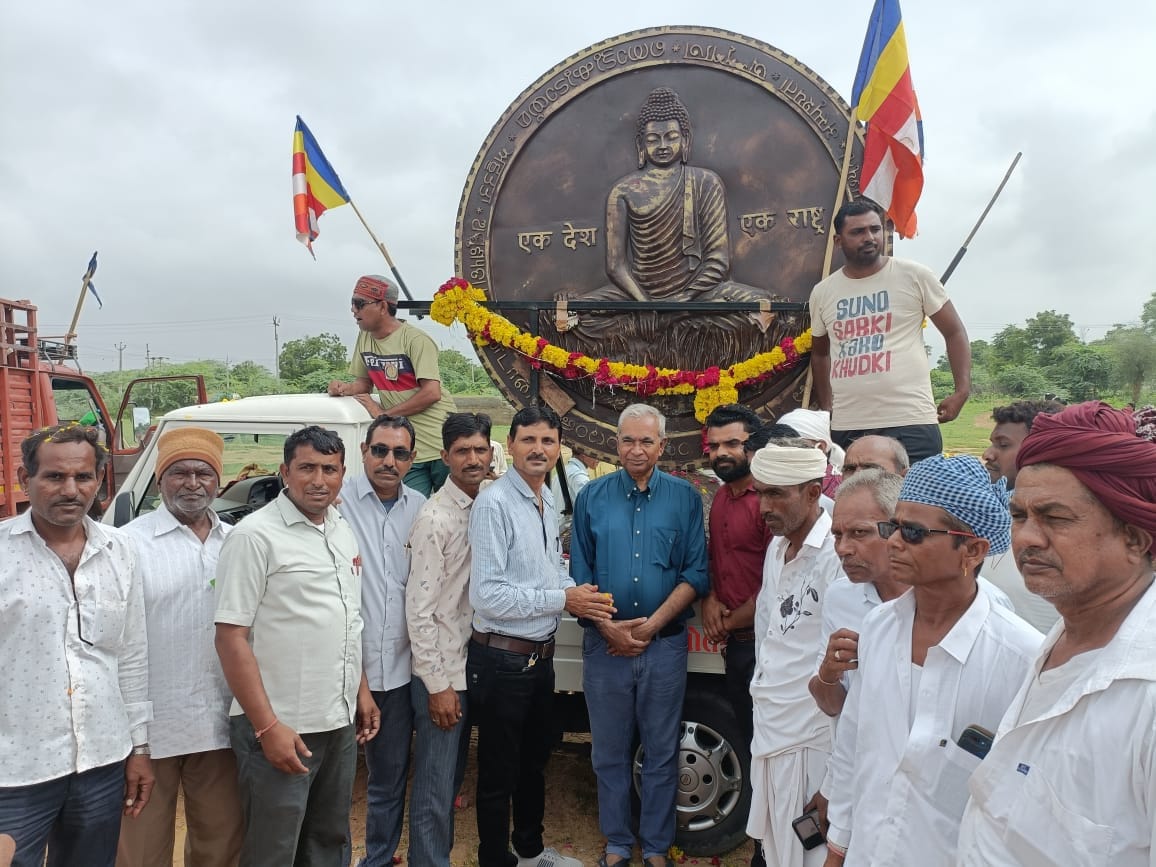
Gujarat’s top Dalit rights leader Martin Macwan, who is currently leading a week-long procession to Delhi carrying a 1,111 kg brass coin with the pointed question embossed on it, “Will the 1947 dream of untouchability free India be a reality in 2047?”, has reiterated that the removal of untouchability in India is Dalits’ primary concern, and not opposition to the new Parliament building.
The march began in Ahmedabad on August 1 at 8:00 am amidst refusal of the Gujarat police a day earlier refusing to give the permission for the procession, which involves a small truck carrying the huge brass coin, another one with an Ambedkar statue, two trucks full of about 25 lakh one rupee coins donated by Dalits across India, and six buses with 300 Dalit activists. The brass coin has the image of BR Ambedkar on one side, and of Lord Buddha, on the other.
Starting at the Dalit Shakti Kendra (DSK), founded by Macwan to provide technical-cum-empowerment training to the underprivileged teens off Ahmedabad, the march, which has passed through the rural areas of North Gujarat, is currently in Rajasthan. “We are getting overwhelming response”, claims Macwan “As we entered Rajasthan, we were supported a one-and-a-half kilometre long procession”, he said.
The march proposes to reach Delhi on August 7 via Haryana.
Addressing rural folk at one spot, Macwan said, “While it is true that Rs 20,000 crore, currently being spent for the new Parliament building, could have been better used for people’s welfare, we think removal of untouchability is a much bigger issue. In whichever building the Parliamentarians site, new or old, their primary concern should be ensure an untouchability-free India.”
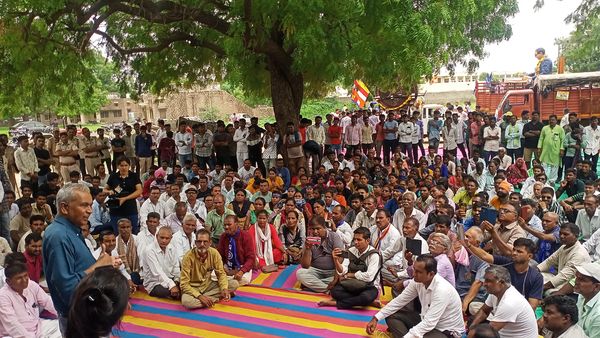
Explaining what he proposes to do with about 25 lakh one rupee coins, Macwan said, “We will donate the coins as the Dalits’ contribution for the new Parliament for the removal of untouchability – not for the building per se… Twenty five lakh Dalits who have contributed this amount should feel that it is their Parliament and it is working for removing untouchablity.”
“The contribution should be a gross reminder to those who consider Dalits as beggars, seeking alms. It is our reply to them – that we have contributed for the removal of a top Constitutional obligation. They must accept out contribution for the new Parliament”, he said.
He added, “We will be in Delhi for 24 hours. If they don’t accept the brass coin and the 25 lakh one rupee coins, we will return lock stock and barrel, hoping for a positive response in the next year, and the years that follow.”
Comments
Post a Comment
NOTE: Hateful, abusive comments won't be published. -- Editor